
Chippy Chip Tariff

President Donald Trump is considering imposing 100 percent tariff on semiconductors to incentivize chipmakers to invest in domestic manufacturing, a move that would make it harder to build out American chip fabrication.
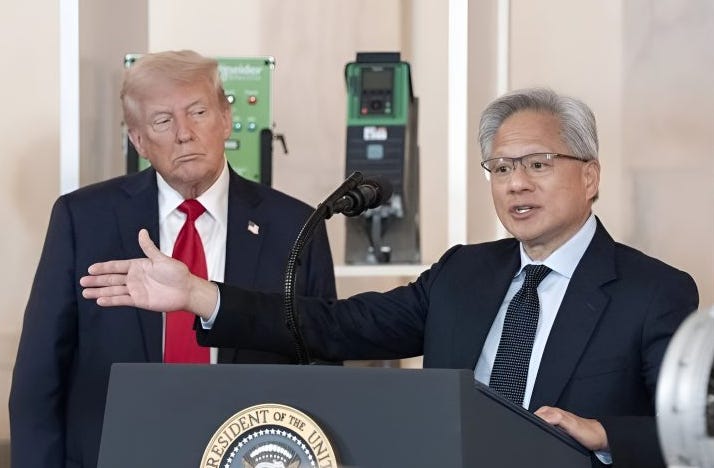
Trump administration could soon force chipmakers “that don’t maintain a 1:1 ratio [of domestic to imported chips] over time” to pay a tariff on each imported semiconductor sold to Americans beyond the number that are produced domestically. “If a company pledged to build one million chips in the U.S., it would essentially be credited with that amount over time so the company and its customers could import until its plant was completed without paying tariffs.” This comports with Trump’s August promise to chipmakers like Apple that “if you’re building, there will be no charge.”
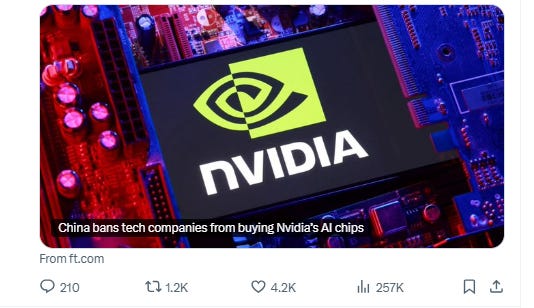
In other hand, all the Chinese tech giants are currently in the process of switching from Nvidia to homegrown AI chips, forced to do so by US export controls. Hard to overstate how ironic it is: the entire point of the export controls was to prevent exactly this, the whole of China - the world’s largest market for chips by far - adopting Chinese chips at the expense of US firms. It’s abundantly clear that by far the better option would have been to do nothing.
Yes, China would probably have still made some efforts to develop a homegrown chip industry but it would have been a slower, more fragmented effort driven by market forces rather than survival instinct, leaving plenty of room for continued US chip dominance in the Chinese market. Sometimes you can rightfully ask yourself if US policies aren’t actually designed to create the very problems they claim to solve.
In less than 3 years, we’ve gone from the US banning chips exports to China to restrict its development, to China banning US chips imports because they now have their own. Easily one of the biggest policy f*ckups of the past few years. I still remember how some people 3 years ago predicted that the export controls meant that “China’s semiconductor manufacturing industry was reduced to zero overnight. Complete collapse. No chance of survival” (look it up). When the truth is that it’s the best thing the Americans could ever have done to turbocharge it.
It’s pretty ironic that we’ve gone within the space of 3 years from the US banning chip exports to China to slow their tech development, to China now telling its companies to avoid those same US chips in favor of domestic alternatives - which now exist because of those US export controls.
Trump admin also pushing Taiwan to relocate semiconductor production so that 50% of U.S. chip demand is met domestically. Commerce Secretary Howard Lutnick has been leading the charge, telling Taiwanese counterparts the shift is essential for American supply-chain security, Lutnick said in a television interview this past weekend.
The demand springs from long-standing concerns about over-reliance on Taiwan Semiconductor Manufacturing Company (known as TSMC) and its vast ecosystem of suppliers and components providers — a concentration seen as especially risky given China’s perceived claims to Taiwan.
While a concern of previous administrations, the rhetoric has hardened under President Donald Trump, with the White House threatening steep tariffs on imported chips and considering a “1:1” production rule requiring companies to manufacture domestically as many chips as they import.
Politics collide with manufacturing realities
In March of 2025, Trump struck a deal with TSMC to invest a purported $100 billion in U.S. chip plants, including plants and packaging facilities, with promises that these investments would shield Taiwan from punitive tariffs. This builds on TSMC’s earlier purported $65 billion U.S. commitment.
The challenges are immense, however “a radical shift for the global semiconductor industry.” Transplanting a dense, highly contingent and interlinked supply chain to the U.S. involves persuading dozens and dozens of component and materials suppliers to relocate, not just the fabrication facilities themselves. As industry experts acknowledge, semiconductors are among the most complicated supply chains on earth.
Matching capacity of domestic chips with imports is a taller order than simply increasing domestic investments because overseas products are often cheaper, supply chains are difficult to tweak, and increasing U.S. supply takes time.
By the same token, any tariffs or “1:1” mandates risk spooking global tech firms or triggering retaliation from China.
But the pledged numbers alone strain credulity
The U.S., at present, produces less than 10% of the global chip supply, and an even smaller percentage of the most advanced chips. Meanwhile, TSMC spent about $30 billion on capital projects in 2024 and expects to spend around $40 billion this year — which means that Washington’s reported $165 billion in U.S. build-outs would consume about five full years’ worth of the company’s total global capital expenditure. And that would be aside from funding expansion in other markets and investing in next-generation process technologies, products, and packaging.
Even spread over a decade, it would require devoting a double-digit share of TSMC’s entire capital budget to the U.S. every year, an improbable concentration for a company whose competitive advantage largely depends on its incredibly finely-tuned global supply chain.
Taiwan pushes back
Taiwanese Giant Tech Tycoon of NVIDIA Jensen Huang said President Donald Trump’s $100,000 H-1B visa fee could put the American dream further out of reach for immigrants, marking a more critical take on the visa change after he initially offered positive feedback on it last week.
The Nvidia CEO said on an episode of the “BG2 Pod” published Friday that the Trump administration’s move to change America’s H-1B visa program is “a great start,” but added that the $100,000 fee “probably sets the bar a little too high.”
The policy “at least eliminates illegal immigration” and abuse of the visa system, but the steep cost might mean more investment outside the US, Huang said.
He agreed with tech investor and podcaster Brad Gerstner that the fee also tilts the playing field toward Big Tech firms that can more easily afford to sponsor visas, leaving startups at a disadvantage.
Huang said the US must remain mindful of how such policies affect global talent flows, saying they could make “foreign students uncomfortable.”
He pointed to Chinese researchers as one example, separating the ideas of the US competing with China as a country from American policies that affect Chinese people.
“We need to make sure that that slippery slope isn’t crossed,” he added.
Talent inflow is an early indicator of the country’s future success. “Smart people’s desire to come to America and smart students’ desire to stay, those are what I would call KPIs,” Huang said, referring to key performance indicators.
The Taiwan-born CEO has often described his own journey as a product of the American dream. America’s immigration system is in a “difficult situation,” and Trump has limited time to improve it, Huang said. Any move that addresses the country’s ability to attract and keep top talent is a step in the right direction, the CEO said.
The H-1B visa change is a good start — but it shouldn’t be the end, he added.
Nvidia is one of the largest tech employers of H-1B visa holders in the United States. At the end of fiscal year 2025, the company had 1,519 H-1B filings and 36,000 employees worldwide, a Business Insider analysis found in March.
Perhaps unsurprisingly, Taiwan has pushed back publicly on the administration’s demands. Its officials argue that no single country can fully control the semiconductor chain, given its complexity and specialization. But with Trump and his cabinet aggressively wielding trade tools and applying other forms of strategic pressure, Taiwan faces a difficult path forward. It can go along with U.S. demands and risk weakening its “silicon shield,” or keep pushing back and potentially endure continued economic coercion.
It remains unclear just how long chipmakers would have to equalize their sales of domestic and imported chips. Likewise, the tariff rate that chipmakers would face is opaque, but Trump indicated last month that the rate could be as high as 100 percent.
Even a small rate change on chip tariffs could have huge consequences for domestic producers. The Chamber of Commerce warns that a 1 percent increase in tariffs on chips and semiconductor manufacturing equipment will increase the construction costs of all announced domestic semiconductor fabrication plants (valued at $540 billion) by as much as $3.5 billion. A 100 percent rate increase, then, could increase construction costs for these projects by $350 billion.
Moreover, “additional costs will reduce demand for end market products [and] reduce investments in semiconductor R&D,” diminishing American semiconductor dominance instead of enhancing it. These estimates are found in the Chamber’s public comment to the Commerce Department, in response to the agency’s Section 232 investigation into the national security effects of imported semiconductors, manufacturing equipment, and downstream products.
Apparently, the impending national security emergency from imported chips is not so imminent that a grace period is precluded by the proposed plan. This is fortunate for American chipmakers, as 90 percent of fabrication occurs abroad and it takes at least 38 months to build a fabrication plant in the U.S.—not accounting for “time needed to build supporting facilities and then qualify products at each fab,” which adds another six months to a year, according to the Chamber.
The Commerce Department’s Bureau of Industry and Security began its investigation in April and has yet to deliver its findings and recommendations in a report to Trump. In the meantime, comments strongly cautioning against semiconductor tariffs have accumulated.
Intel, “the only American company [that is] capable of producing leading-edge logic semiconductors,” warned that “Section 232 tariffs could increase U.S. manufacturing costs for essential materials and components.” The Semiconductor Industry Association, a trade association and lobbying group, said that “removing trade and other barriers to U.S. chips in overseas markets,” which account for 70 percent of revenue to the U.S. semiconductor industry, is key to making the expansion of domestic capacity economically viable. Right now, “the complete onshoring of all semiconductor supply chain elements is not feasible, much less in a short period of time,” because “supply chains have evolved over decades and cannot be rearranged overnight or even within a decade,” explains the Chamber.
Trump’s plan has not been officially announced and, like his reciprocal tariffs, could be delayed, changed, or reversed at the drop of a hat, making it impossible for chipmakers to rationally plan multi-billion-dollar projects. But for the time being, it appears Trump is ready to punish American chipmakers for efficiently manufacturing their products abroad and selling them to American consumers and artificial intelligence companies at competitive prices.
========
If you feel powerless to help Gaza, you still has a choice: donate. When so much of what exists is false, authenticity is a powerful weapon we can wield that the state never could. So if you feel lost, hopeless, depressed, angry and afraid, I implore you to return - again and again - to the feeling of love that exists within you that brought you here in the first place. It is only through this that we can remake the world. To redress Gaza’s famine, displacement, and destruction, independent and impartial humanitarian organizations - UN agencies, international and national NGOs - must be allowed to deliver relief at scale. To salvage Gaza’s people from the devastation inflicted by Israel, it must be unified with the West Bank to form an independent and sovereign Palestinian State, not to be parceled and colonized by the former.

Meanwhile, children continue to be shredded by US bombs, and the starvation reaches new depths of hellish collective punishment. If both parties are going to continue to support an ongoing genocide, at least they can both be honest about doing so, rather than having one openly bloodthirsty party, and another—unconvincingly—playing the role of powerless, bumbling humanitarian.
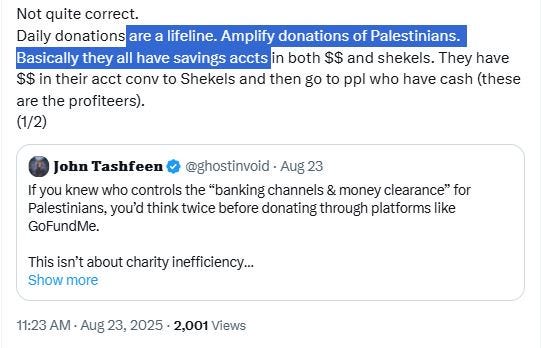
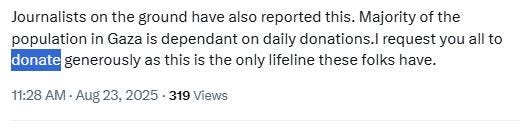
Please keep donate Gaza especially if you, as reader, has [background] International Relation [whatever universities]. IR Graduate means [you must, at least] get some semester [about] studying Middle East [in macro, not specifically Gaza].
We need more people to share fundraisers instead of only talking about Gaza. Some people think that those in Gaza don’t need money but that’s wrong. Almost everyone lost their source of income while essentials, food & medicine get sold for astronomical prices. So I put my attempt in all social media as I can, in twitter / X, in substack [since October 2023 I put link donation], in bluesky or bsky, in threads, in instagram.

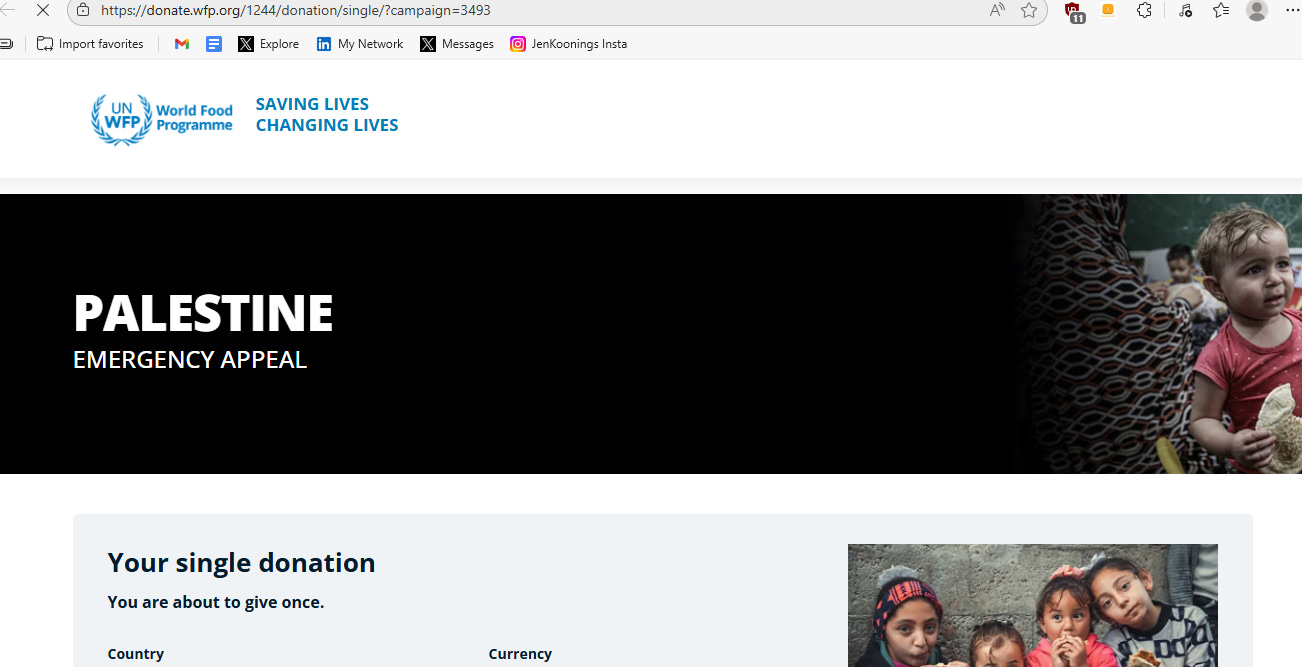
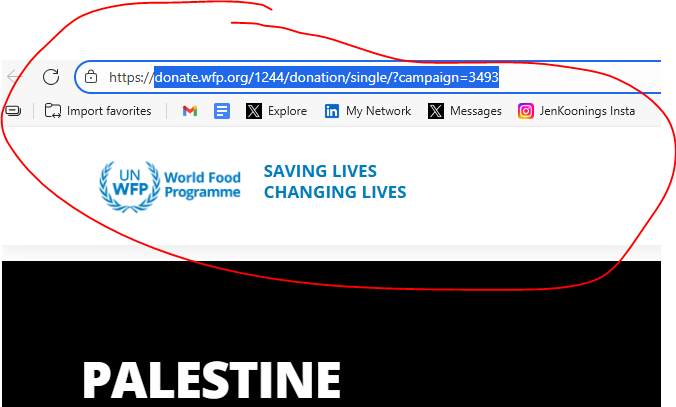
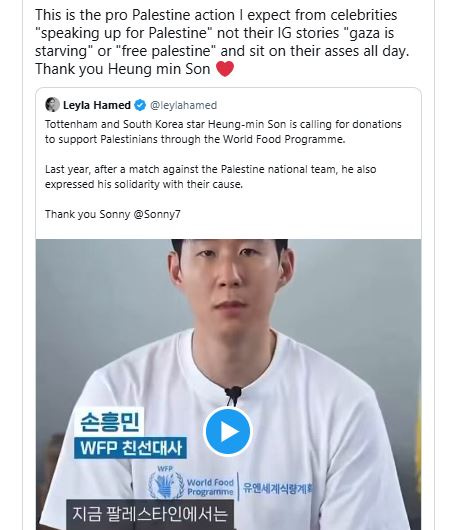
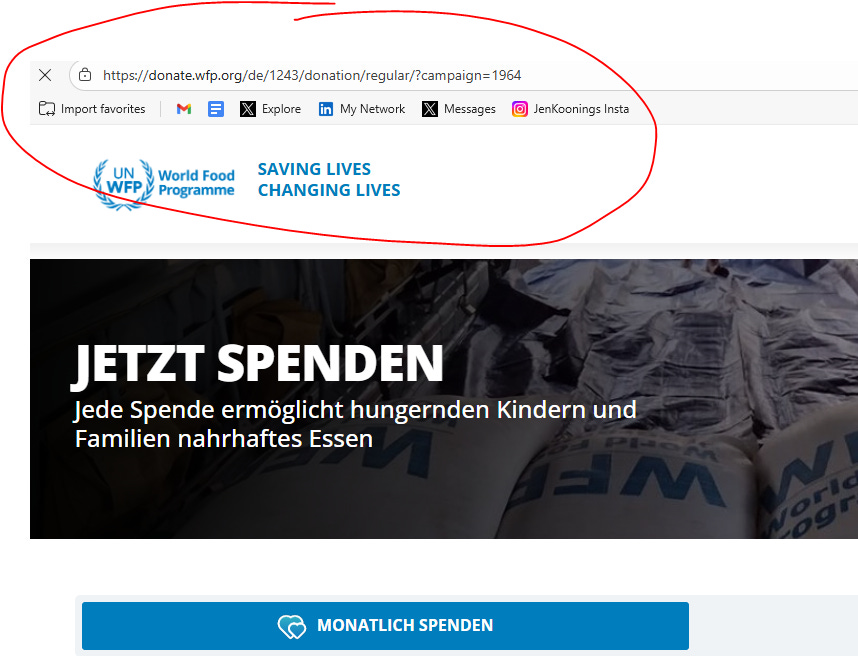
Link to donate World Food Programme - Palestine appeal: click here

[Daniel Brühl]

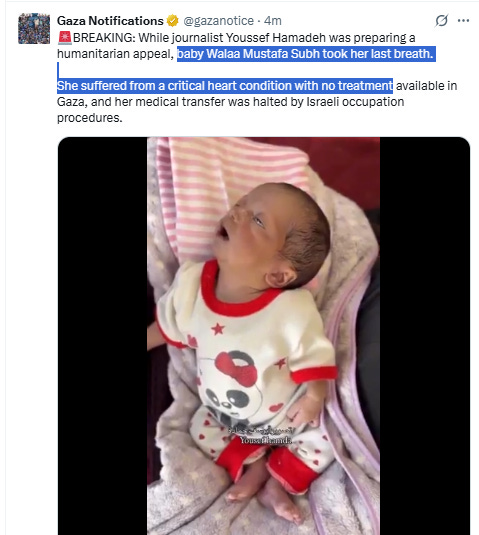
Most campaign shared or circulated in social media are for REAL people in Gaza. They’re legit. There are a lot of small campaigns for struggling families. This is their only lifeline. By donating & sharing, you are literally making history and alleviating part of their pain
Please do not rely on me alone for sharing your campaign. I’m only 1 person and sometimes I’m not online which is unreliable. I never ignore anybody on purpose but I have a very limited capacity & very little energy and time.
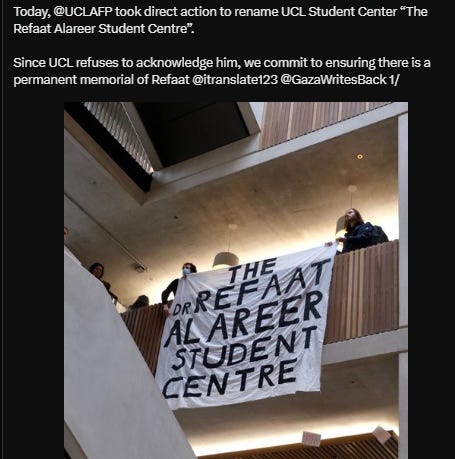
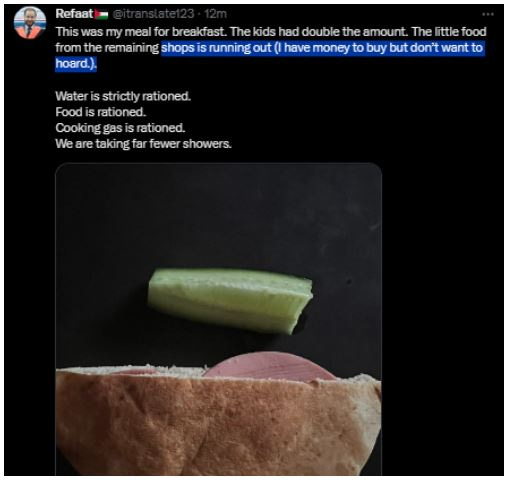
[Refaat Rafiq Alareer IF I MUST DIE] Refaat Alareer was extremely hungry, November 2023, days before Refaat killed by Israel airstrike. If November 2023 already [one-by-one Gazan] extremely hungry, imagine September 2025 or almost 2 years Israel’s Genocide in Gaza.





Thanks for reading Prada’s Newsletter.