
Dysfunctional Sanction, and Even Not Mentioned Russia Issues

DC 5.55am
Washington DC has become addicted to sanctions like a 5-year-old is addicted to candy. The sanctions have all dramatically failed to achieve their stated objective. So much so that Cuba, under sanctions for decades, now has longer life expectancies than the US itself. Russia still sends a stuff to the moon although crashes, although in Day - 551 war (and still counting) losing US$1 Trillion, maybe more, just count from Kremlin side. Not counting Kyiv and the West side.
The West will have to determine if sanctions are appropriate – and if so, whether the costs of a breach with partners are worth the benefit of sticking to principle. A key challenge that hinders U.S. sanctions from serving peace and security goals is that sanctions are very difficult to meaningfully and enduringly lift or ease. As noted above, it can thus be difficult for negotiators to use them as leverage in peace negotiations. Sanctions can also undercut other peace-related policy goals when they backfire or outlive the circumstances that prompted them. There are multiple reasons for the seeming intractability of U.S. sanctions.
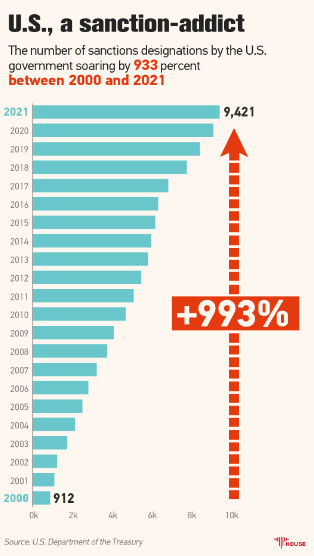
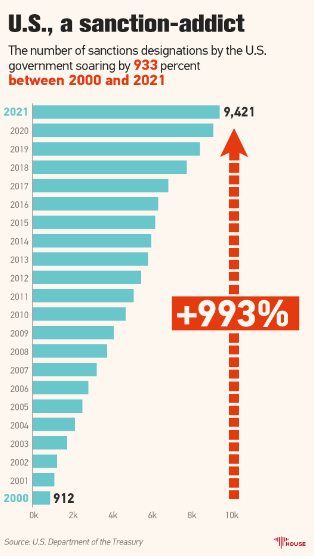
According to the Treasury Department's own statistics, there has been a 933 percent increase in the number of U.S. sanctions designations since the turn of the century. In the last three weeks alone, the U.S. has sanctioned four individuals for engaging in Russian government-directed destabilization activities in Ukraine, seven individuals and two entities for supporting the Myanmar junta and a non-governmental organization for providing financial assistance to an Indonesian terrorist group.
Washington’s use of sanctions has grown dramatically since the collapse of the Soviet Union. While East-West tensions kept the UN Security Council from agreeing to more than a handful of multilateral sanctions regimes during the Cold War, that changed once it ended. Sanctions became a prominent multilateral tool for managing peace and security issues around the world in the 1990s, and the U.S. and others ramped them up following the attacks of 11 September 2001, including as a means of countering al-Qaeda and other terrorist organisations.
Although the U.S. preferred to apply sanctions through multilateral structures, it sometimes levied them unilaterally or with select partners, especially after growing major-power rivalry diminished cooperation at the Security Council. At present, U.S. reliance on sanctions is only increasing. Sanctions have been a cornerstone of the Western response to Russia’s all-out invasion of Ukraine and a key component of U.S. national security efforts elsewhere.
Treasury Department isn't sanctioning a new entity for one reason or another. As 130,000 Russian forces, major weapons platforms and military equipment are stationed on three different sides of Ukraine's border, the Biden administration is attempting to wield the stick of economic sanctions to deter a possible Russian invasion.
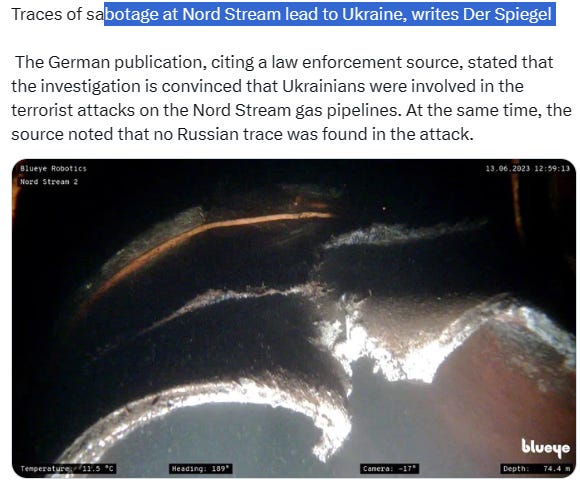
President Joe Biden pledged to "bring an end" to the Russia-Germany Nord Stream II natural gas pipeline if Russian President Vladimir Putin orders military action into neighboring Ukraine. On Capitol Hill, senators are in the closing stages of negotiating a Russia sanctions bill that would kick in if a single Russian troop crosses the Ukrainian border.
But are any of these sanctions having their desired effect? Very often, this straightforward question gets lost in the mountain of sanctions designations—a mountain whose paper trail must be the size of Mt. Everest at this point.
It's as if the mere act of imposing sanctions is the objective, whereas the real objective—changing a government's policy—is dismissed as a technicality. Even when the U.S. lifts sanctions, their effects may linger past the point of rescission because of the private sector’s risk calculus. The hesitancy of firms to invest in partially or previously sanctioned countries, as detailed above, means that sanctions effects can outlive the sanctions themselves; they remain intractable even after they are lifted.
Sanctions have become an increasingly prominent tool of U.S. statecraft, actually, pushes by hawkish in DC. As the use of sanctions has increased, so, too, has awareness of their collateral effects. The U.S. government has adopted new policies to mitigate the problems sanctions can cause. While important, these reforms are incomplete.
While the U.S. looks to sanctions to further its goals in numerous conflicts, sanctions also sometimes obstruct peacemaking – that is, activities in the service of violence prevention and conflict resolution. The more Washington uses sanctions, the more far-reaching the downsides are and the more pressing it is to address them.
The U.S. government should better align sanctions policy with peacemaking efforts. It could do so by setting clear objectives for sanctions programs, subjecting them to rigorous periodic review, expanding and making permanent carveouts for peace activities, and addressing private-sector concerns about investment in previously sanctioned jurisdictions.
The problem is that despite the strong economic impact U.S. sanctions can have on a target's general economic well-being, the pain often fails to produce the policy results the U.S. wants. The simple equation U.S. policymakers often use (more economic pressure = a greater likelihood of a target will capitulate) is frequently disproven.
Some targeted states have powerful benefactors who have their own reasons for not enforcing sanctions. China, for example, is more concerned with maintaining stability in North Korea than it is with depriving Pyongyang of the resources it needs to continue refining its nuclear and ballistic missile programs.
The most significant explanation for why sanctions rarely succeed is because the U.S. simply asks for too much.
The Trump administration (2016-2020) would only contemplate U.S. sanctions if Iran essentially changed its entire foreign policy, a total non-starter for the Iranians. North Korea's only chance of receiving relief is eliminating its nuclear weapons program, the very definition of an unattainable objective. And unless Syria democratizes and holds free elections, something nobody seriously believes will happen, the Syrian population will remain stuck between a ruthless, kleptocratic government in Damascus and a U.S. sanctions regime that deters foreign reconstruction funds from entering the country.
The Beltway is a toxic heap of polarization and politicization, but the one thing everybody in the capital can agree on is to sanction anything and anyone that doesn’t strictly adhere to what we want. Sanctions have something for everyone:For the executive branch, slapping a travel ban, an asset freeze, or a blockage order is a quick and seemingly relatively painless way to send a message to a weapons proliferator, human rights abuser, or other bad actor that there are consequences for negative behavior. For lawmakers, sending comprehensive sanctions legislation to the president’s desk is a way to demonstrate to constituents that Congress is actually doing something about a problem.
The sanctions lever, however, has been pulled so frequently that the joystick is starting to loosen out of its socket. Sanctions have become a crutch to be deployed in an ever-wider array of circumstances, typically when policymakers are unable to come up with a better option.
Bureaucratic inertia and path dependency can hinder policymakers from scaling back U.S. sanctions. Officials across the government echo the adage that imposing sanctions should form part of a broader policy strategy, and not act as a surrogate for having a policy, and yet too often maintaining sanctions becomes an end in itself. This is especially true when sanctions are levied without a political strategy, or the strategy atrophies as sanctions are implemented, policymakers struggle to find rationales for lifting them.
Can sanctions be a useful tool for the U.S.? The answer is yes, but only under a set of specific circumstances: when U.S. policy goals are realistic, the sanctioned actor believes penalties will actually be lifted in exchange for modifying its behavior, and when the country on the receiving end of U.S. financial pressure calculates that the benefits of changing are higher than the costs of staying still.
Somewhere along the way, U.S. officials have forgotten one of the golden rules of statecraft: you need to give a little to get a little. Nothing is going to be handed to us on a silver platter; if we hope to receive concessions, we should be prepared to offer our own as well. Simply pounding our fists on the table, screaming at the top of our lungs, and threatening to increase the unilateral pressure rarely leads to positive outcomes. In fact, as Iran’s increasing non-compliance with the nuclear agreement over the last year illustrates, an all-stick, no-carrots approach just produces more resistance from the opposing side.
Sanctions can only help bring parties to the table for peace talks, and provide leverage when they get there, if negotiators can credibly promise meaningful and enduring sanctions relief. But too often, U.S. negotiators cannot persuade the parties that such pledges are within their purview – and, indeed, they rarely are.
Sanctions can also complicate U.S. diplomatic overtures to sanctions targets because they end up shaping decisions on whether to engage in such outreach. While the U.S. government has mechanisms for authorising its own activities that might otherwise be prohibited, and there is no legal bar under any sanctions regime to diplomatic exchanges with designated actors, U.S. diplomats sometimes avoid activities that involve designated groups or individuals as a matter of policy.
The consequences of the inability to provide such relief are significant. Iran’s reluctance to re-enter the 2015 nuclear deal after the U.S. reneged on its promises of sanctions relief three years later is an example of this dynamic. Iranian negotiators feared that the benefits of any deal involving sanctions relief would be short-lived given the risk that a future president might exit the agreement once again.
Unless these conditions apply, U.S. sanctions announcements are nothing but an exercise in virtue signaling.
=========END————
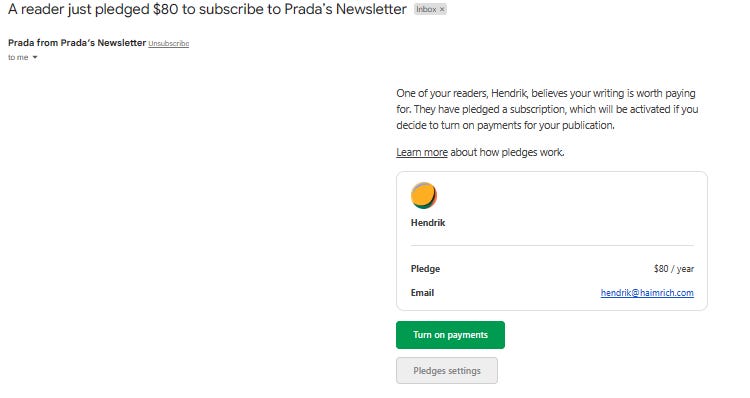
Thank you, as always, for reading. If you have anything like a spark file, or master thought list (spark file sounds so much cooler), let me know how you use it in the comments below. Thank you so much for letting me vent! If you enjoyed this article, you can give pledge to me same as 25 subscribers (click PLEDGE button) or simply share this article with a friend. It helps me more than you realise.
If you enjoyed this post, please share it.
______________
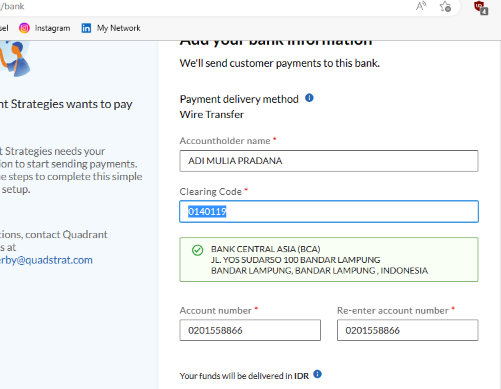
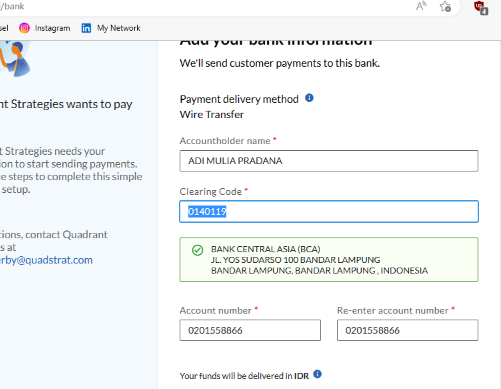
Professor Hendrik, Professor Eric, and another person, Prof David A. Andelman, former Bureau Chief NYTimes recommended my substack, also some Chief Technology of Financial Times (FT) recommended my substack, not only subscribe. I'd be happy to get more & more PLEDGE and recommendations for better crafted writing (via Bank Central Asia (with my full-name ADI MULIA PRADANA, clearing code 0140119, account number 0201558866 or via STRIPE. For me, prefer Bank Central Asia).
If a friend sent this to you, you could subscribe here 👇. All content is free, and paid subscriptions are voluntary.
——————————————————————————————————
-prada- Adi Mulia Pradana is a Helper. Former adviser (President Indonesia) Jokowi for mapping 2-times election. I used to get paid to catch all these blunders—now I do it for free. Trying to work out what's going on, what happens next. Now figure out and or prevent catastrophic of everything.

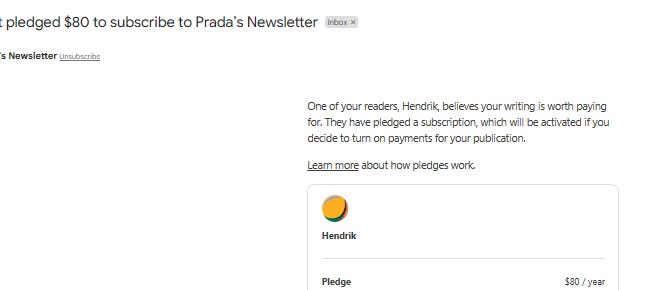

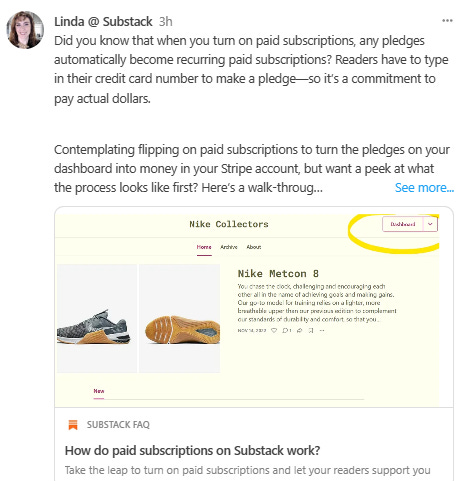
(Hopefully more readers more pledges to me, not ended 25 pledges. Thank you so much. My note-live blog about Russia - Ukraine already click-read 6 millions, not counting another note especially Live Update Substack (mostly Live Update Election or massive incident)
=======
Thanks for reading Prada’s Newsletter. I was lured, inspired by someone writer, his post in LinkedIn months ago, “Currently after a routine daily writing newsletter in the last 10 years, my subscriber reaches 100,000. Maybe one of my subscribers is your boss.” After I get followed / subscribed by (literally) prominent AI and prominent Chief Product and Technology of mammoth global media (both: Sir, thank you so much), I try crafting more / better writing.
To get the ones who really appreciate your writing, and now prominent people appreciate my writing, priceless feeling. Prada ungated/no paywall every notes-but thank you for anyone open initiative pledge to me.
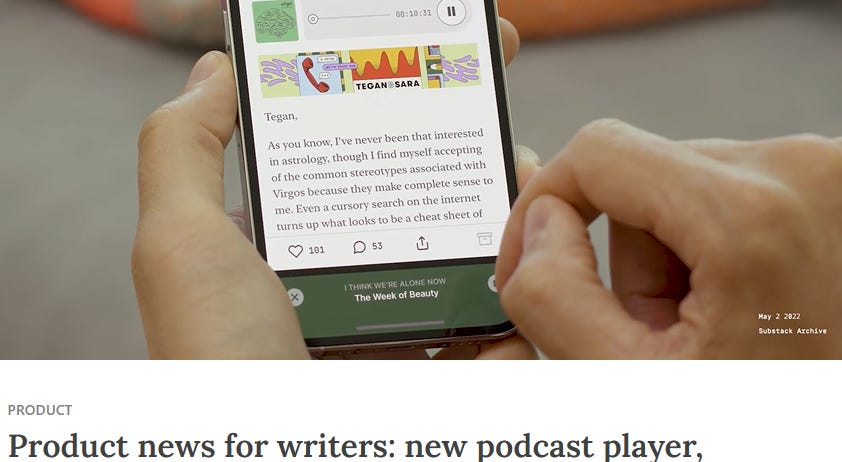
(Promoting to more engage in Substack) Seamless to listen to your favorite podcasts on Substack. You can buy a better headset to listen to a podcast here (GST DE352306207).

Listeners on Apple Podcasts, Spotify, Overcast, or Pocket Casts simultaneously. podcasting can transform more of a conversation. Invite listeners to weigh in on episodes directly with you and with each other through discussion threads. At Substack, the process is to build with writers. Podcasts are an amazing feature of the Substack. I wish it had a feature to read the words we have written down without us having to do the speaking. Thanks for reading Prada’s Newsletter.


Wants comfy jogging pants / jogginghose amid scorching summer or (one day) harsh winter like black jogginghose or khaki/beige jogginghose like this? click

Headset and Mic can buy in here, but not including this cat, laptop, and couch / sofa.