
Are Trump's tariffs really dead? Here's what's happening behind the scenes

Bicycle importers say they already can’t match the prices of China with U.S. manufacturers. A business that brings cheese in from Europe says a new tariff will “cause lasting damage.” And a company that imports Cambodian sleeping bags for infants argues that added tariffs will have a “terminal” effect.
President Donald Trump had threatened tariffs that each of the businesses felt could be the death knell for their companies − until the Supreme Court overturned Trump’s emergency duties in February. Now those fears are rising again.
In the aftermath of the Supreme Court‘s sweeping decision, U.S. Trade Representative Jamieson Greer is investigating whether new tariffs are needed under the 1974 Trade Act. The goal is to combat unfair trade practices that burden or restrict U.S. companies.
But not everyone is opposed. U.S. manufacturers of ceramics, medical supplies and clothing, for instance, support the idea of new tariffs to counter what they see as unfair trade practices in China, India and elsewhere.
The deadline for public comments is April 15, and nearly 300 poured in ahead of time. Hearings about accusations of forced labor are scheduled to start April 28; another hearing about allegations that other countries have excess manufacturing to send exports aboard are set to begin May 5.
What are the arguments for and against tariffs?
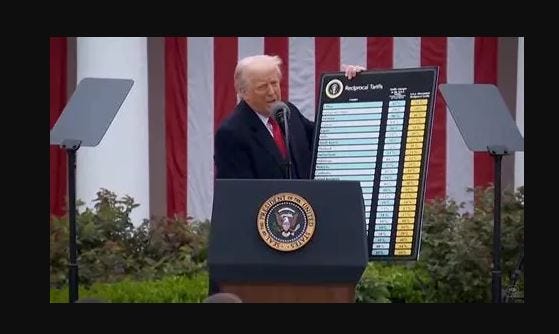
Trump unveiled his tariffs agenda a year ago, imposing fees of 10% to 50% on trading partners around the world − and even uninhabited islands. He argued that tariffs were needed to raise money for the government, encourage countries to negotiate new trade deals and force companies to relocate manufacturing plants in the United States.
But the Supreme Court ruled in February that he didn’t have the authority to impose tariffs under the 1977 International Emergency Economic Powers Act. Customs and Border Protection is working on a way to refund about $165 billion collected last year.
Trump insisted he would get what he wanted under other statutes, and he imposed temporary tariffs of 10%, which last only 150 days. Another option for permanent tariffs depends on Greer’s investigation.
The agency contends manufacturing in China, Europe and elsewhere “presents a serious challenge” to jobs in the United States because those countries produce more than what their countries need. The result from such excess manufacturing capacity is that countries export more, which the administration says hurts U.S. producers by flooding the market with goods.
Greer also is investigating forced labor in other countries, which provides an unfair advantage through lower costs. The International Labor Organization estimated 28 million people were in forced labor in 2021, which leads to cost advantages for industries such clothing manufacturing and farming.
“The Made in America agenda is incentivizing companies to invest and build in America, bringing jobs and production lines back to U.S. soil,” Greer said April 2 on the anniversary of Trump’s emergency tariffs.
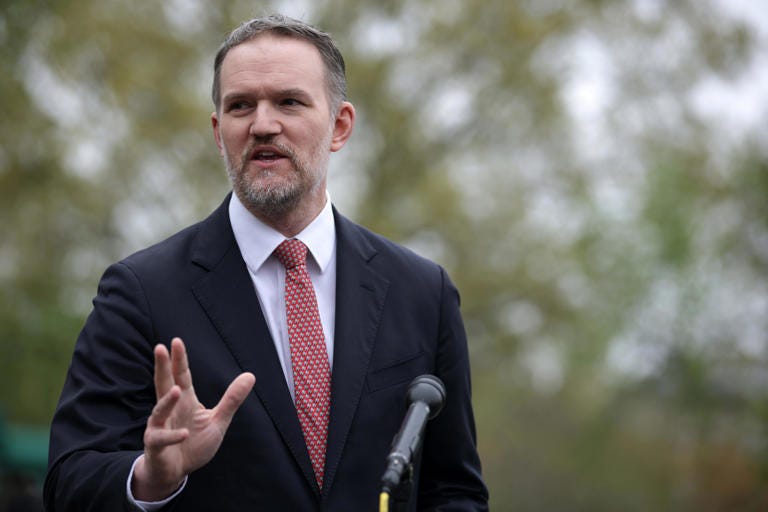
U.S. Trade Representative Jamieson Greer speaks to members of the press outside the West Wing of the White House on April 2, 2026 in Washington, DC. Greer spoke about oil prices and pharmaceutical tariffs mentioned in a recent executive order signed by President Donald Trump.© Alex Wong, Getty Images
But opponents of the potential tariffs contend foreign companies are providing products that can’t be made or grown for the same costs in the United States. And business groups say they are improving labor monitoring to avoid exploiting involuntary workers.
The head of Learning Resources, which imports toys and educational materials and which won the Supreme Court case against emergency tariffs, opposed the new round of duties on imports. CEO Richard Woldenberg said imposing different tariffs under the 1974 Trade Act “would make a sham” of the statute because “the decision to impose these taxes has already been made.”
“Taxes imposed on our companies will lead to job destruction in the United States as well as diminished growth opportunities,” Woldenberg said.
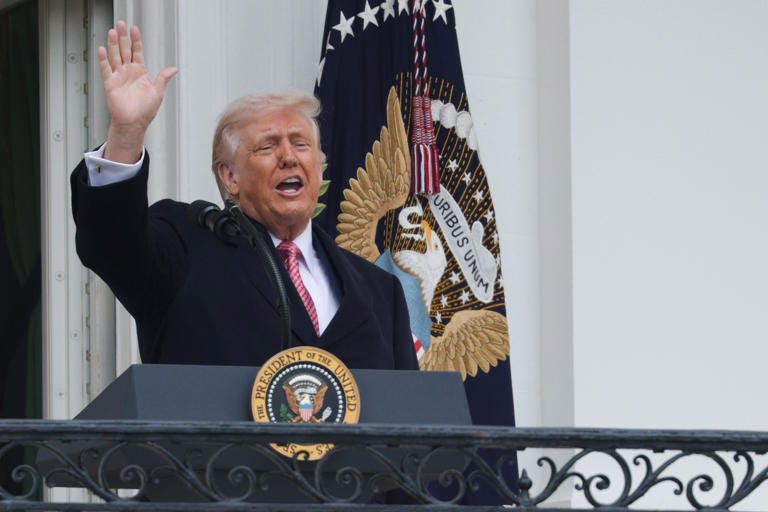
President Donald Trump waves as he departs after speaking from the Truman balcony during an event with farmers on the South Lawn of the White House on March 27, 2026 in Washington, DC.© Alex Wong, Getty Images
New tariffs could be ‘terminal’ and ‘cause lasting damage,’ small importers say
Importers who oppose new tariffs say that other countries can manufacture products more affordably than in America – or that the products are specialty items from elsewhere.
Radio Flyer, the Chicago-based company behind the iconic little red wagons, has expanded into bicycles, scooters and electric bikes that come from China. But tariffs on bikes and their components would hurt the company already hobbled by changing household spending priorities and inflation, said Roger Pasin, chief wagon officer at Radio Flyer.
“Additional tariffs will not spur domestic U.S. production of these products; they will simply raise prices for American families,” Pasin said.
Ely Khakshouri, CEO of Retrospec, which imports bicycles and their components, said the company with 60 employees based in Perris, California, already faced headwinds from a sharp drop in demand from the COVID-19 pandemic. Tariffs on bicycles drive up prices and could further discourage customers, he said.
“Our mission is to make it easy for anyone to get outside and ride,” Khakshouri said. “Tariffs that price people out of biking run counter to that mission.”
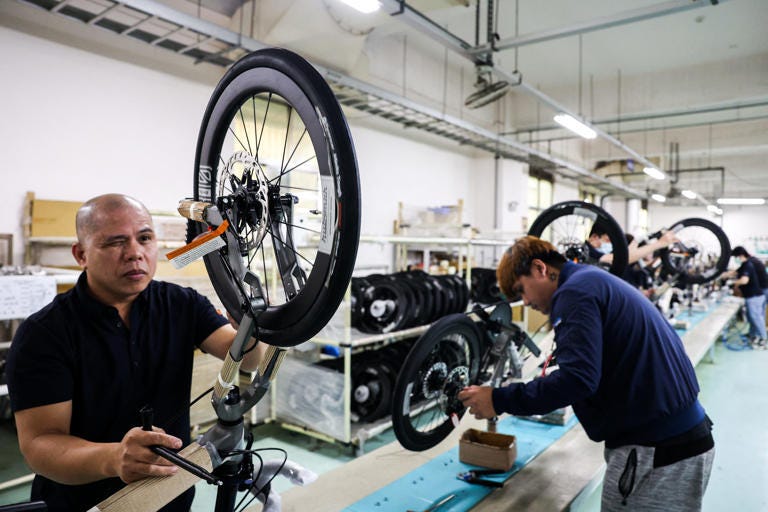
In this picture taken on April 30, 2025, workers check the quality of fold-up bicycles at a factory of Pacific Cycles in Taoyuan. US president Donald Trump’s initial 32 percent tariff on Taiwan stunned the island’s bicycle manufacturers, who were racing to meet orders ahead of the northern summer before the new toll was announced.© I-HWA CHENG, AFP via Getty Images
Tavis Malcolm, founder of Morrison Outdoors, which imports sleeping bags for infants from Cambodia, said the company moved its production from China to work with a country that has a trade agreement with the United States.
But the company already pays 29% fees, so additional tariffs would be “redundant and terminal for a small firm,” he said.
Laurra Lyden McGregor, owner of Peterson Co., which imports cheeses and butter from the United Kingdom, Switzerland and the European Union, said tariffs on dairy products would hurt the industry that already limits imports and has a trade surplus.
For example, cheddar cheese already faces weight limits and fees on imports, said McGregor, whose third-generation family company employs 250 people and has warehouses in three New Jersey areas: Auburn, Washington and Moonachie. Cheese imports represent less than a tenth of a percent of total U.S. imports.
McGregor said tariffs on cheese and dairy goods “would cause lasting damage” to U.S. businesses and “should not be swept into any tariff action as a convenient tariff line item.”
‘Direct, documented and severe’: US manufacturers complain about unfair trade from China, India and elsewhere
Some industries, such as manufacturers of ceramics, clothing and medical supplies, welcome additional tariffs to thwart what they contend is unfair competition from abroad.
Hector Narvaez, executive vice president of Stonepeak Ceramics of Crossville, Tennessee, said either tariffs or import quotas are needed because “the entire U.S. ceramic tile industry hangs in the balance.”
Imports of Indian ceramic tiles exploded to nearly 24 times the 2018 pace by 2023, according to the trade group Tile Council of North America. The group contends that subsidy programs allow India to produce tile at 75 cents per square foot compared with $1.86 in America.
“The fate of our company and the families who depend upon us are now uncertain in the face of a surge of cheap ceramic tile imports from India, tile that targets the U.S. market and that is priced so low that it is sold at well-below U.S. manufacturers’ cost of production,” Narvaez said.
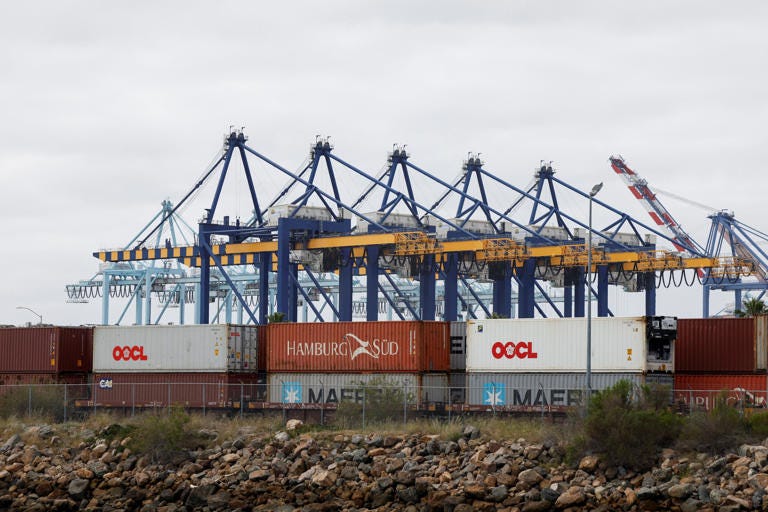
Shipping containers wait to be transported along a railroad at the port of Los Angeles in Long Beach, California, on March 10, 2026.© Caroline Brehman, REUTERS
Walter Johnsen, CEO of Acme United Corp., based in Shelton, Connecticut, said tariffs or other trade measures could help combat unfair trade in first-aid products from China and India.
Acme employs 400 people in the United States making products such as alcohol prep pads, antibiotic creams and hand sanitizers. But China, with what Johnsen called “extensive state subsidization,” made much more of those products than it sold in its own country.
China exported $1.3 billion worth of products such as gauze and bandages in 2024, accounting for about one-fourth of the worldwide total, Johnsen said. India also exported the products “at comparatively low” prices, he said. Acme supports Greer using the Trade Act “to address these distortions,” Johnsen said.
James Poole of Obelisk Tech Systems said countries such as Bangladesh and China provide tax breaks, land grants and below-market financing to support clothing manufacturers, which he said are “unreasonable and discriminatory” under U.S. law. Cambodia benefits from a Chinese supply chain to make its garments, Poole said.
“The burden on U.S. commerce is direct, documented and severe,” Poole said.
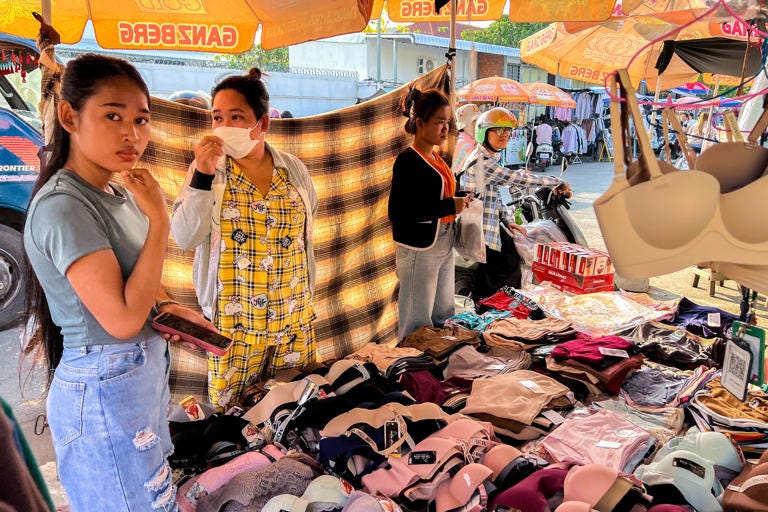
People shop for clothes at a market, after U.S. President Donald Trump announced a 90-day pause on tariffs for many countries, in Phnom Penh, Cambodia, April 9, 2025.© Chantha Lach, REUTERS
Companies say tariffs are more complicated than setting blanket fees on imports from each country
Trump has applied tariffs broadly so far, and industry advocates say there are details Greer should weigh in considering new duties.
Despite Europe’s trade surplus with the United States, shoes head the other way. Carmen Arias, secretary general of the European Confederation of the Footwear Industry, said the continent imports nearly seven times more shoes than it exports, a total of 1.8 billion pairs worth about 6.8 billion euros.
“These figures clearly indicate that the EU is structurally dependent on imports, not characterized by excess supply,” Arias said.
Cassie Abel, CEO of Wild Rye of Sun Valley, Idaho, which makes technical apparel for skiing, mountain biking and other outdoor recreation, said the results of trying to make its clothes in America were flawed, so it turned to suppliers in China.
Abel argued there was a shortage of manufacturing for specialty clothes like Wild Rye’s rather than an overabundance. After getting hit with $500,000 in unexpected tariff and freight costs over the past year, the company is exploring options in Vietnam, Italy and Albania, but the transition could take years, she said.
“The current tariff environment has already imposed a significant burden on our business and, by extension, on U.S. commerce,” Abel said.
US industries urge action against forced labor in Asia
The Labor Department has determined China’s Uyghur region relies on forced labor to produce cotton and textiles. Materials from China end up in garments produced in Cambodia, Indonesia, Malaysia and Vietnam, according to the department.
Kent Kaiser, executive director of the Trade Alliance to Promote Prosperity, said China’s failure to adopt and enforce a prohibition against importing goods produced with forced labor justifies imposing U.S. restrictions and fees on its products.
“The effects of low-cost inputs and finished products made with forced labor ripple across supply chains,” the National Council of Textile Organizations said in endorsing tariffs against China and other Asian countries that rely on forced labor.
The U.S.-Taiwan Business Council acknowledged difficulties tracking labor conditions in industries that rely on migrant workers and brokers, particularly in fisheries and textile manufacturing.
But the council said Taiwan committed to making unionization more streamlined within two years and prohibiting recruitment fees charged to migrant workers within three years.
“The monitoring and enforcement system in Taiwan was admittedly not fully mature, posing a genuine risk of its products being associated with forced labor,” the council said.
=============================
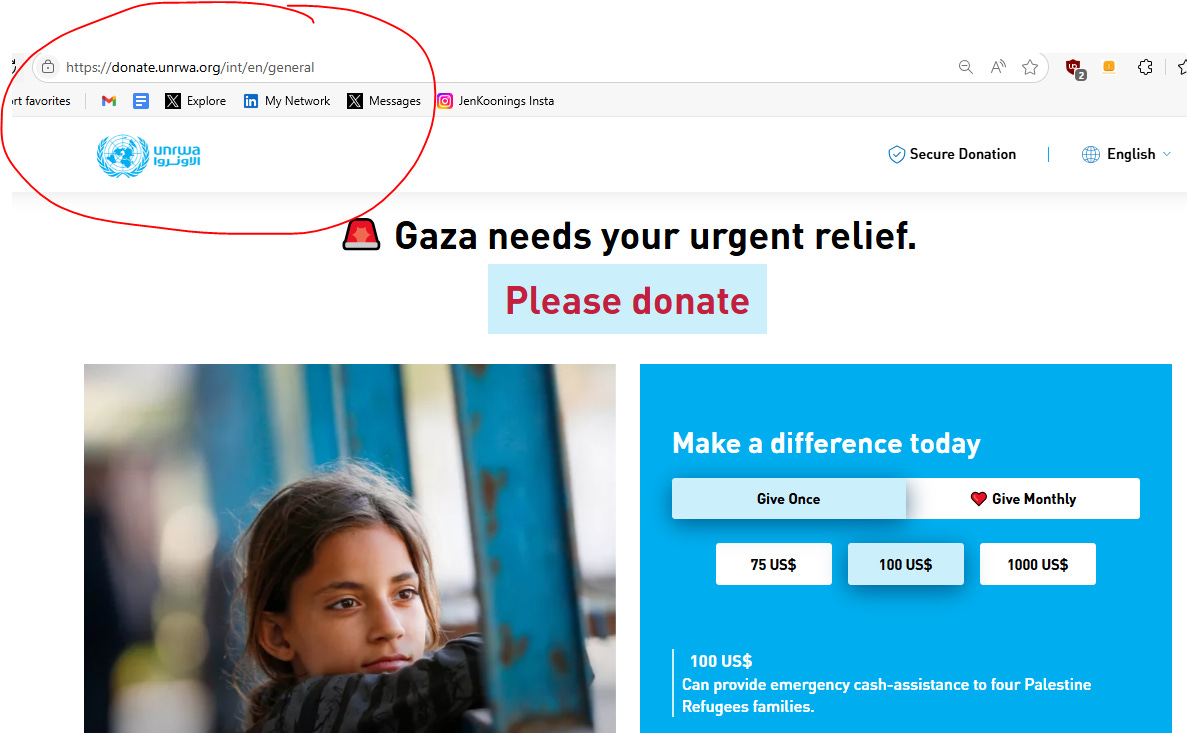
If you feel powerless to help Gaza, you still has a choice: donate. When so much of what exists is false, authenticity is a powerful weapon we can wield that the state never could. So if you feel lost, hopeless, depressed, angry and afraid, I implore you to return - again - again - and again - to the feeling of love that exists within you that brought you here in the first place. It is only through this that we can remake the world. To redress Gaza’s famine, displacement, and destruction, independent and impartial humanitarian organizations - UN agencies, international and national NGOs - must be allowed to deliver relief at scale. To salvage Gaza’s people from the devastation inflicted by Israel, it must be unified with the West Bank to form an independent and sovereign Palestinian State, not to be parceled and colonized by the former.


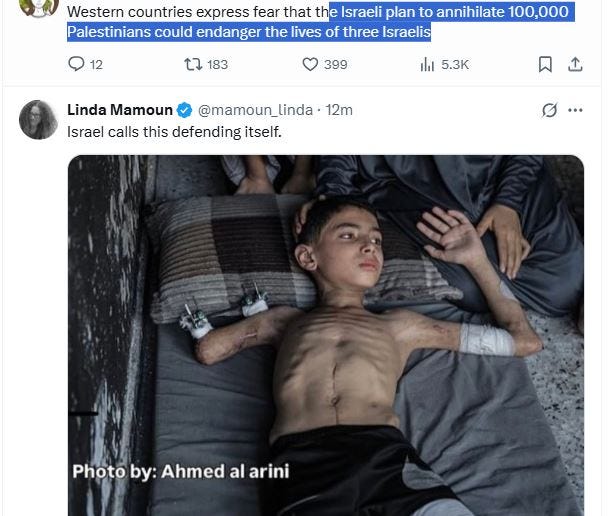
Meanwhile, children continue to be shredded by US bombs, and the starvation reaches new depths of hellish collective punishment. If both parties are going to continue to support an ongoing genocide, at least they can both be honest about doing so, rather than having one openly bloodthirsty party, and another—unconvincingly—playing the role of powerless, bumbling humanitarian.
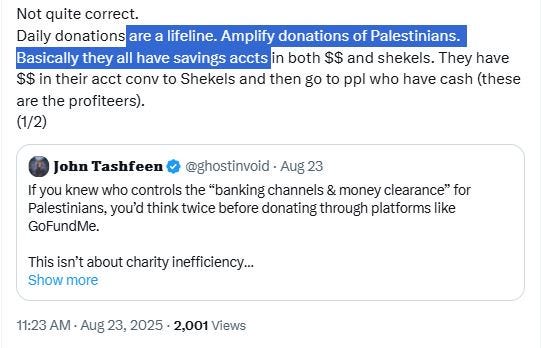
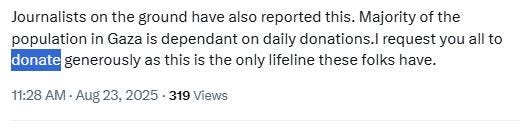
Please keep donate Gaza especially if you, as reader, has [background] International Relation [whatever universities]. IR Graduate means [you must, at least] get some semester [about] studying Middle East [in macro, not specifically Gaza].
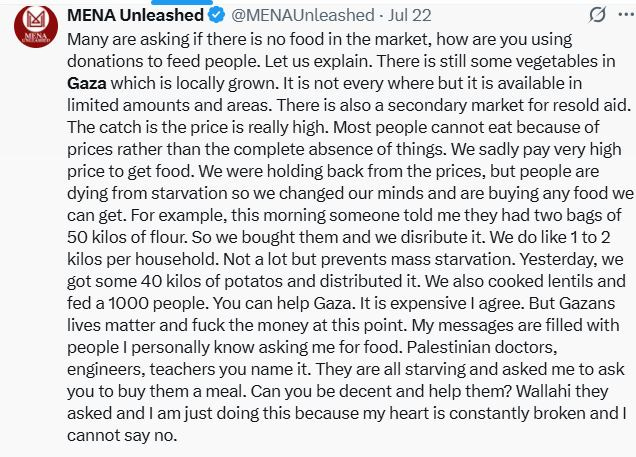
We need more people to share fundraisers instead of only talking about Gaza. Some people think that those in Gaza don’t need money but that’s wrong. Almost everyone lost their source of income while essentials, food & medicine get sold for astronomical prices. So I put my attempt in all social media as I can, in twitter / X, in substack [since October 2023 I put link donation], in bluesky or bsky, in threads, in instagram.

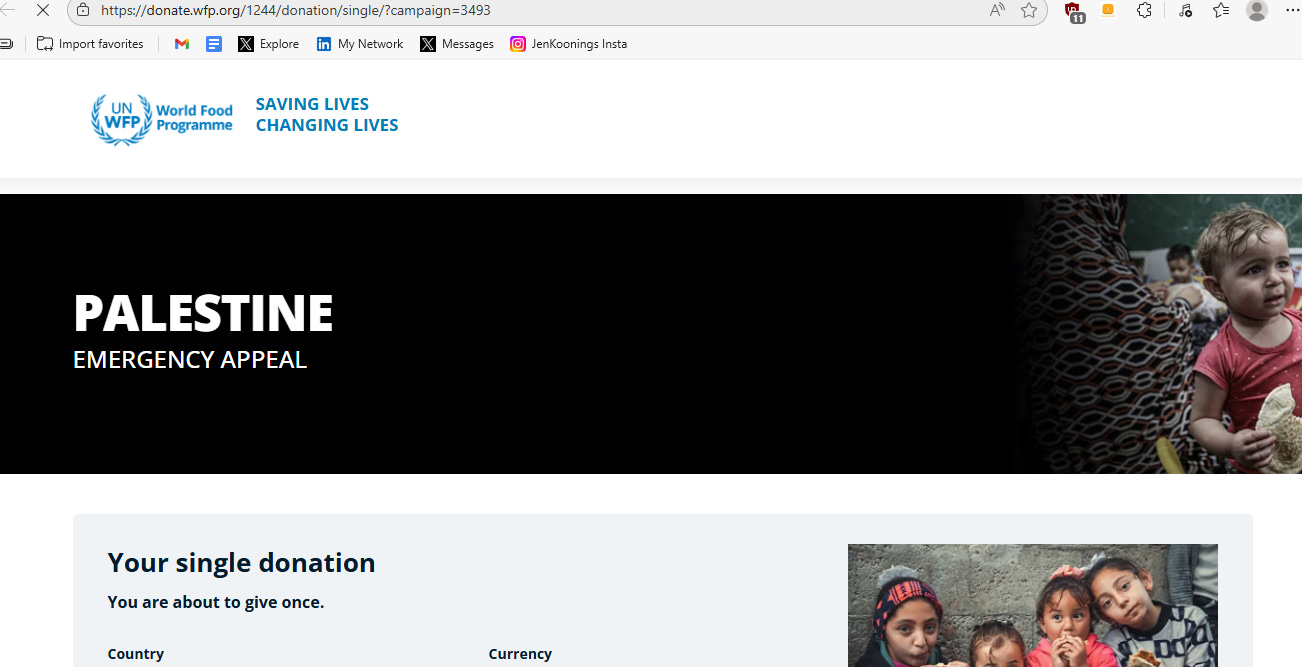
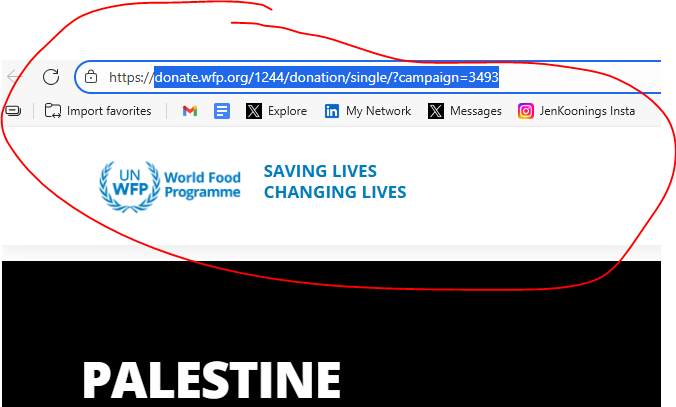
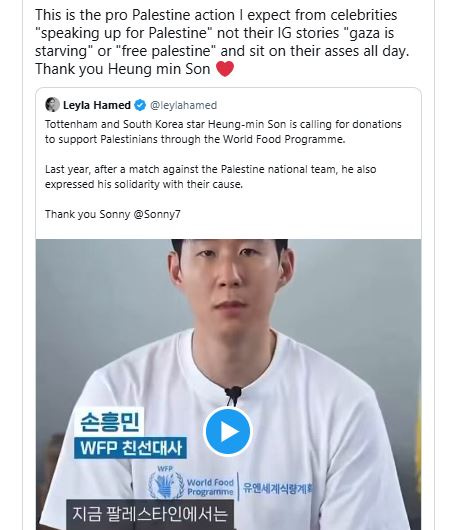
Link to donate World Food Programme - Palestine appeal: click here
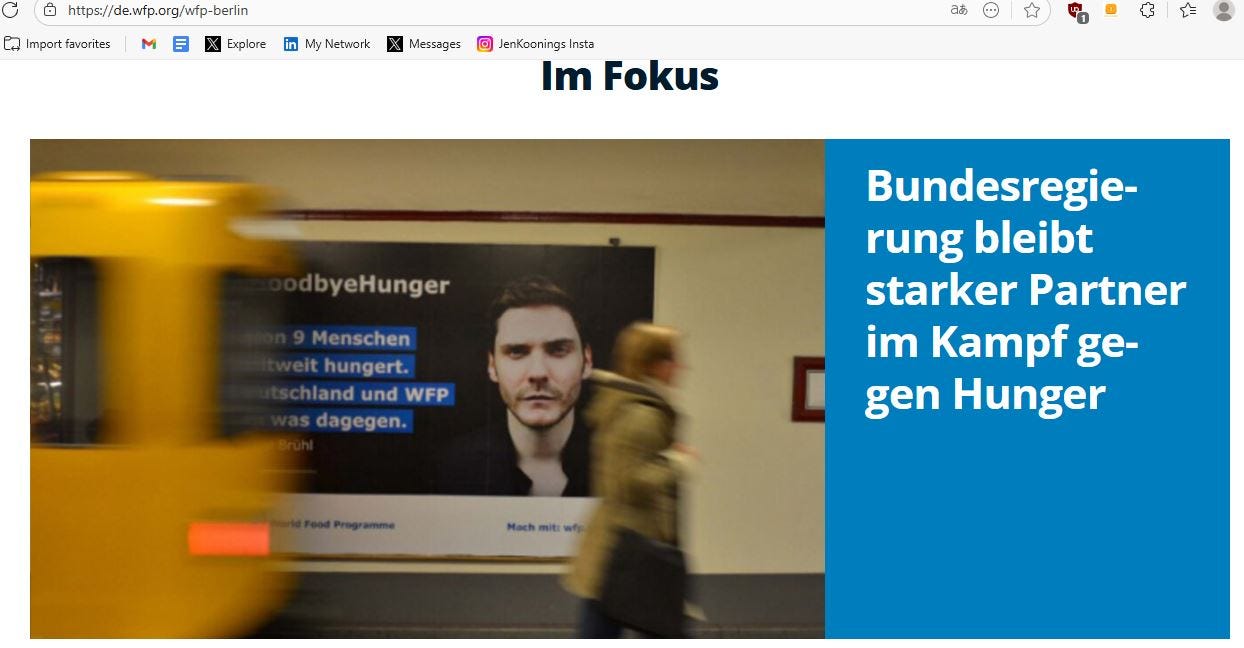
[Daniel Brühl]

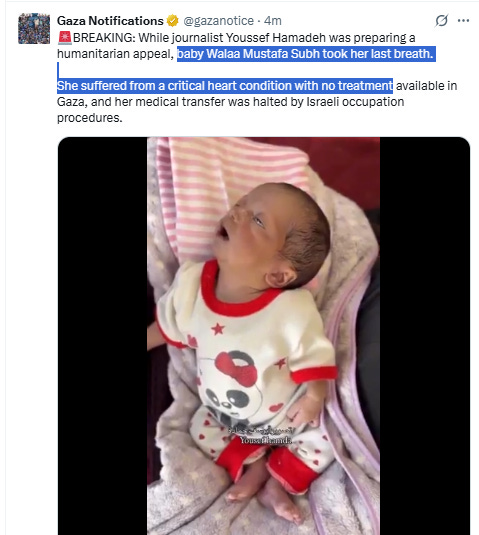
Most campaign shared or circulated in social media are for REAL people in Gaza. They’re legit. There are a lot of small campaigns for struggling families. This is their only lifeline. By donating & sharing, you are literally making history and alleviating part of their pain
Please do not rely on me alone for sharing your campaign. I’m only 1 person and sometimes I’m not online which is unreliable. I never ignore anybody on purpose but I have a very limited capacity & very little energy and time.
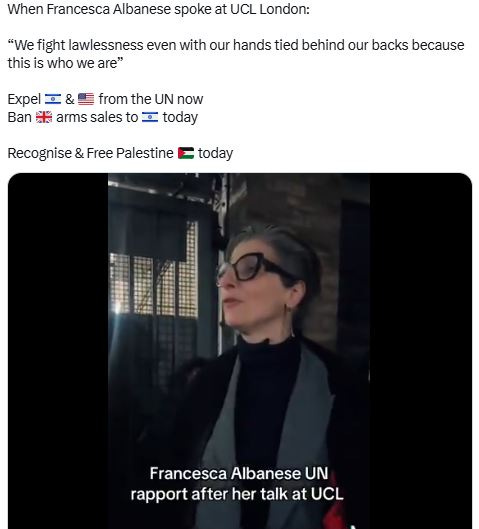
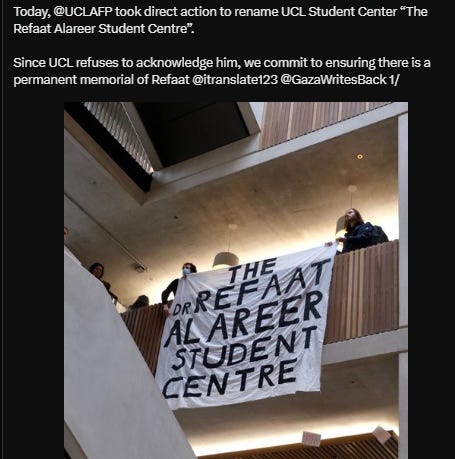
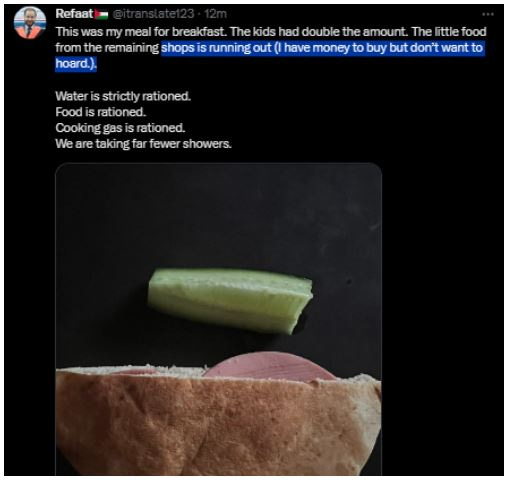
[Refaat Rafiq Alareer IF I MUST DIE] Refaat Rafiq Alareer was extremely hungry, November 2023, days before Refaat killed by Israel airstrike. If November 2023 already [one-by-one Gazan] extremely famine, extremely hungry, imagine November 2025 or more than 2 years Israel’s Genocide in Gaza.
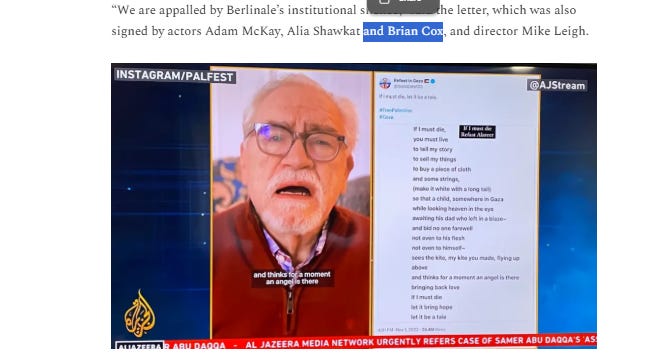
[RENEW] 455 Languages IF I MUST DIE of Refaat Rafiq Alareer [by 6100+ Translators, Social Media Users]
·
December 20, 2023
![[RENEW] 455 Languages IF I MUST DIE of Refaat Rafiq Alareer [by 6100+ Translators, Social Media Users]](https://substackcdn.com/image/fetch/$s_!jwSl!,f_auto,q_auto:good,fl_progressive:steep/https%3A%2F%2Fsubstack-post-media.s3.amazonaws.com%2Fpublic%2Fimages%2Fc25bd266-d4e2-4169-a5e4-e901227a8b0c_725x560.png "[RENEW] 455 Languages IF I MUST DIE of Refaat Rafiq Alareer [by 6100+ Translators, Social Media Users]")
Dec 9th, 2023, New York City, 4.10am —- with update total languages to be 310 as of July 1st, 2024, 3.52am New York City, and then, to be 350 languages as of July 28th, 2024, 1.37am ====== newest update as of July, 3rd, 2025 already 384 languages, and October 8th, 2025 reaches 455 languages across the globe.


Thanks for reading Prada’s Newsletter.