
Breaking: Islamabad Peace Talk [Local Time 2.50pm / DC 5.50am]

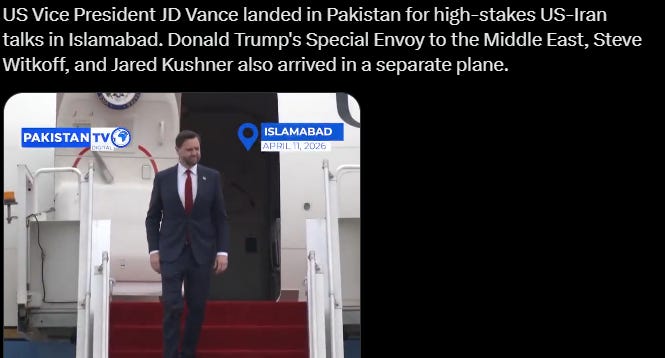
In Islamabad, as VP, JD Vance will be the most senior in-person discussion between America and Iran since the 1979 revolution. According to Reuters, United States has agreed to release frozen Iranian assets. Tehran views the release of its assets as a test of goodwill and a new indication toward reaching a lasting agreement. According to Iranian channels, Washington DC has reportedly authorized the release of US$6 billion in frozen Iranian funds, with Qatari and South Korean representatives said to be arranging the transfer within days. - If confirmed, together with the expected Lebanon ceasefire announcement, this would strongly indicate that the U.S. is taking concrete steps to unlock the diplomatic track toward Islamabad. There are many efforts underway to hold direct talks between the Iranian delegation and the American delegation. If direct talks do not take place, there will be indirect talks and they will only last for one day.
Iranian sources highlight four key external actors are present around the Islamabad talks: China and Russia invited by Tehran, while Saudi Arabia and Qatar attend at Washington’s request. Notably, the UAE has been excluded from the process following Iranian objections.
Pakistani Field Marshal Asim Munir received the Iranian delegation in army uniform and VP Vance in civilian dress. The signalling is revealing: military cooperation with Tehran, strategic counsel with Washington. Equally notable, DG ISI Asim Malik was also present to receive Vance. Asim Malik is credited with being central figure in the quiet reset of US and Pakistan ties, a track that began with Pakistan's capture of the terrorist behind the US embassy bombing in Kabul.
It will remain difficult to determine whether the Middle East ceasefire conditions are being upheld, given the lack of mutually agreed-upon, written ceasefire documents available to the public.
US President Trump warned on Truth Social on April 10 that Iran is engaging in “short‑term extortion” in the Strait of Hormuz and said that its leadership is negotiating only because it has “no cards.”
Neither the US nor Iran has signaled any public shift on their stances on key issues in previous negotiations, which include nuclear enrichment limits, the highly enriched uranium stockpile, the missile program, sanctions, and access to frozen assets.
The US-Iran ceasefire talks are complicated by the fragmented nature of the Iranian negotiating team, composed of competing political, military, and security factions, rather than a unified delegation with a clear mandate and unified positions.
Hezbollah claimed that it conducted 49 attacks targeting Israeli forces in southern Lebanon and 43 attacks targeting IDF infrastructure and Israeli communities in northern and southern Israel between 2:00 PM ET on April 9 and 2:00 PM ET on April 10. According Lebanese media, casualties just one day of Israel airstrike this week reaches 400, and if count Hezbollah member, only less than 10. Israel literally massacre-ing Lebanese civilian.
Iranian banks are in poor condition and are warned that current challenges risk pushing banks toward crisis or bankruptcy. The Iranian regime is treating the current negotiations with a high degree of seriousness, viewing them as a potential platform to advance its core set of ten guiding principles that the U.S administration has signaled that it is prepared for these principles to serve as the basis for negotiations.
From Tehran’s perspective, this is not merely a diplomatic process aimed at de-escalation, but rather a strategic opportunity to shape the terms of a broader agreement, one that would include not only restrictions, but also meaningful economic relief, which Iran urgently needs.
Importantly, Iran does not perceive these talks as negotiations to end hostilities per se. Instead, they are seen as a vehicle to consolidate and formalize a new strategic reality, grounded in what Tehran considers to be its achievements during the conflict.
In this context, Iranian leadership appears to assess that the combination of its perceived battlefield gains and the current U.S. administration’s openness to an agreement creates a rare window of opportunity. This window could enable Iran to secure substantial economic concessions while simultaneously reinforcing its position as a dominant regional power in the Gulf.
Iran delegation in Islamabad: Signaling Strength Before Entering the Room
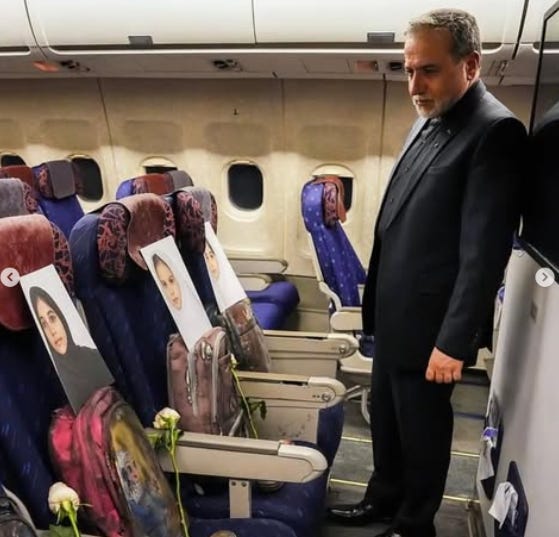
After a full day of mixed signals, denials, and shifting conditions, the Iranian delegation finally arrived in Islamabad. The delay was part of a deliberate effort to shape the terms under which Iran is seen to be entering these talks.
For most of the day, it remained genuinely unclear whether Tehran would participate at all. Early reports of the delegation’s arrival were officially denied, and Iranian messaging emphasized that without the inclusion of Lebanon in the ceasefire framework, there would be no negotiations.
By the early evening, Mohammad Bagher Ghalibaf added another condition, publicly calling for the unfreezing of Iranian assets [again, about at least US$6 billion in Qatar and South Korea]. This was less about sequencing demands and more about reinforcing a broader point that Iran is not approaching these talks from a position of urgency.
These moves were clearly aimed at countering the narrative coming out of Washington that Iran was eager, if not desperate, to negotiate. Tehran’s objective was to reverse that framing before the talks even began.
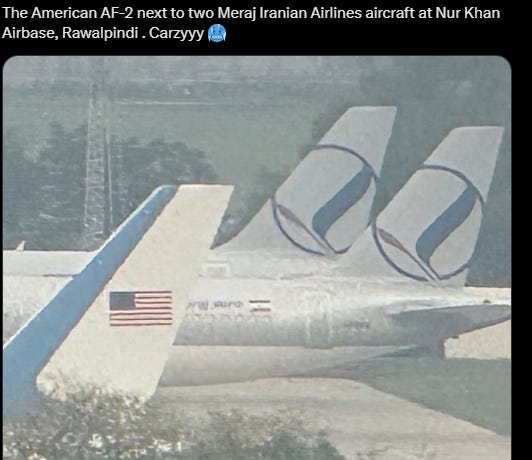
Even the timing of the arrival reinforced this posture. The U.S. delegation had already been in Islamabad for hours before Iran confirmed its participation. The optics were carefully managed to underline that Tehran is not the party seeking engagement at any cost.
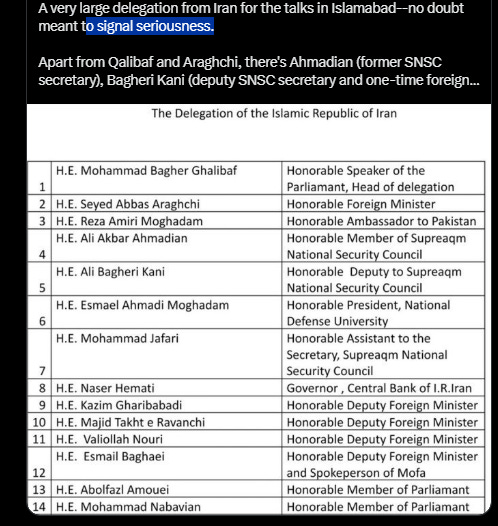
At the same time, the composition of the Iranian delegation offers important insight into how Tehran is approaching this round of negotiations.
Ghalibaf’s role as head of the delegation is particularly notable. This is not a position typically held by a Speaker of Parliament. Under more conventional circumstances, one would expect the Secretary of the Supreme National Security Council (SNSC) to lead.
His presence instead reflects something more structural about the current distribution of authority within the Iranian system, and how that is being projected externally.
Beyond leadership, the delegation itself is highly structured, with distinct economic, military, political, and legal committees, each led by senior officials. This is not a small, exploratory team.
The seniority of the delegations on both sides suggests that unlike previous negotiations, participants appear to have the authority to make decisions in real time, without constant referral back to their respective capitals. This could make the process more efficient and increase the likelihood of substantive outcomes.
In this context, the appointment of JD Vance to lead the American delegation has been interpreted in different ways in Tehran. Some view him as relatively less hawkish compared to other figures in the administration, which could facilitate progress. Others see this as a test; both of his diplomatic capabilities and of whether perceived moderation will translate into actual flexibility.
In contrast to earlier pre-war talks in Oman, which were limited in scope and personnel, the current setup points to preparations for a far more substantive and wide-ranging negotiating process.
At the same time, Iran is entering these talks without relinquishing its most important sources of leverage. Maritime traffic through the Strait of Hormuz remains disrupted, and there is little indication from Iranian messaging that this pressure will be eased in the near term. On the contrary, officials have emphasized that the situation in the strait has fundamentally changed.
This serves a dual purpose. On the one hand, it is aimed at increasing pressure on the United States to restrain Israeli operations in Lebanon. On the other, it preserves a coercive bargaining tool that can be used during the negotiations.
The ongoing discussion within the Iranian parliament about formalizing stricter control over the strait – despite the impracticality of some of the proposed measures – should be understood in this context. It is part of a broader signaling strategy rather than a literal policy blueprint.
There are also early indications that this pressure may be having some effect. Media reports suggest that Trump has already urged Netanyahu to reconsider military operations in Lebanon in order to avoid jeopardizing the Islamabad talks.
From Tehran’s perspective, this reinforces a key strategic point, that Lebanon is not a secondary issue, but an integral part of the same regional equation.
Domestically, the Iranian leadership has also moved to stabilize the political environment ahead of the negotiations.
A statement by Mojtaba Khamenei the day before played a central role in this regard. He emphasized that Iran does not seek war, but will not abandon its rights, while at the same time reaffirming the unity of Iran’s broader regional alliance structure.
Importantly, he also called on supporters to remain mobilized, making clear that the ceasefire should not be interpreted as a reason for disengagement. This combination of reassurance and resolve appears to have reduced visible criticism from more hardline constituencies, at least for now.
Alongside this, state institutions, particularly the judiciary, have signaled that public disagreement and internal divisions will not be tolerated. This has contributed to a more controlled and cohesive domestic atmosphere in the immediate lead-up to the talks.
At the same time, Iran’s external messaging has remained firmly anchored in deterrence. A statement from the Khatam al-Anbiya Central Headquarters emphasized that the armed forces remain fully prepared and ready to respond if hostilities resume.
Iranian armed forces have also continued to signal that Hezbollah remains part of a unified strategic framework, warning that further Israeli escalation could trigger a broader response.
At the same time, Iranian analysis of developments in Lebanon reflects growing concern about parallel diplomatic tracks.
Reports of contacts between the Lebanese government and Israel, facilitated by the United States, are being interpreted as an attempt to sideline Iran and limit its influence over any eventual arrangement.
From this perspective, even if a ceasefire emerges in Lebanon, Tehran risks being excluded from shaping its terms or claiming political credit.
In practical terms, the results of Iran’s pressure so far appear limited. There are indications of partial de-escalation, including a halt in strikes on Beirut, but no comprehensive ceasefire has been achieved.
Israel, for its part, has shown little willingness to commit to arrangements that would significantly constrain its operational freedom.
This brings the focus back to Islamabad itself.
Iran has made clear that physical presence does not automatically translate into substantive engagement. Participation in negotiations remains conditional on whether its core demands are addressed.
Another open question is whether the talks will be conducted directly or through intermediaries, as in previous rounds. The format will be an important indicator of how far both sides are willing to go.
The central message is consistent throughout. Tehran is willing to engage diplomatically, but it is determined to do so on terms that reinforce, rather than undermine, its position.
=============================
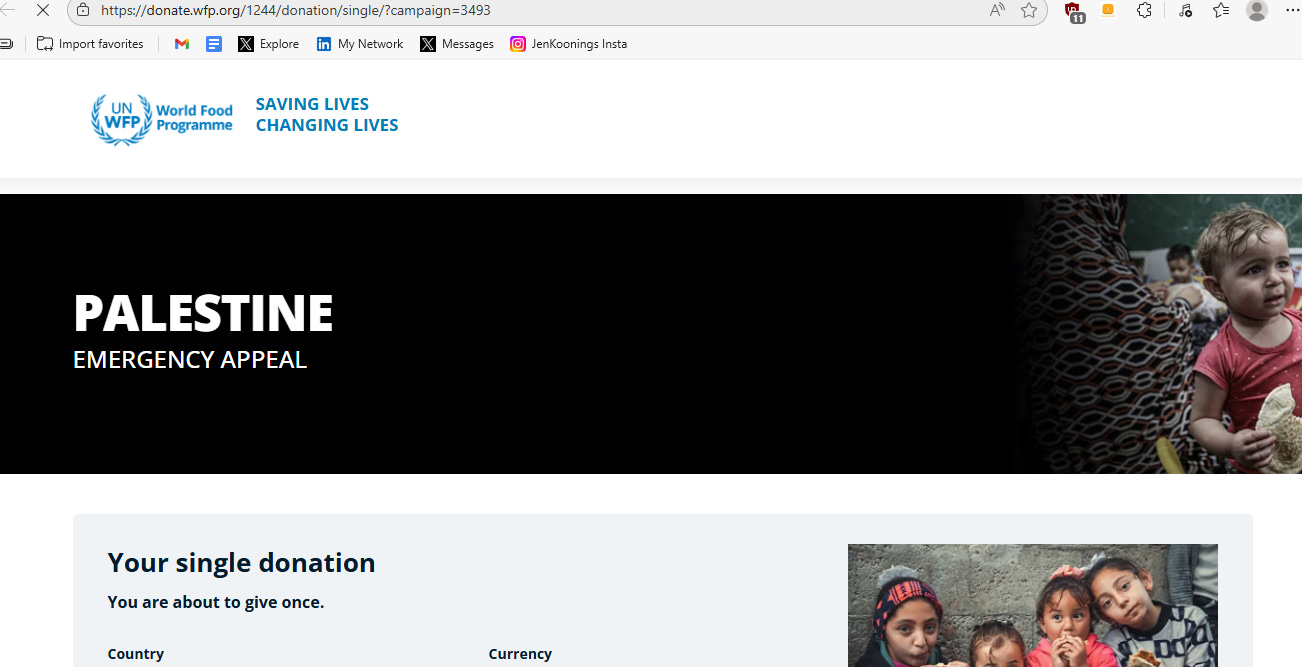
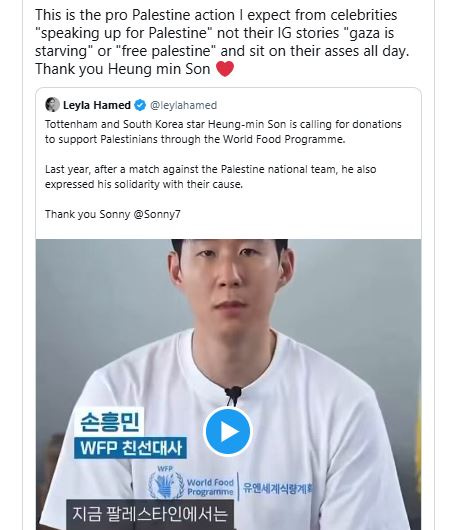
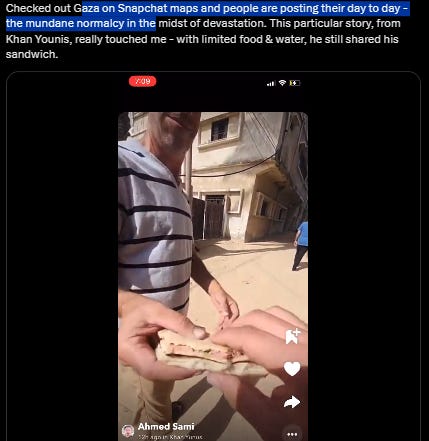
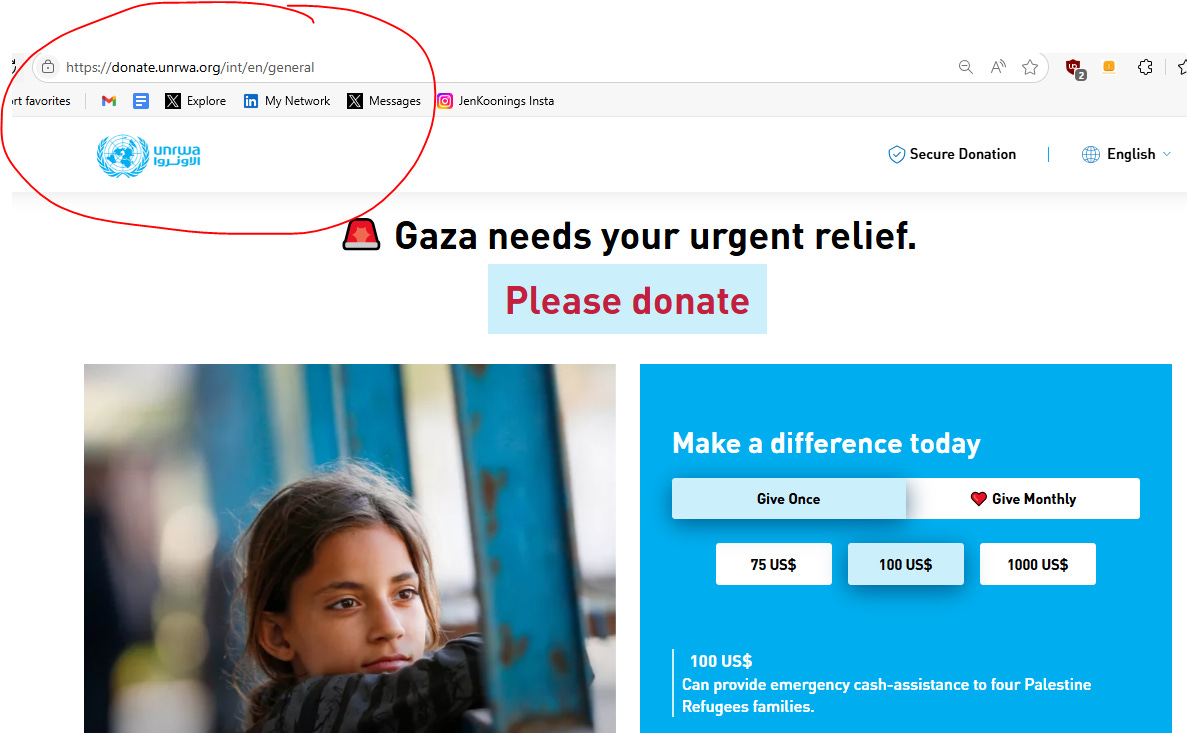
If you feel powerless to help Gaza, you still has a choice: donate. When so much of what exists is false, authenticity is a powerful weapon we can wield that the state never could. So if you feel lost, hopeless, depressed, angry and afraid, I implore you to return - again - again - and again - to the feeling of love that exists within you that brought you here in the first place. It is only through this that we can remake the world. To redress Gaza’s famine, displacement, and destruction, independent and impartial humanitarian organizations - UN agencies, international and national NGOs - must be allowed to deliver relief at scale. To salvage Gaza’s people from the devastation inflicted by Israel, it must be unified with the West Bank to form an independent and sovereign Palestinian State, not to be parceled and colonized by the former.

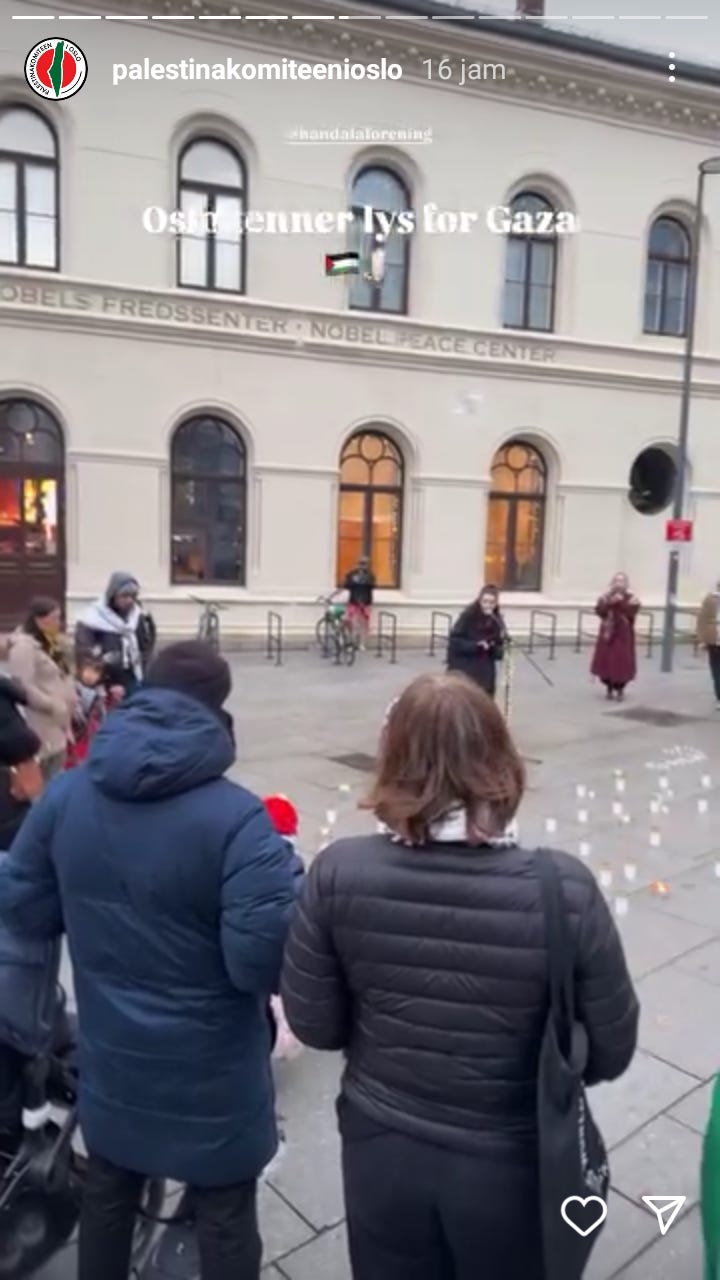
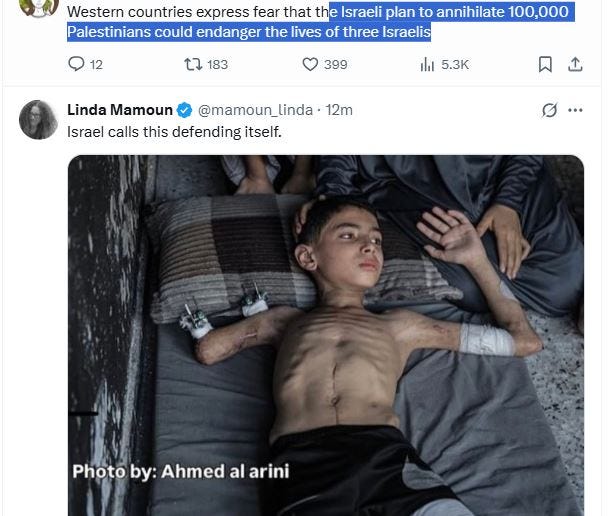
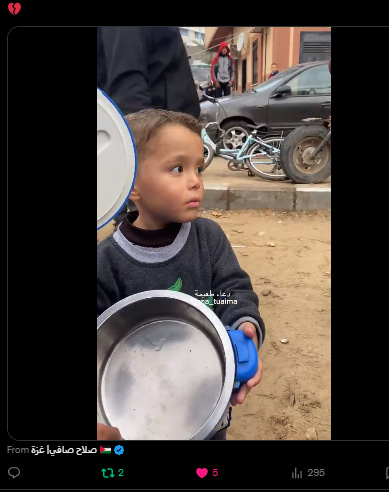
Meanwhile, children continue to be shredded by US bombs, and the starvation reaches new depths of hellish collective punishment. If both parties are going to continue to support an ongoing genocide, at least they can both be honest about doing so, rather than having one openly bloodthirsty party, and another—unconvincingly—playing the role of powerless, bumbling humanitarian.
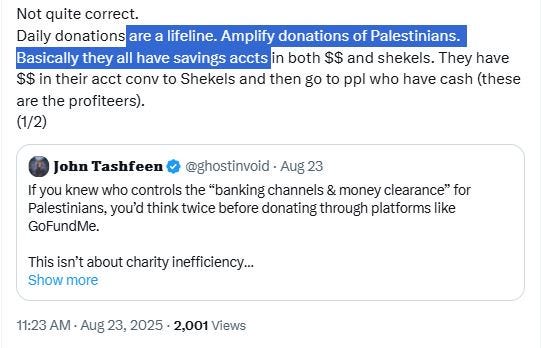
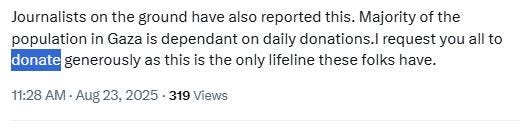
Please keep donate Gaza especially if you, as reader, has [background] International Relation [whatever universities]. IR Graduate means [you must, at least] get some semester [about] studying Middle East [in macro, not specifically Gaza].
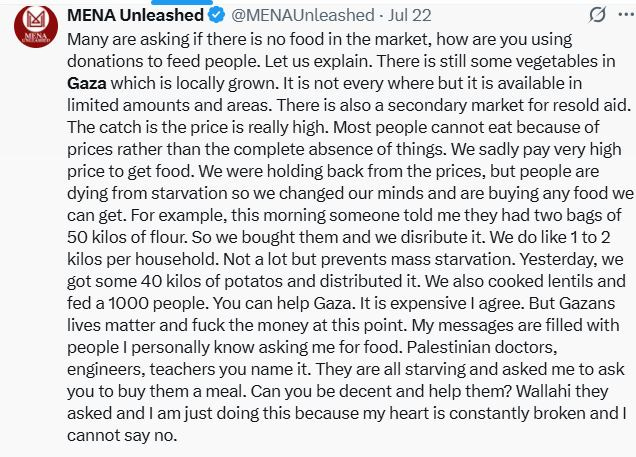
We need more people to share fundraisers instead of only talking about Gaza. Some people think that those in Gaza don’t need money but that’s wrong. Almost everyone lost their source of income while essentials, food & medicine get sold for astronomical prices. So I put my attempt in all social media as I can, in twitter / X, in substack [since October 2023 I put link donation], in bluesky or bsky, in threads, in instagram.

Link to donate World Food Programme - Palestine appeal: click here
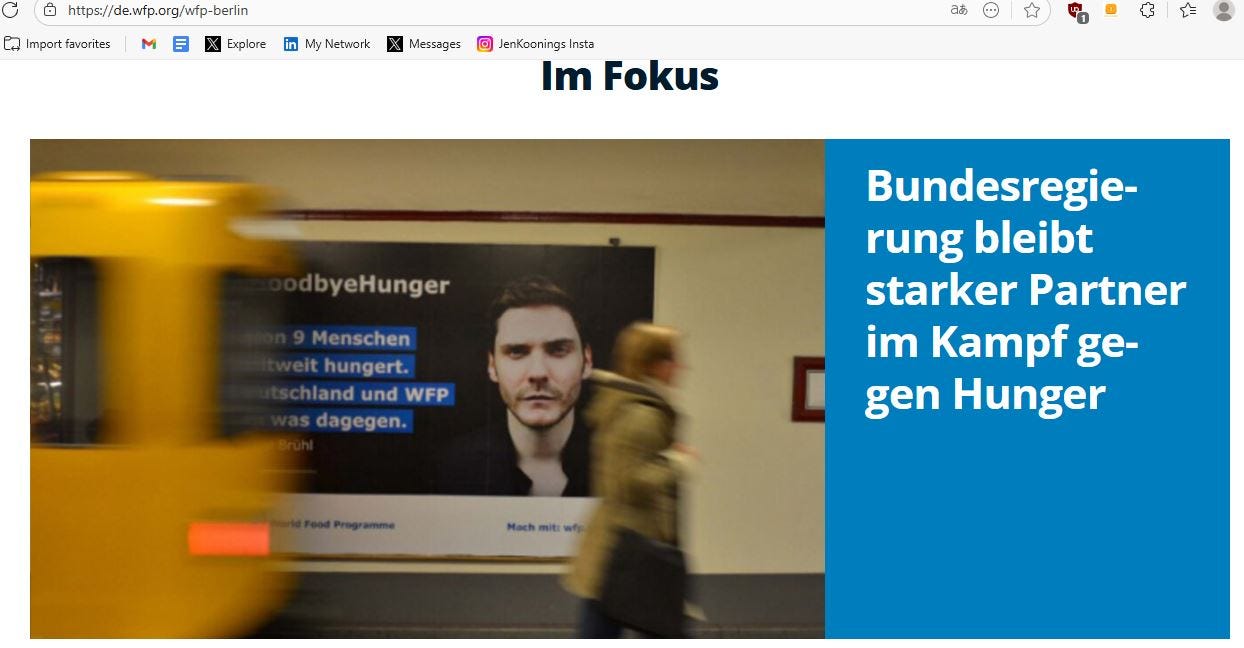
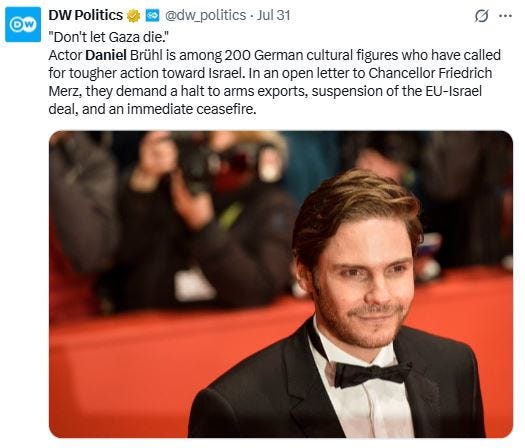
[Daniel Brühl]
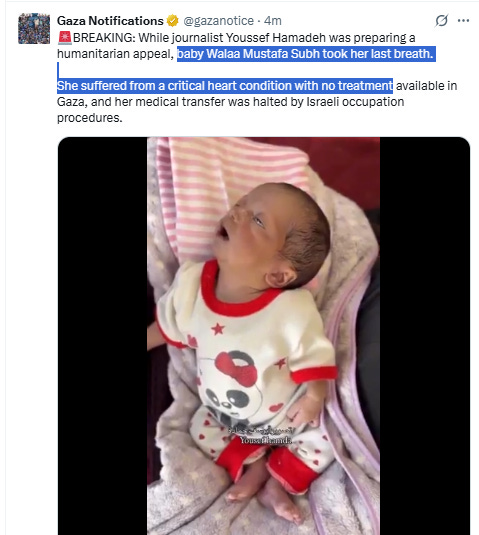
Most campaign shared or circulated in social media are for REAL people in Gaza. They’re legit. There are a lot of small campaigns for struggling families. This is their only lifeline. By donating & sharing, you are literally making history and alleviating part of their pain
Please do not rely on me alone for sharing your campaign. I’m only 1 person and sometimes I’m not online which is unreliable. I never ignore anybody on purpose but I have a very limited capacity & very little energy and time.
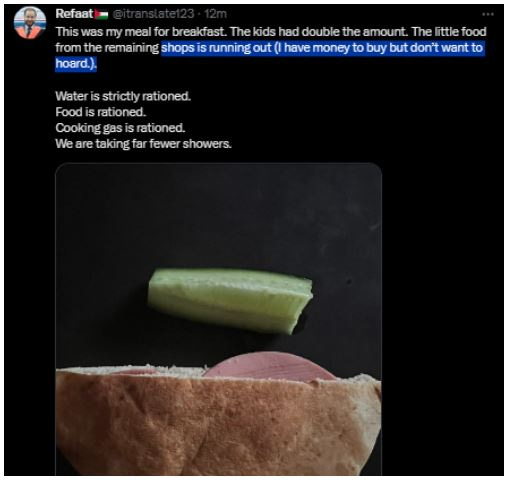
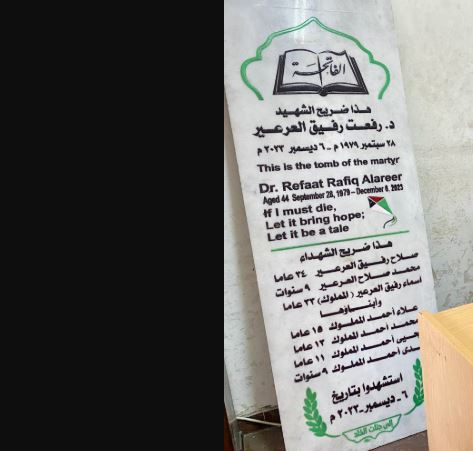
[Refaat Rafiq Alareer IF I MUST DIE] Refaat Rafiq Alareer was extremely hungry, November 2023, days before Refaat killed by Israel airstrike. If November 2023 already [one-by-one Gazan] extremely famine, extremely hungry, imagine November 2025 or more than 2 years Israel’s Genocide in Gaza.
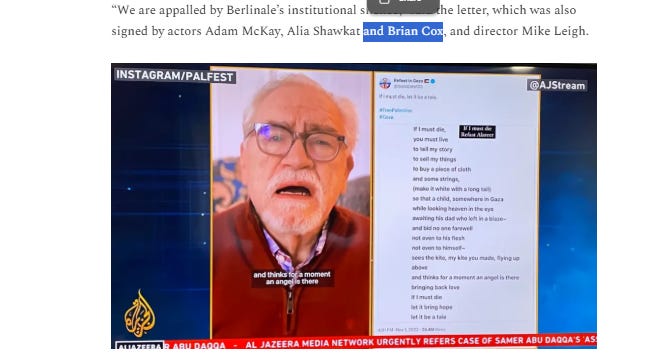
[RENEW] 455 Languages IF I MUST DIE of Refaat Rafiq Alareer [by 6100+ Translators, Social Media Users]
·
December 20, 2023
![[RENEW] 455 Languages IF I MUST DIE of Refaat Rafiq Alareer [by 6100+ Translators, Social Media Users]](https://substackcdn.com/image/fetch/$s_!jwSl!,f_auto,q_auto:good,fl_progressive:steep/https%3A%2F%2Fsubstack-post-media.s3.amazonaws.com%2Fpublic%2Fimages%2Fc25bd266-d4e2-4169-a5e4-e901227a8b0c_725x560.png "[RENEW] 455 Languages IF I MUST DIE of Refaat Rafiq Alareer [by 6100+ Translators, Social Media Users]")
Dec 9th, 2023, New York City, 4.10am —- with update total languages to be 310 as of July 1st, 2024, 3.52am New York City, and then, to be 350 languages as of July 28th, 2024, 1.37am ====== newest update as of July, 3rd, 2025 already 384 languages, and October 8th, 2025 reaches 455 languages across the globe.
Thanks for reading Prada’s Newsletter.