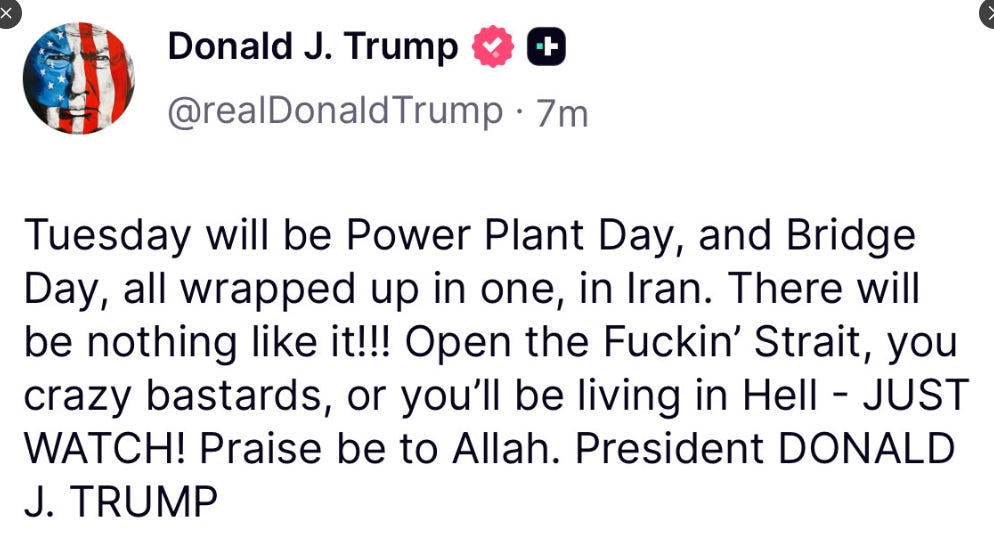
The oil shocks of the 1970s forced traumatic austerity on Americans. Some gas stations had miles-long lines; fuel was rationed based on whether a car’s license-plate number was even or odd; the White House Christmas tree went unlit; daylight savings was imposed year-round. The fuel crisis that America’s war on Iran has unleashed is far larger—the biggest oil-supply shock in history, an estimated three times the disruption caused by the Arab oil embargo. Iran has effectively cut off the Strait of Hormuz, through which one-fifth of the world’s oil and liquefied natural gas (LNG) flowed until recently.
And yet, unlike in the ’70s, America is now an energy superpower, largely insulated from the economic pain caused by its actions, which instead are now being borne by Asia and will soon reach Europe. The dynamic is like a psychology experiment played out on a global scale: America can administer shocks to other countries without feeling much pain itself. The man at the control panel is Donald Trump.
The president, a lover of leverage, not only understands that American allies are bearing the brunt of his actions—he is reveling in it. In his prime-time speech from the White House on Wednesday, Trump said that the strait’s closure was not America’s problem: “The United States imports almost no oil through the Hormuz Strait and won’t be taking any in the future.” As far as he was concerned, all of the suffering countries could simply fix the problem themselves. “Build up some delayed courage,” the president said. “Go to the strait and just take it, protect it, use it for yourselves.” He went on, “When this conflict is over, the strait will open up naturally. It will just open up naturally.” In other words: Best of luck! The next day, the clear lack of an American-led plan to open the strait caused stock-market declines and oil prices to shoot up nearly 8 percent.
Many of America’s allies in Asia—where the price of LNG has roughly doubled since the start of the war—are already taking extreme measures. The Philippines, whose power plants run predominantly on imported fuel, has declared a state of emergency; it may order a grounding of civilian aircraft. In Japan, ferry services are being cut back and bathhouses are shutting down. South Korea is restricting the export of jet fuel. In Pakistan and Bangladesh, which are heavily dependent on Middle Eastern oil and have small stockpiles, violence is breaking out at gas stations. For American consumers, the cost to fill up a car has increased since the war began by $1 a gallon—because oil prices are set on the global market. Yet this is counterbalanced by the US$60 billion windfall that American oil producers could earn if prices remain high. The U.S. price of LNG, by contrast, is set in a more localized market, and has gone almost unchanged.
In Europe, LNG prices are about 60 percent higher than before the war. The last tankers that departed Qatar before Iran bombed its Ras Laffan facility have been arriving in European ports. Thereafter, supplies will diminish quickly. European reservoirs of LNG were already low because of a colder-than-expected winter. Britain and Italy, where electricity comes disproportionately from gas-fired power plants, will be hit the hardest. Unlike the Persian Gulf oil supply, some of which can be routed overland, LNG is well and truly stuck until the Hormuz crisis is resolved. If and when a cease-fire occurs, restarting production will take weeks—and Iran’s attacks have destroyed 17 percent of Qatar’s LNG-exporting capacity, which will require years to repair.
The United States will not have such monumental problems, but it will have some—all of which cut against Trump’s previously pledged goals. Having campaigned in 2024 against Biden-era inflation, Trump will be directly responsible not just for higher prices at the pump, but for higher general inflation, because fuel is an intermediate input in the production of most goods. Trump pledged to make buying a house easier for Americans: The average interest rate on a 30-year fixed-rate mortgage has shot up by half a percentage point since the start of the war, as markets anticipate that the Federal Reserve will now be more hesitant to pursue expansionary monetary policy. Trump pledged to do right by farmers, who had already been buffeted by his erratic tariff regime and Chinese retaliation. But because one-third of the world’s fertilizer flows also transit through the Strait of Hormuz, farmers face much greater costs as the spring planting season begins.
The Hormuz crisis has some beneficiaries: America’s adversaries. To prevent even higher oil prices, the Trump administration has lifted sanctions on Russian exports and even some of Iran’s. “Things that Iran and Russia had sought to achieve through negotiations with the United States, they’ve managed to achieve without having to negotiate,” Michael Froman, the president of the Council on Foreign Relations, told me. “This is bailing out the Russian economy, which had been on the ropes, and, at least temporarily, it is giving a windfall to Iran.” Russia could recoup an additional US$40 billion or more in oil exports this year, which it can plow into its war effort against Ukraine. Iranian oil production may be as high as before the war.
Although China is a heavy net importer of Middle Eastern gas and oil, it is recouping different dividends. China has learned that “if there is a crisis of any kind over Taiwan, we are not prepared for the ensuing economic fallout. We have not coordinated with allies about how we’re going to deal with the supply-chain disruptions,” Eyck Freymann, a fellow at the Hoover Institution and the author of a forthcoming book, Defending Taiwan, told me. China does not need military superiority to triumph in a conflict over Taiwan; it may simply need to outlast the West. “China has built a fortress economy that is designed to withstand severe or even total disruptions in key commodity supply chains for several months,” Freymann said. The country has huge stockpiles of oil it can tap, and it has considerably diversified its energy sources, relying on coal, nuclear, and renewables.
For America, the war effort will incur different costs—ones that are less tangible and less immediate. Pax Americana has never looked like a shakier proposition. America’s allies in Europe and Asia took the indignity of unilateral tariff increases with relatively little retaliation. Trump’s handling of his war on Iran—attacking without consultation, expecting unwavering support, forcing higher prices on others—has dealt another blow to these relationships. Spain and Italy have both denied America use of military bases in their territory; Britain, the erstwhile steadfast ally of America, wavered on the issue, too. Trump is once again toying with the idea of leaving NATO out of anger.
Most countries would prefer American hegemony to a multipolar world where they are consigned to one of China’s or Russia’s spheres of influence. But the distinctions between these visions of the world are diminishing. The alienation of longtime U.S. allies will continue for as long as Washington exercises its military and economic clout selfishly and capriciously. Criticisms of the U.S. president that would once have been made in private diplomatic cables are now spilling out into the open. Asked about Trump’s management of the crisis on Thursday, Emmanuel Macron, the president of France, had this to say: “When we’re serious, we don’t say the opposite of what we said the day before every day, and maybe one shouldn’t speak every day.”
=================================
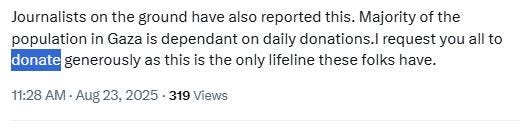
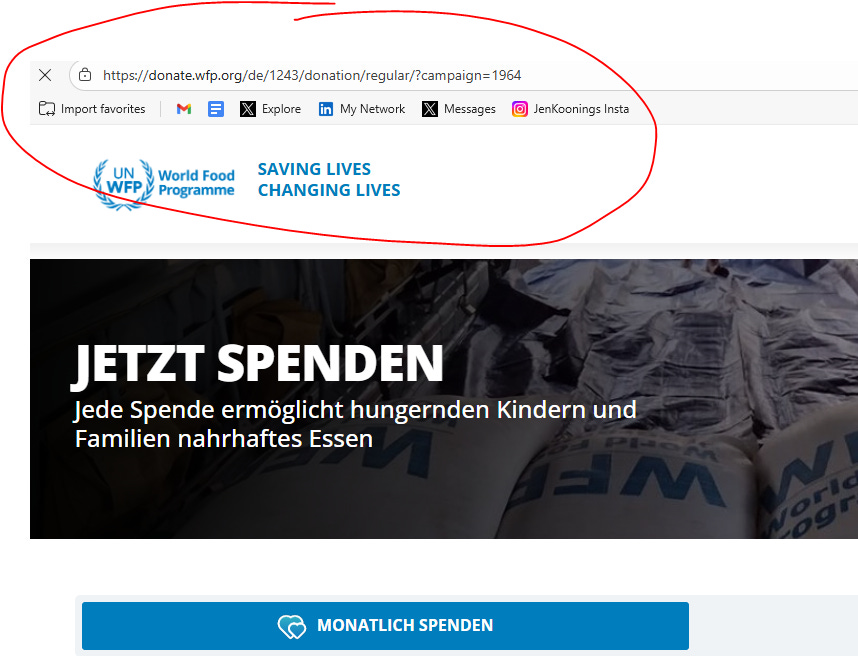
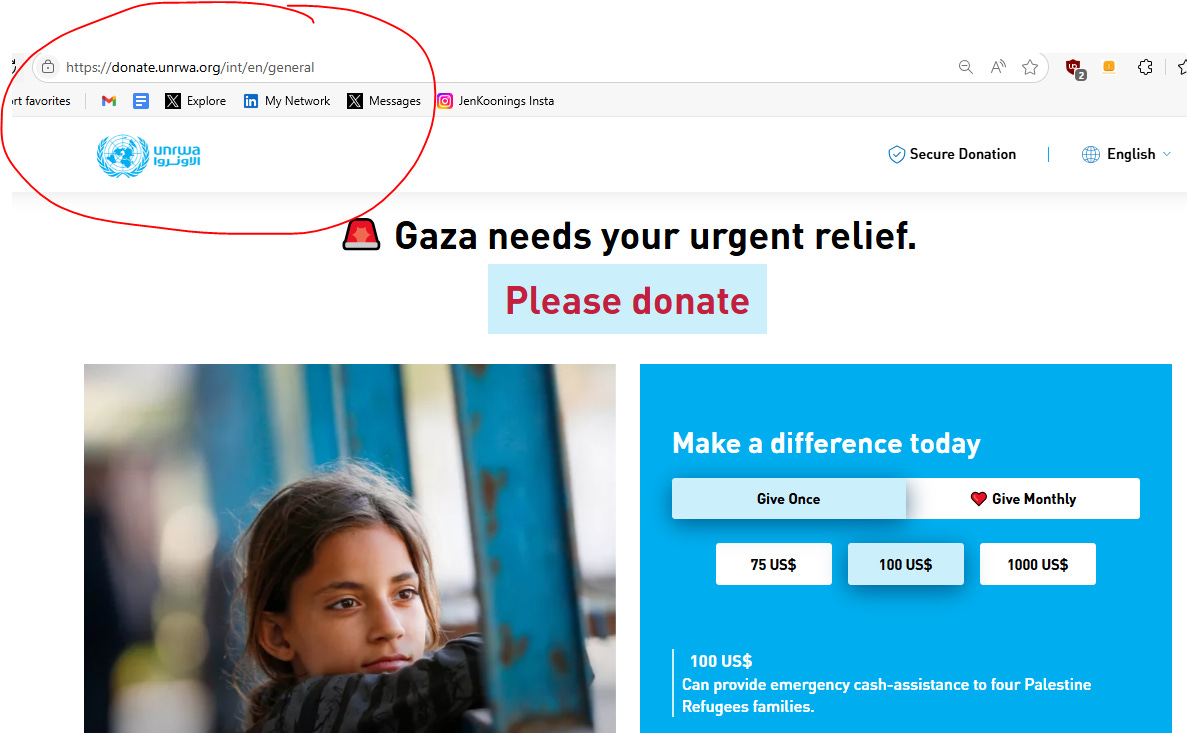
If you feel powerless to help Gaza, you still has a choice: donate. When so much of what exists is false, authenticity is a powerful weapon we can wield that the state never could. So if you feel lost, hopeless, depressed, angry and afraid, I implore you to return - again - again - and again - to the feeling of love that exists within you that brought you here in the first place. It is only through this that we can remake the world. To redress Gaza’s famine, displacement, and destruction, independent and impartial humanitarian organizations - UN agencies, international and national NGOs - must be allowed to deliver relief at scale. To salvage Gaza’s people from the devastation inflicted by Israel, it must be unified with the West Bank to form an independent and sovereign Palestinian State, not to be parceled and colonized by the former.
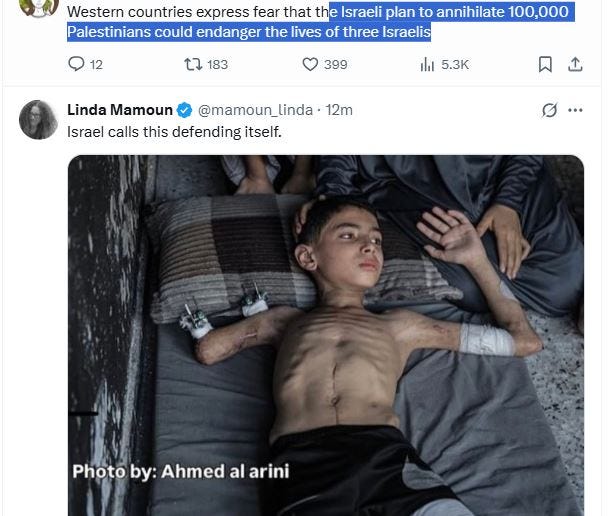
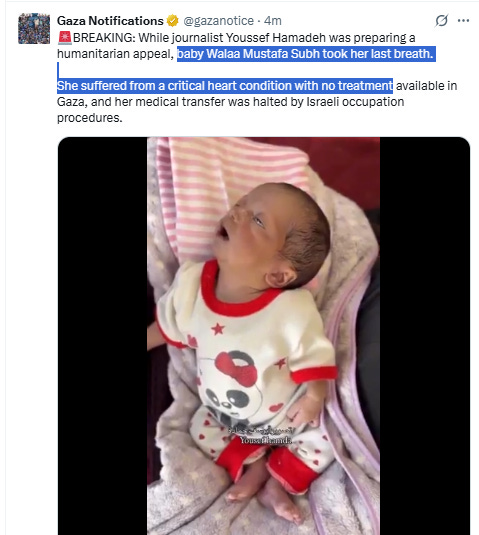
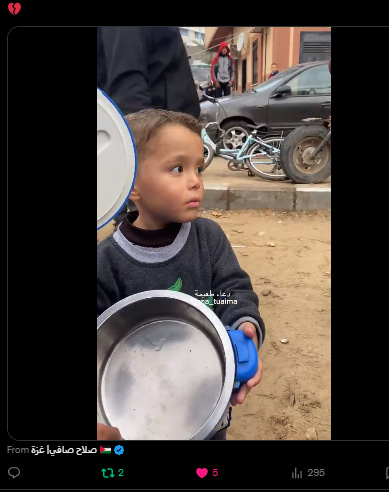
Meanwhile, children continue to be shredded by US bombs, and the starvation reaches new depths of hellish collective punishment. If both parties are going to continue to support an ongoing genocide, at least they can both be honest about doing so, rather than having one openly bloodthirsty party, and another—unconvincingly—playing the role of powerless, bumbling humanitarian.
Please keep donate Gaza especially if you, as reader, has [background] International Relation [whatever universities]. IR Graduate means [you must, at least] get some semester [about] studying Middle East [in macro, not specifically Gaza].
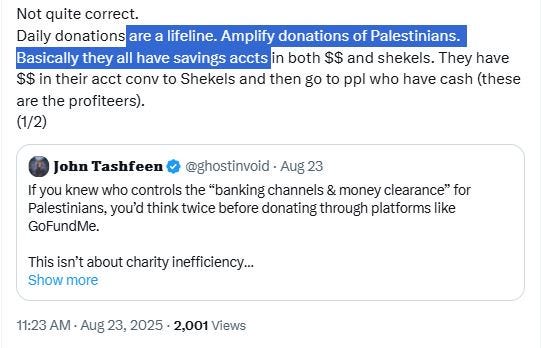
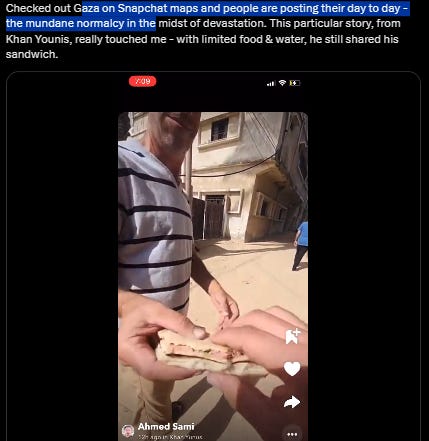
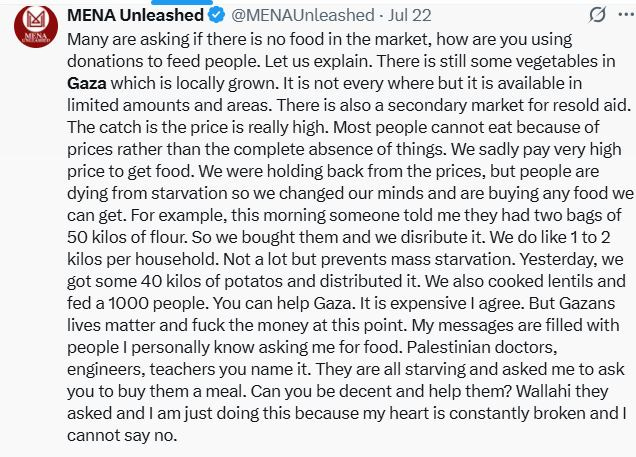
We need more people to share fundraisers instead of only talking about Gaza. Some people think that those in Gaza don’t need money but that’s wrong. Almost everyone lost their source of income while essentials, food & medicine get sold for astronomical prices. So I put my attempt in all social media as I can, in twitter / X, in substack [since October 2023 I put link donation], in bluesky or bsky, in threads, in instagram.
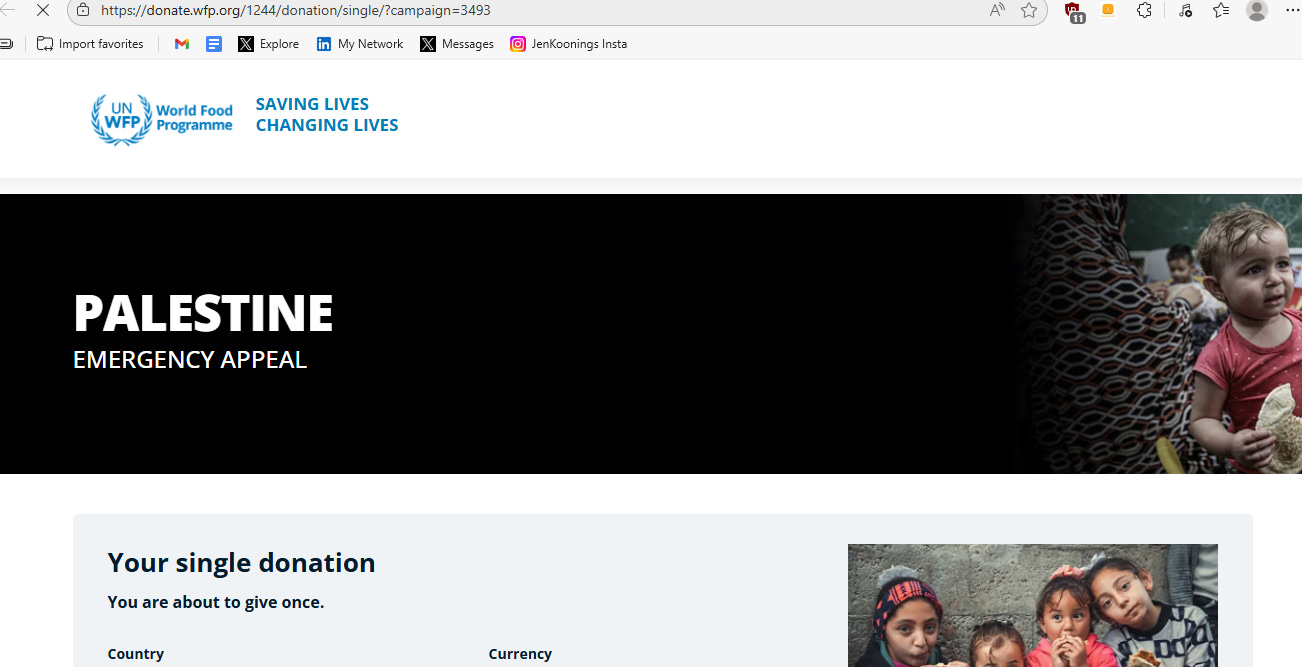
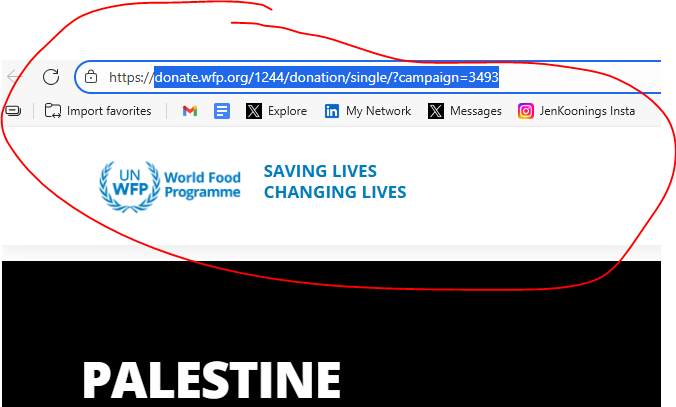
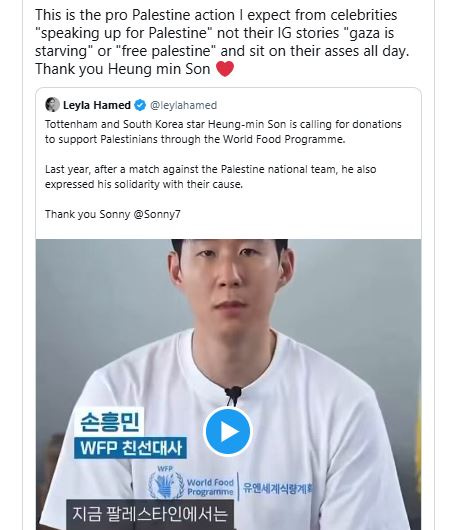
Link to donate World Food Programme - Palestine appeal: click here
Most campaign shared or circulated in social media are for REAL people in Gaza. They’re legit. There are a lot of small campaigns for struggling families. This is their only lifeline. By donating & sharing, you are literally making history and alleviating part of their pain
Please do not rely on me alone for sharing your campaign. I’m only 1 person and sometimes I’m not online which is unreliable. I never ignore anybody on purpose but I have a very limited capacity & very little energy and time.
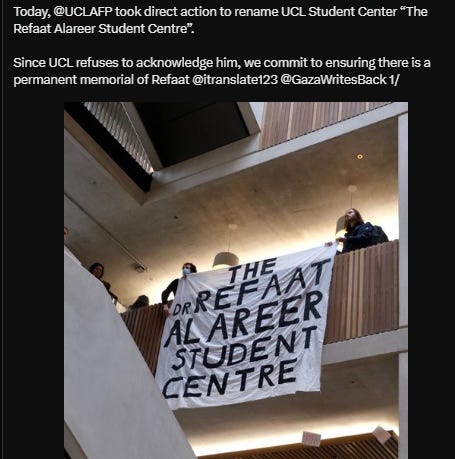
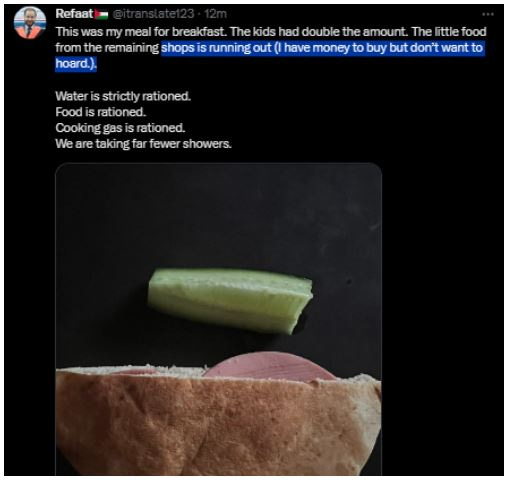
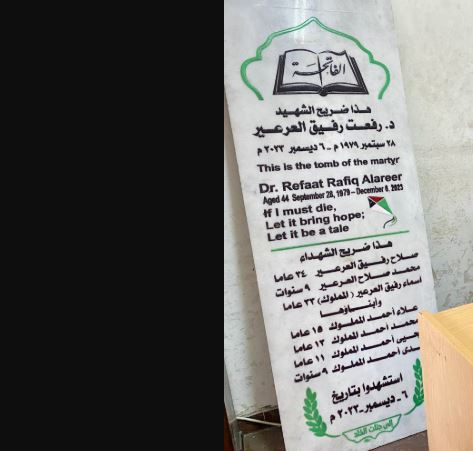
[Refaat Rafiq Alareer IF I MUST DIE]Refaat Rafiq Alareer was extremely hungry, November 2023, days before Refaat killed by Israel airstrike. If November 2023 already [one-by-one Gazan] extremely famine, extremely hungry, imagine November 2025 or more than 2 years Israel’s Genocide in Gaza.
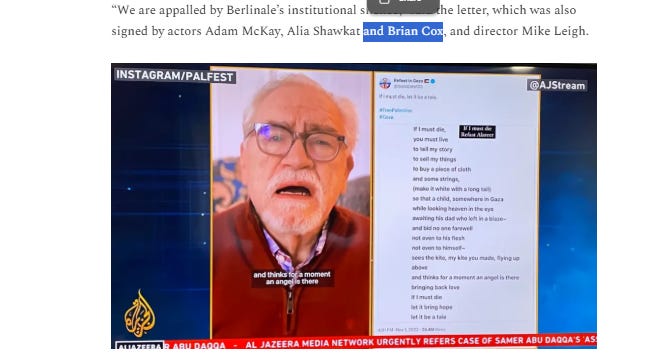
Dec 9th, 2023, New York City, 4.10am —- with update total languages to be 310 as of July 1st, 2024, 3.52am New York City, and then, to be 350 languages as of July 28th, 2024, 1.37am ====== newest update as of July, 3rd, 2025 already 384 languages, and October 8th, 2025 reaches 455 languages across the globe.






![[RENEW] 455 Languages IF I MUST DIE of Refaat Rafiq Alareer [by 6100+ Translators, Social Media Users]](https://substackcdn.com/image/fetch/$s_!jwSl!,f_auto,q_auto:good,fl_progressive:steep/https%3A%2F%2Fsubstack-post-media.s3.amazonaws.com%2Fpublic%2Fimages%2Fc25bd266-d4e2-4169-a5e4-e901227a8b0c_725x560.png "[RENEW] 455 Languages IF I MUST DIE of Refaat Rafiq Alareer [by 6100+ Translators, Social Media Users]")
The Great Game, 2026
https://naifshaaban.substack.com/p/the-great-game-2026?utm_campaign=post-expanded-share&utm_medium=web