
Indonesia: Dying in Darkness

When you’re in a position of power, your instinct is to believe you deserve every bit of praise that comes your way. It takes real emotional strength for a leader to admit that, despite the accolades, [7th Indonesia’s President, 2014 - 2024 tenure] Jokowi is failing.
Because of Jokowi’s attempts to stay in power [at least make sure his son to be a VP for 2024 - 2029] beyond the prescribed term, historians writing about him may not be so kind. They may see him as fitting Lord Acton’s description, in the quotation above, of a “great man.”
All things considered, it would not be a stretch to call Jokowi the man who may have singlehandedly turned the clock back on democracy in Indonesia. The political system that in 2014 ushered to power the small furniture entrepreneur who challenged the political establishment is now almost broken. It will be a huge struggle for the nation to restore the system to the same condition it was in when Jokowi was first elected.
Developing countries often suffer from a vicious policy cycle: disastrous policies produce disastrous consequences, which in turn justify new disastrous policies. The only saving grace is that many of these policies are implemented just as disastrously.
As a politician steeped in Javanese statecraft and power plays, Jokowi clearly has little appetite for a direct confrontation. But this does not make him any less assertive than Prabowo.
Writing is such an underrated decision-making tool. Simply jotting down why you believe a certain action is the best can help you externalize your thoughts, making them easier to critique objectively. Also, it creates a record you can revisit to guide future decisions.
I keep writing about the journey of Indonesian economics, [with the goal of my writing] to stimulate a debate on key development policy issues in Indonesia, placing special emphasis on the importance of evidence-based policymaking, comparing every Indonesian President’s decision-making process. Writing is such an underrated decision-making tool. Simply jotting down why you believe a certain action is the best can help you externalize your thoughts, making them easier to critique objectively. Also, it creates a record you can revisit to guide future decisions or policies.
For every technocratic explanation, there’s always an alternative/ complementary political explanation & vice versa. Academics & the broader commentariat can be forgiven for focusing on just one side, but those who make policy shouldn’t be content with an incomplete picture.
Education is a convenient scapegoat. By blaming it all on our failing education, politicians can get away with perpetuating bad policies while sounding like a philosopher-king. This is why our education policy always changes pointlessly, while nothing seems to budge anywhere else
10 Years of Jokowi’s regime is pure liberal nostalgia for a world where the US and China was a reliable hegemon and neoliberalism was an economic consensus. Circa 2014 - 2024, seeing the world already dominated by virtually-immortal oligopolistic mature industrial firms, Jokowi believes that most innovation occurs in-house in the incumbent firms themselves. We live in an age of intense geopolitical competition between transformative states and the economic elites, and so Jokowi is [too] open for the West [especially U.S.] and China. Now, it is turn for Prabowo.
In Indonesia, democracy isn’t dying in darkness; it’s being butchered in broad daylight, with threats and intimidation replacing any pretense of decency. The regime isn’t even trying to hide it anymore. They want us to see, to fear, and to bend to their will. Democracy [should] thrive on a battle of ideas, not a ballet of evasions.
President Prabowo Subianto’s government sought to calm the anger that drove August’s protests by addressing the proximate causes of the demonstrations, withdrawing the housing perks for parliamentarians and promising a full investigation into the heavy-handed police response.
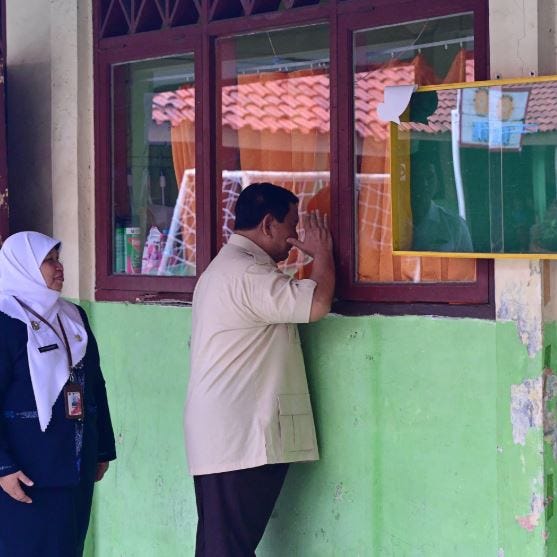
Prabowo is the kind of leader who would throw hundreds of trillions at a grand idea without bothering with the details. Assuming he won’t make catastrophic decisions is wishful thinking at best. Because addressing the root causes of public problems is often politically untenable, politics is reduced to two basic moves: redirecting public anger toward a convenient scapegoat, or handing out symbolic candies to keep the crowd distracted. Governing becomes crowd control.
But the underlying causes of the unrest are yet to be acknowledged. The post-pandemic scarring in the labour market is visible — there are not enough jobs for young people, including university graduates. Inflation may be low overall, but many face a cost-of-living crisis with high food prices and education costs. And the quality of governance is slipping backwards.
Less than a year into his term, Prabowo confronts a major test. He has inherited an economy and society yet to fully recover from the COVID-19 pandemic and now facing one of the most hostile and uncertain external environments in living memory. I used to think that the kind of extreme retrenchment we’re seeing under the Prabowo administration would only happen in a debt crisis. I never imagined a president could become so fixated on a single massive money pit of a program—at the expense of everything else.
Then, Indonesia got hit by Senyar Cyclone. Natural disasters aren’t really natural. They’re a natural consequence of modern anthropocentrism: our arrogant belief that human knowledge and technology have conquered nature. What we call conquest is merely stretching a rubber band that will eventually snap back at us. Disaster response is necessary, but what we truly need to avoid being in this situation again and again is disaster mindfulness: a habit of reflecting on how our choices, policies, and technologies may unintentionally build the conditions for future disasters.
Ecological repentance is necessary, but whatever it means, it will not endure without a credible alternative development model. Indonesia must move away from its deeply extractive growth model toward a model that relies on human capital, as soon as possible. CNN retracting the video of a journalist crying after days observing desperation in Aceh while the government persistently denies the reality on the ground is like a knife manufacturer recalling its products for being too sharp. Pusillanimous.
Criticizing the government is usually taboo during natural disasters, supressed by a shared instinct to unite for an urgent common cause. But this time is different: the Sumatra disaster has laid bare the ruling elite’s incompetence, conflicts of interest, and complicity.
===========================
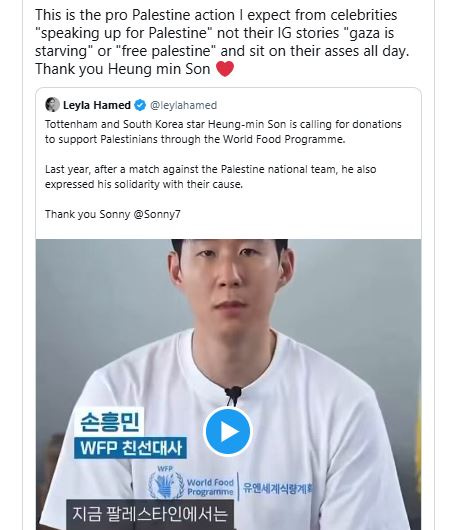
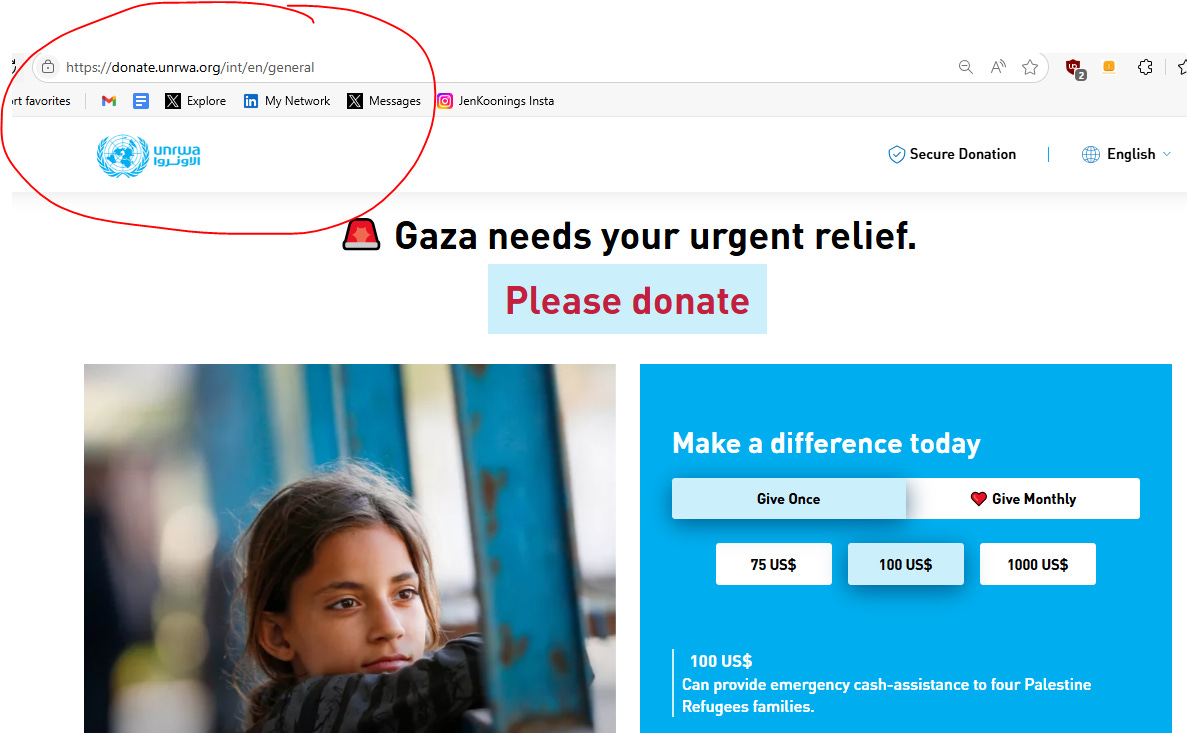
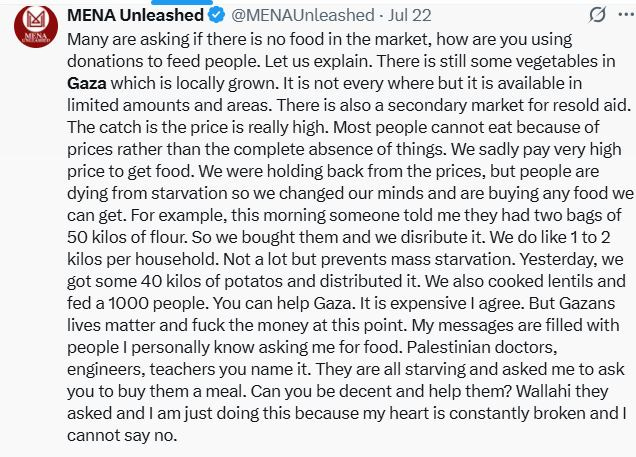
If you feel powerless to help Gaza, you still has a choice: donate. When so much of what exists is false, authenticity is a powerful weapon we can wield that the state never could. So if you feel lost, hopeless, depressed, angry and afraid, I implore you to return - again - again - and again - to the feeling of love that exists within you that brought you here in the first place. It is only through this that we can remake the world. To redress Gaza’s famine, displacement, and destruction, independent and impartial humanitarian organizations - UN agencies, international and national NGOs - must be allowed to deliver relief at scale. To salvage Gaza’s people from the devastation inflicted by Israel, it must be unified with the West Bank to form an independent and sovereign Palestinian State, not to be parceled and colonized by the former.
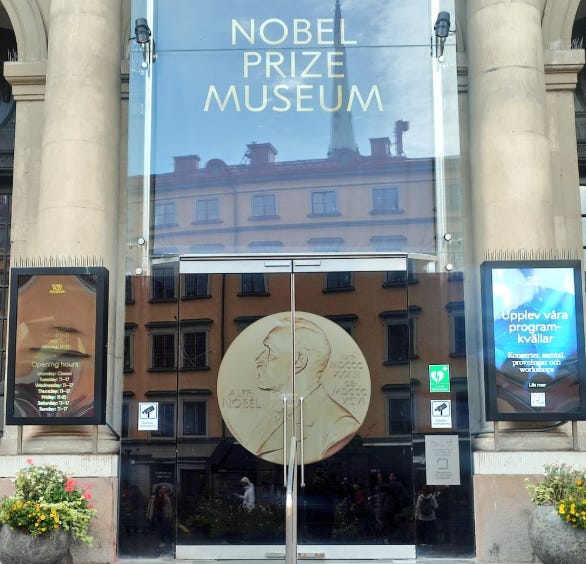
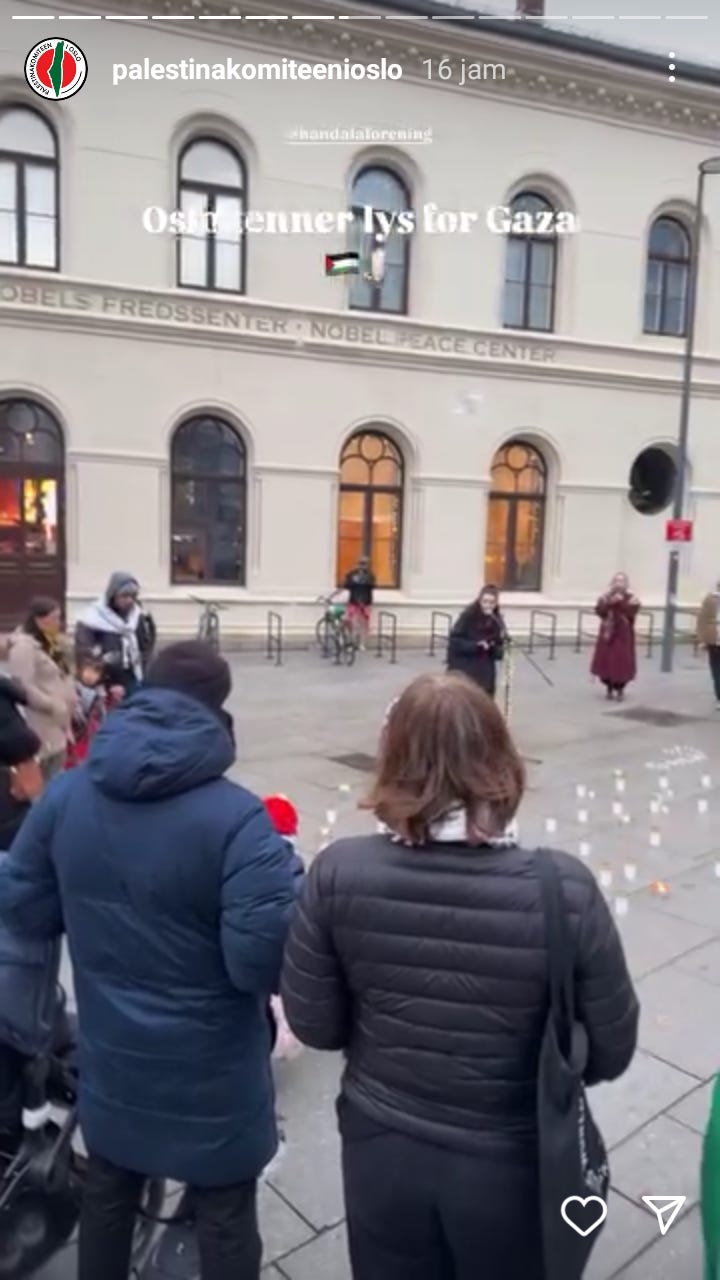
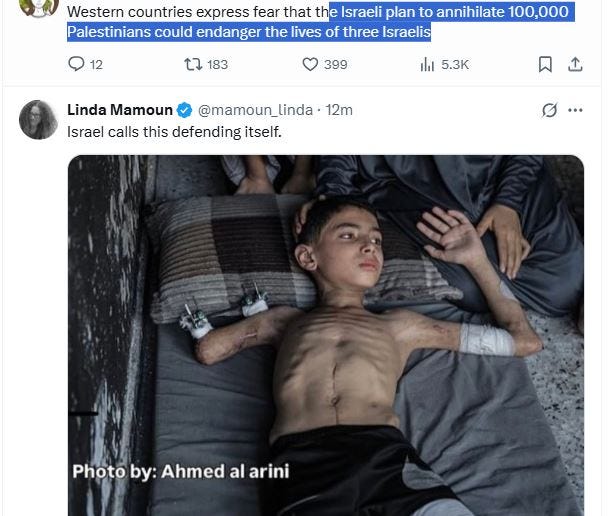
Meanwhile, children continue to be shredded by US bombs, and the starvation reaches new depths of hellish collective punishment. If both parties are going to continue to support an ongoing genocide, at least they can both be honest about doing so, rather than having one openly bloodthirsty party, and another—unconvincingly—playing the role of powerless, bumbling humanitarian.
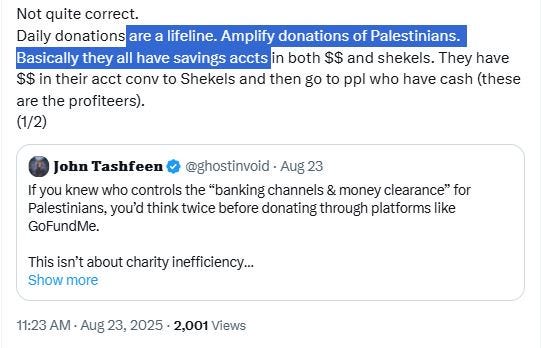
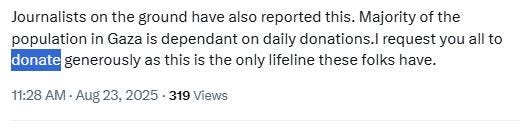
Please keep donate Gaza especially if you, as reader, has [background] International Relation [whatever universities]. IR Graduate means [you must, at least] get some semester [about] studying Middle East [in macro, not specifically Gaza].
We need more people to share fundraisers instead of only talking about Gaza. Some people think that those in Gaza don’t need money but that’s wrong. Almost everyone lost their source of income while essentials, food & medicine get sold for astronomical prices. So I put my attempt in all social media as I can, in twitter / X, in substack [since October 2023 I put link donation], in bluesky or bsky, in threads, in instagram.
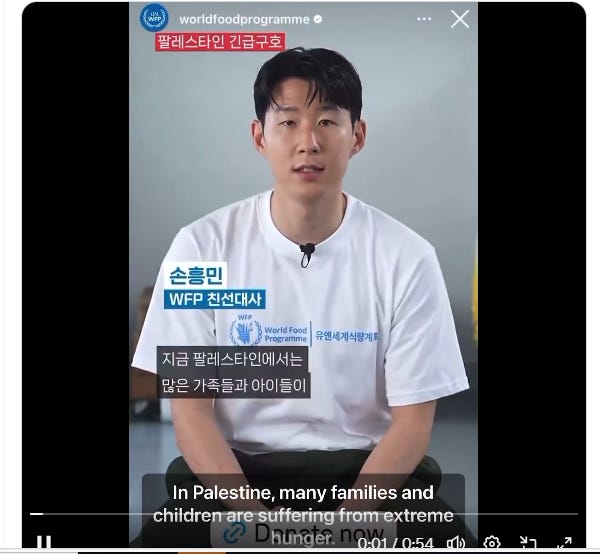
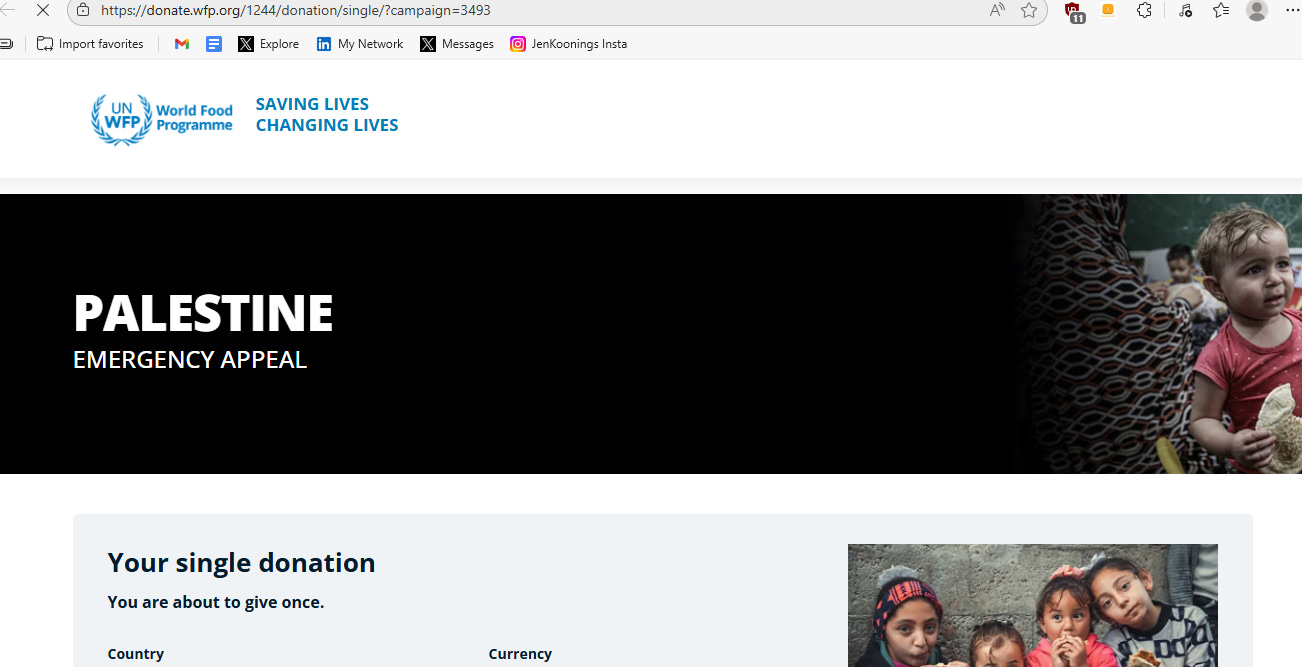
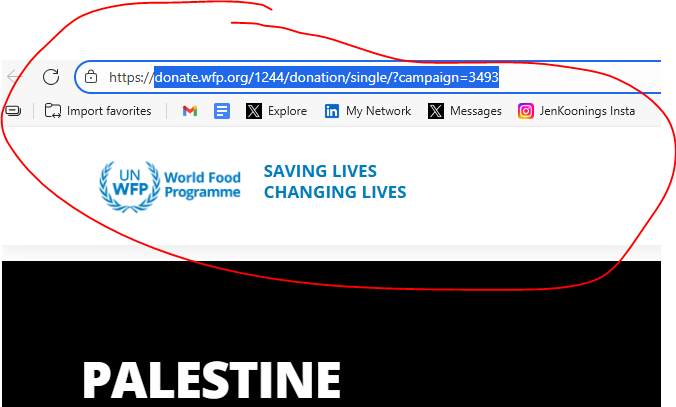
Link to donate World Food Programme - Palestine appeal: click here
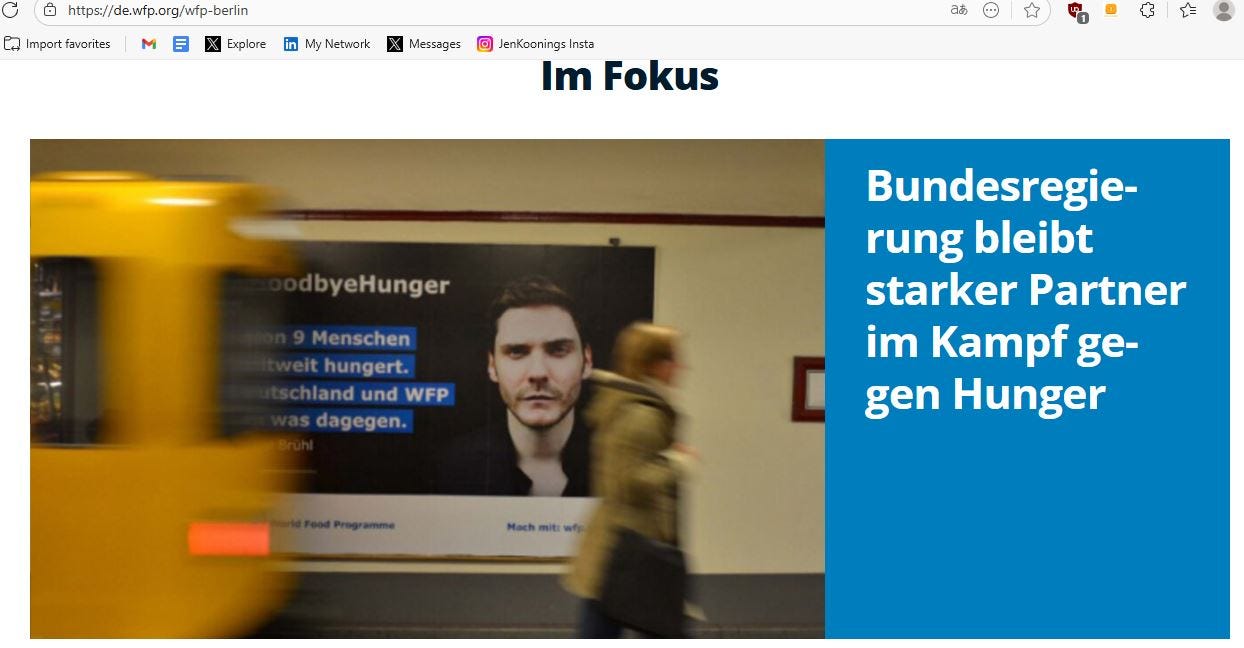
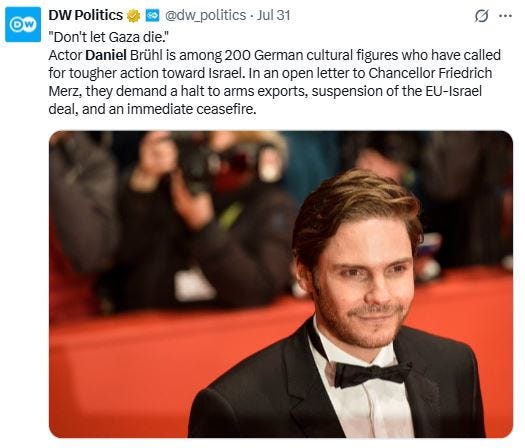
[Daniel Brühl]
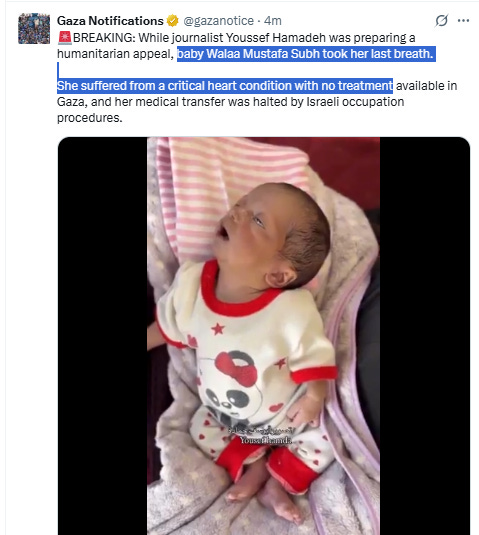
Most campaign shared or circulated in social media are for REAL people in Gaza. They’re legit. There are a lot of small campaigns for struggling families. This is their only lifeline. By donating & sharing, you are literally making history and alleviating part of their pain
Please do not rely on me alone for sharing your campaign. I’m only 1 person and sometimes I’m not online which is unreliable. I never ignore anybody on purpose but I have a very limited capacity & very little energy and time.
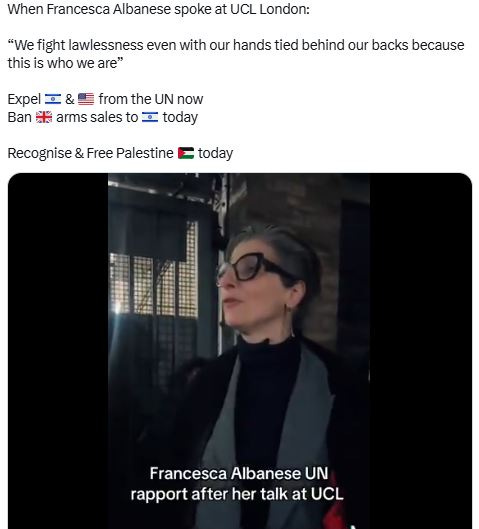
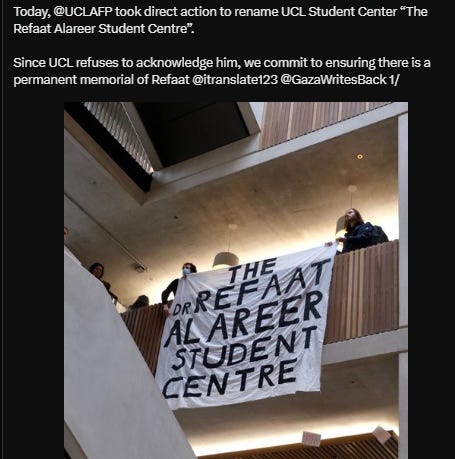
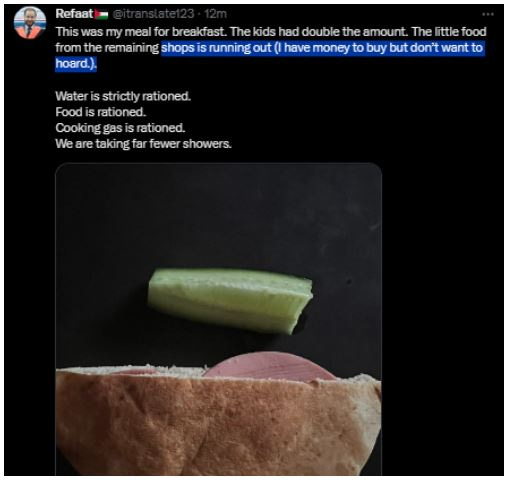
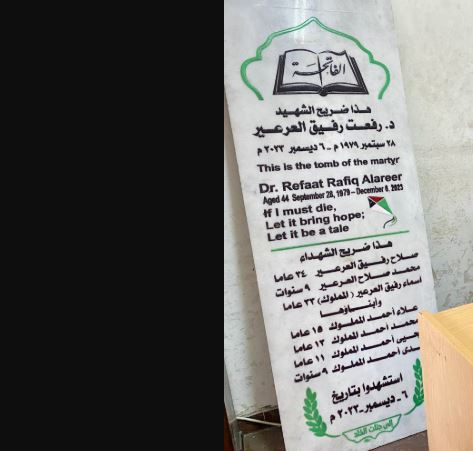
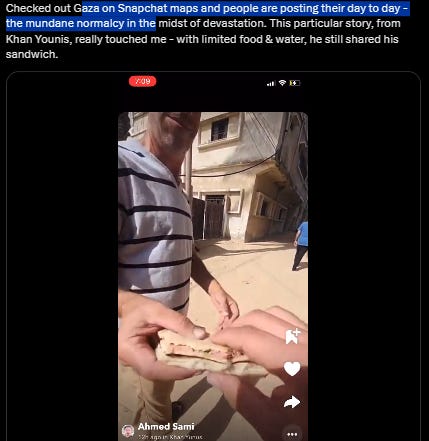
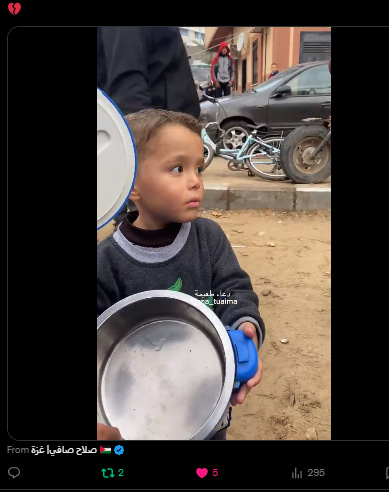
[Refaat Rafiq Alareer IF I MUST DIE] Refaat Rafiq Alareer was extremely hungry, November 2023, days before Refaat killed by Israel airstrike. If November 2023 already [one-by-one Gazan] extremely famine, extremely hungry, imagine November 2025 or more than 2 years Israel’s Genocide in Gaza.
Thanks for reading Prada’s Newsletter.