
Nobel Peace Prize First

President Donald Trump campaigned on an “America First” policy that rejected the United States’ traditional role of global policeman. His first 200 days in office have said otherwise.
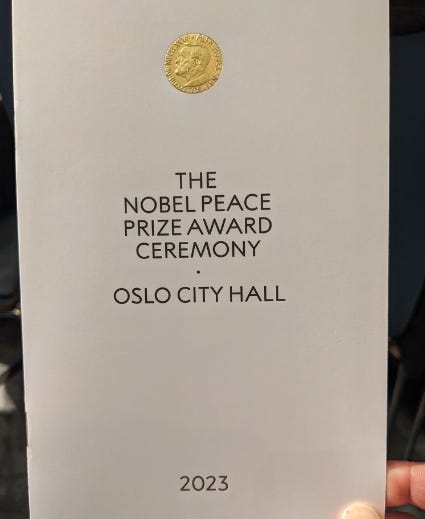
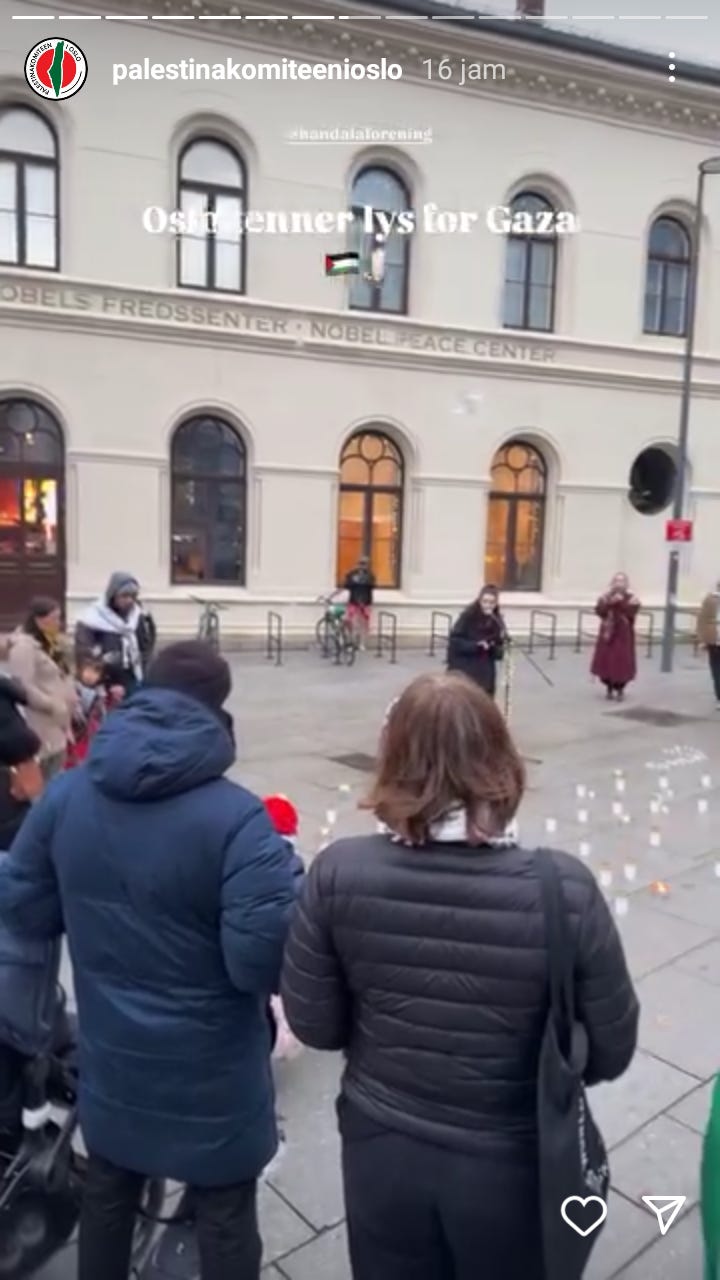
[outside Nobel Building or Nobel Peace Center in Oslo, reciting IF I MUST DIE by Refaat Alareer]
Or, actually “Nobel [Peace] Prize First”, not ‘America First.’
No way that Trump will get his coveted Nobel Peace Prize by being the Neville Chamberlain of the 21st century. Rather than appeasing Putin, Trump must insist on security guarantees to safeguard Ukraine's democracy, which Putin wants to destroy. Trump’s obsession with winning the Nobel Peace Prize has driven him to make a series of rash decisions in pursuit of ending the war in Ukraine. The latest example is scheduling a premature summit with Putin — an object lesson in how not to do diplomacy.
7 Years ago, Trump so obsessed with Nobel after ‘acclaimed’ helping North - South Korea peace talk. Today [August 15th, 00.30am Washington DC, or already 12.30pm in Seoul] is Liberation Day of South Korea [Independence Day (광복절 / Gwangbokjeol)].
President Lee Jae Myung has just unveiled his North Korea policy vision on the occasion of the 80th Liberation Day, where he declared "South and North are not enemies" and pledged to restore inter-Korean military agreements whilst ruling out "unification through absorption." Lee explicitly stated "South and North are not enemies" and defined the relationship as "a special relationship in the process of pursuing peaceful (re)unification while respecting and recognising each other's systems."
"We clearly declare that we respect the North's current system, will not pursue any form of unification by absorption, and have no intention of engaging in hostile acts." Lee pledged to "take proactive, gradual steps to restore the September 19 Military Agreement" - the 2018 inter-Korean military accord that was suspended by both North Korea (2023) and South Korea (2024) during the previous Yoon government. In line with the principles of common interest, coprosperity and mutual aid, we will strive to restore the basis for exchanges and cooperation and foster conditions for shared growth. Doing so may lead to substantial improvements in the lives of both South and North Koreans."
"The people's sovereignty government has been taking measures since immediately after its inauguration, including halting the distribution of [balloons loaded with anti-Pyongyang] leaflets and suspending loudspeaker broadcasts." "I will patiently await and hope that North Korea will reciprocate our efforts to restore trust and revive severed dialogue" despite recent rebuffs.
Lee Jae Myung's declaration that "South and North are not enemies" was off script and not part of the original speech planned in advance.
Back again to 2018. With outsiders talking Nobel Prize, the president himself says his positions have led to a ‘better alternative than anybody thought even possible.’ Leading skeptics to worry that expectations are growing dangerously high. How high?
“Following this historic announcement, President Trump should get the Nobel Peace Prize,” Representative Luke Messer (R-Ind.) declared in a statement 7 years ago. “We are seeing unprecedented progress toward peace, and it’s a direct result of President Trump’s strong leadership.” Messer was referring to the pledge by the Asian leaders to pursue a denuclearized Korean Peninsula, on a day when Kim became the first-ever North Korean leader to step across the border into South Korea.
And he was not alone.
“One thing [is] clear: the meeting would never have taken place if not for President Trump,” Harry Kazianis, a defense policy analyst at the Center for the National Interest, wrote in a op-ed for FoxNews.com. “And for this achievement, President Trump deserves the Nobel Peace Prize.”
The resulting talks between the Koreas produced few specifics and left open numerous crucial questions.
Trump himself wasn’t talking about peace prizes. But as remarkable images emerged of the bellicose Kim stepping for the first time across his country’s border with South Korea, the president’s excitement — and desire for credit — was plain to see.
“KOREAN WAR TO END,” Trump tweeted, adding that Americans “should be very proud of what is now taking place in Korea.” Hours later, while hosting U.S. athletes who competed in the Winter Olympics in South Korea, he added that when he first addressed North Korea’s nuclear program, “people were saying that was an impossibility. … And now we have a much better alternative than anybody thought even possible.”
Now back to 2025 again.
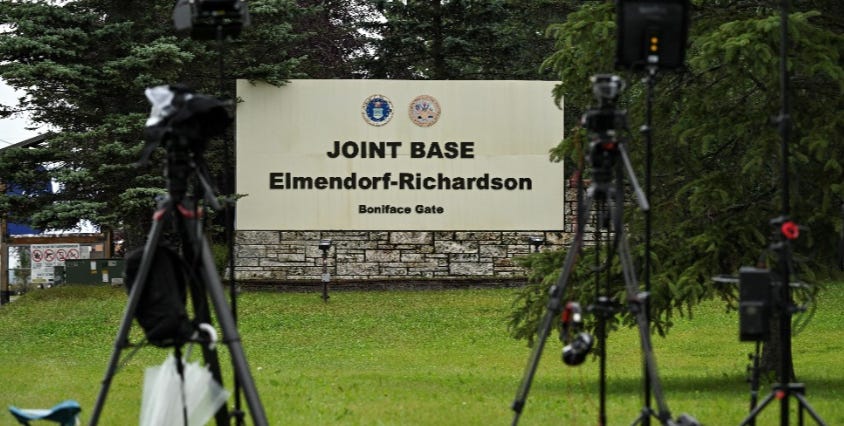
Donald Trump is turning history on its head with his Alaska summit with Vladimir Putin -- inviting Russia's leader to land that once belonged to Moscow, and meeting him at a military base that monitored the Soviet Union. Trump is hosting Putin as a guest at the same Air Force Base [joint base Elmendorf-Richardson] that has been sending fighter jets up to interceptor Russian bombers for decades. For those soldiers, it is like hosting the enemy and a war criminal dictator at that. Someone needs to ask whose idea Alaska was by the way. Kremlin seems tempting. In 1867, the US bought Alaska from Russia. Now, 158 years later, it’s hosting a Trump-Putin summit that may touch on land swaps.
You don't get a Nobel Peace Prize for aiding and abetting genocide. If Trump wants one, he should use his enormous leverage to stop Israel's killing and starving of Palestinian civilians and to push for a Palestinian state. Netanyahu shamefully panders to Trump by saying he nominated Trump for a Nobel Peace Prize even though Netanyahu's refusal to end his forever war in Gaza or allow a Palestinian state are the major obstacles to a peace that might yield a prize for Trump.
What is happening in Gaza today is absolutely horrible. You have a completely modern military supplied largely by the United States. And it’s using this complete superiority to pummel Palestinian civilians of Gaza — ostensibly to fight Hamas, but doing it in a way where the civilian population is a completely predictable victim of all of this.
And indeed, the Israeli government seems to be virtually indifferent to civilian suffering, and often that’s the point of its action. When it is imposing starvation for weeks or months at a time, that’s not aimed at Hamas, that’s aimed at ordinary civilians. When it bombs even a military target, it accepts that there are civilian casualties. They say they are going after some low-level Hamas fighter, that 20 civilians can be killed, and that is deemed acceptable, somehow proportionate. This shows an utter disregard for civilian life.
That’s what is so disturbing about this: that you have nothing like a fair contest. It’s almost unfair to call it a war. Hamas is there in some residual form fighting back, but mostly this is just Israel pummeling Gaza — and doing it in large part knowing, and sometimes intending, for civilians to be the target.
Trump is relishing his role as peacemaker in chief, according to a White House official granted anonymity to speak candidly about the president, believing he can make deals that have eluded his predecessors, showing simultaneously his acumen and his power – whether he’s successful or not.
“He loves being in the position to be a kingmaker for all of these smaller, weaker countries around the world,” the person said.
Trump reminds audiences regularly of the wars he believes he has stopped, emphasizing how long the conflicts have raged. Last week, Trump brought the leaders of Armenia and Azerbaijan to the White House to secure a peace agreement between the long-hostile countries, the sixth such deal of his second term, although his exact role in at least one case is in dispute.
“I’ve solved six wars in the last six months, a little more than six months now, and I’m very proud of it,” Trump said Thursday in the Oval Office.
But on Friday, Trump will face perhaps his toughest test as he meets with Russian President Vladimir Putin in an effort to secure an end to his war in Ukraine.
Trump, who has labeled himself the “president of peace,” has turned his attention to these conflicts in part because of a belief that he can use U.S. clout to end conflicts, according to a second White House official granted anonymity to discuss internal thinking.
It’s a contrast to his 2024 campaign, during which he adopted an “America First” approach, emphasizing domestic affairs over foreign conflict.
“There’s only so much that you know on the campaign trail and then when you get into the West Wing, you understand what the hell is actually happening in the world,” the second official said, referring to intelligence briefings Trump received as president. “And in many ways, had [Trump] known this, I think it probably would have been a larger foundation of his campaign.”
Trump’s turn of attention to settling conflicts also stems in part from his desire to win a Nobel Peace Prize, which he has long sought. Trump, in his pursuit, went so far as to cold-call the Norwegian finance minister last month to ask about the prize.
The prize has also become a go-to for foreign leaders looking to curry favor with the president.
At least six world leaders involved in recent agreements have nominated Trump or endorsed his nomination, including Israeli Prime Minister Benjamin Netanyahu and Cambodian Prime Minister Hun Manet.
Manet nominated Trump after the president brought Cambodia and neighboring Thailand to the table by threatening to halt trade negotiations unless they ended a border dispute.
In addition to Cambodia and Thailand, White House officials say Trump has played a role in ceasefire pacts or other agreements between: Iran and Israel, Rwanda and the Democratic Republic of the Congo, India and Pakistan, Egypt and Ethiopia, Armenia and Azerbaijan, and the U.S. and the Houthis in Yemen. Trump has had less success ending the wars in Gaza and Ukraine.
And White House officials have provided few details of Trump’s strategic involvement.
People close to Trump say the quick succession of peace deals between warring countries is aligned with his campaign vision of putting America First, in part, because the president is tying peace agreements with trade agreements as he recently did with Armenia and Azerbaijan.
“With every one of these peace agreements, there has been some economic benefit to America,” the first White House official noted.
Critics question Trump’s sincerity in securing peace and the permanence of such agreements. John Bolton, who was Trump’s national security adviser during the president’s first term, pointed in particular to the Cambodia and Thailand agreement – where there has already been violence post ceasefire, according to media reports.
Watch: The Conversation
“He got them to sign a ceasefire to make sure they could get their trade deals done,” Bolton said. “Maybe the ceasefire will last more than a few days. Who knows? The underlying causes of the tension, the border issues have not been resolved. “
“This is a Donald Trump first policy,” Bolton said. “He wants the Nobel Peace Prize. I think everybody acknowledges now that’s what’s motivating him.”
Trump’s interest in landing international agreements is not a complete policy departure from the president’s first term. At that time, Trump brokered the Abraham Accords, a set of agreements that stabilized diplomatic relations between Israel and several Arab countries. Trump also played a role in the reestablishment of economic ties between Serbia and Kosovo.
While campaigning for his second term, Trump emphasized reduced engagement in international organizations and pushed a more transactional and nationalistic approach – something he and his team called “America First” policy, rejecting the full label of isolationist.
On Friday, Trump will bring that policy into a one-on-one meeting with Putin. In the days leading to the summit, the president and his senior aides have downplayed expectations, with the president even calling it a “feel-out meeting.”
Of the conflicts raging around the world when Trump took office, he thought Russia and Ukraine would be “the easiest one” to resolve. On Thursday he acknowledged, “it’s actually the most difficult.”
=======
==========================
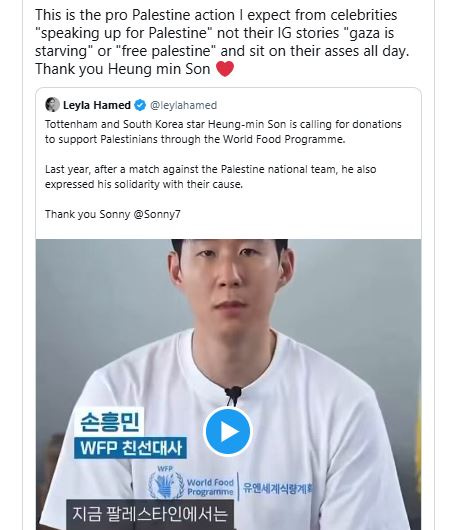
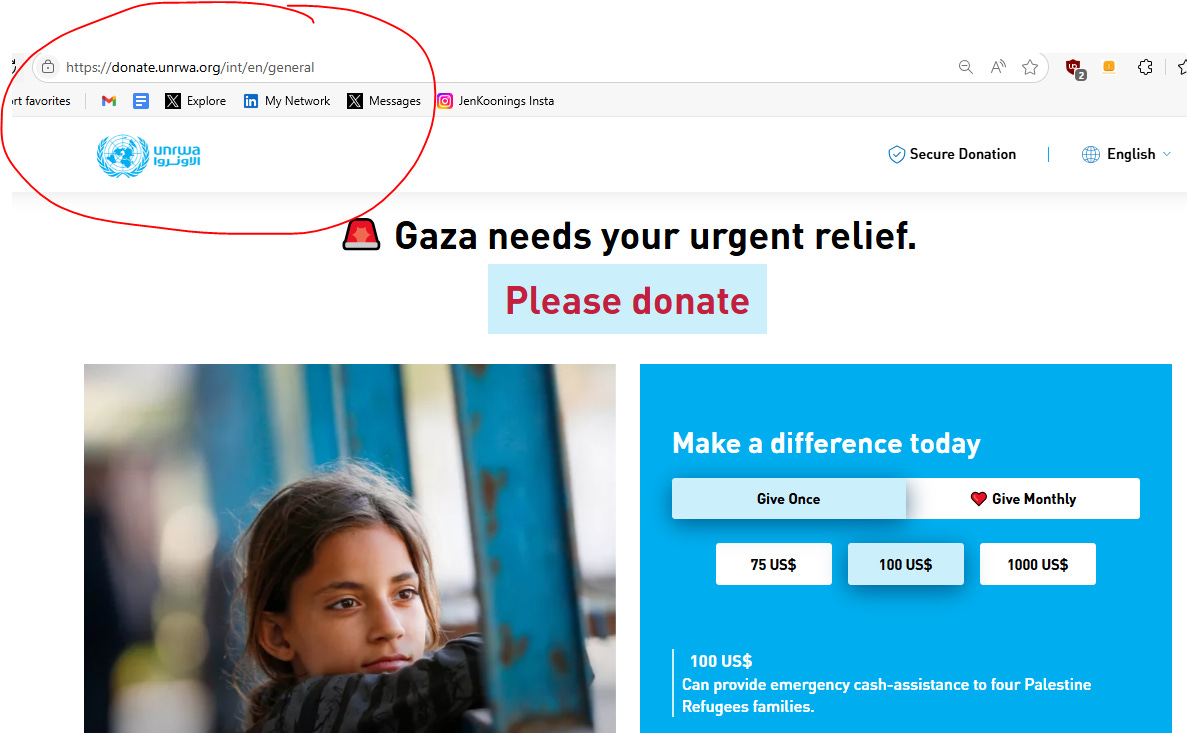
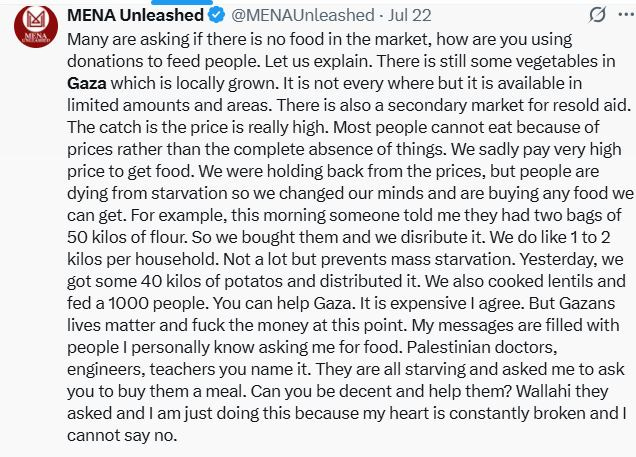
If you feel powerless to help Gaza, you still has a choice: donate. When so much of what exists is false, authenticity is a powerful weapon we can wield that the state never could. So if you feel lost, hopeless, depressed, angry and afraid, I implore you to return - again and again - to the feeling of love that exists within you that brought you here in the first place. It is only through this that we can remake the world.
Please keep donate Gaza especially if you, as reader, has [background] International Relation [whatever universities]. IR Graduate means [you must, at least] get some semester [about] studying Middle East [in macro, not specifically Gaza].
We need more people to share fundraisers instead of only talking about Gaza. Some people think that those in Gaza don't need money but that's wrong. Almost everyone lost their source of income while essentials, food & medicine get sold for astronomical prices. So I put my attempt in all social media as I can, in twitter / X, in substack [since October 2023 I put link donation], in bluesky or bsky, in threads, in instagram.
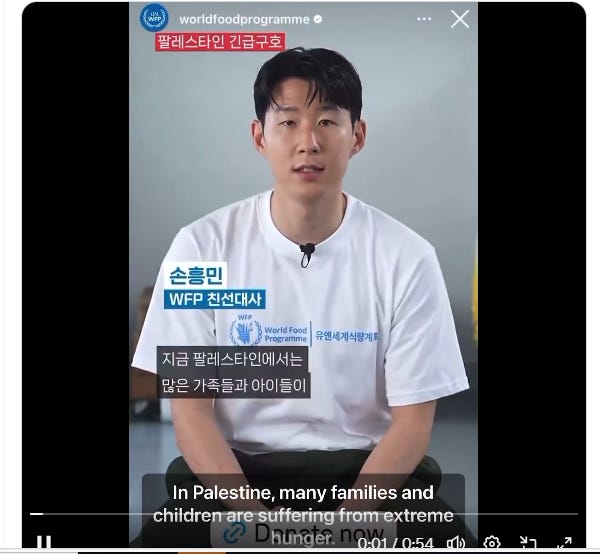
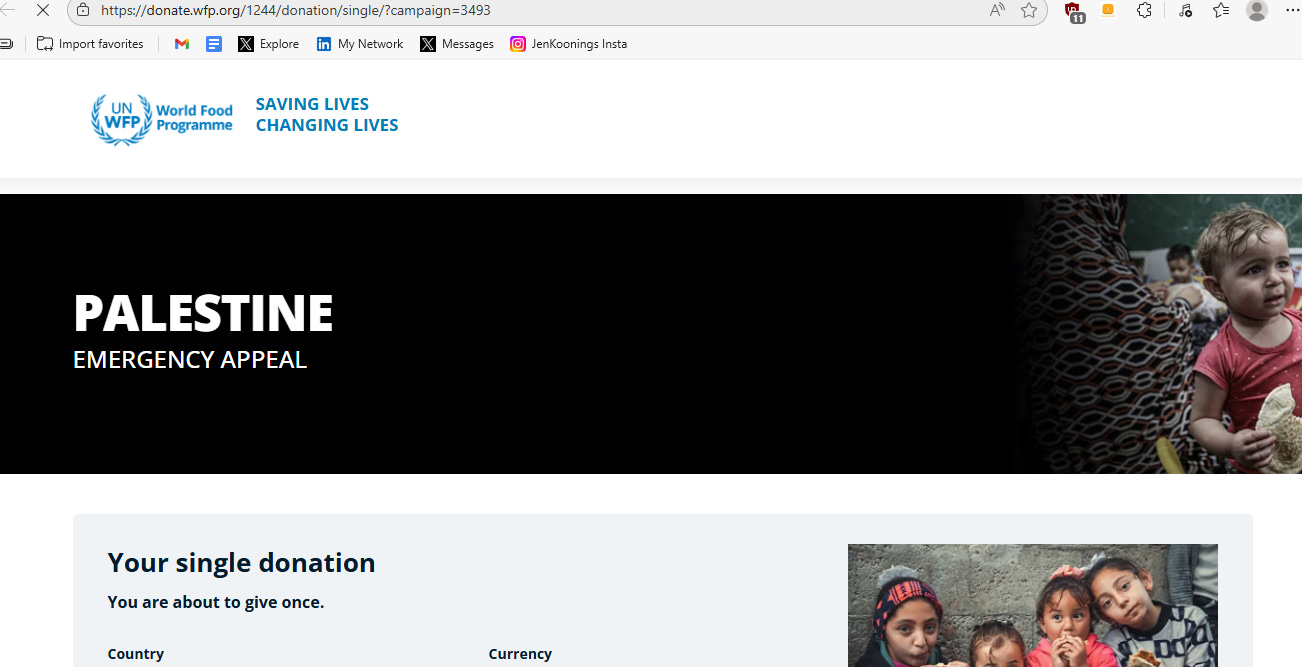
Link to donate World Food Programme - Palestine appeal: click here

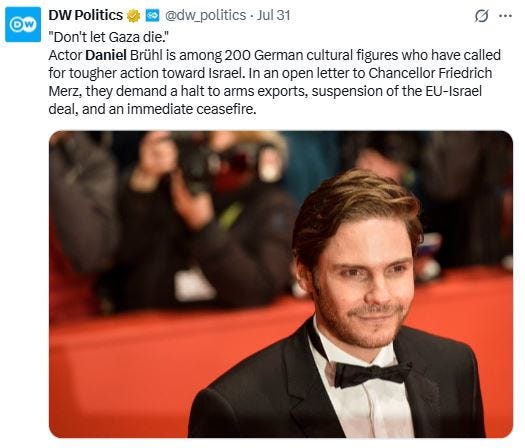
[Daniel Brühl]
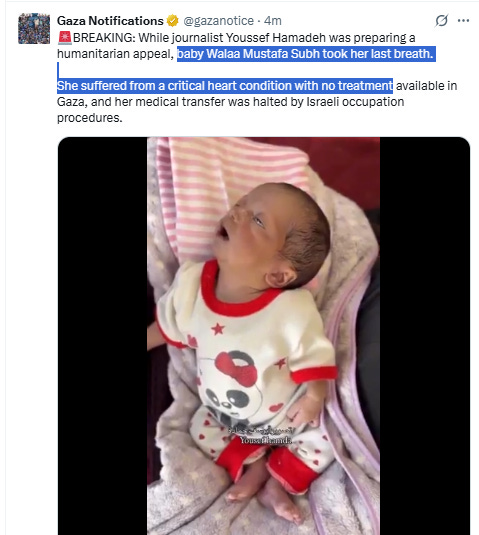
Most campaign shared or circulated in social media are for REAL people in Gaza. They're legit. There are a lot of small campaigns for struggling families. This is their only lifeline. By donating & sharing, you are literally making history and alleviating part of their pain
Please do not rely on me alone for sharing your campaign. I'm only 1 person and sometimes I'm not online which is unreliable. I never ignore anybody on purpose but I have a very limited capacity & very little energy and time.
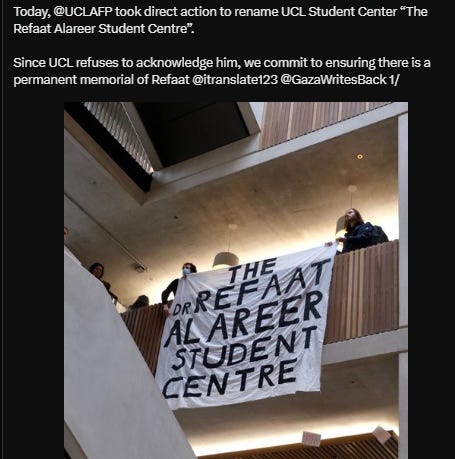
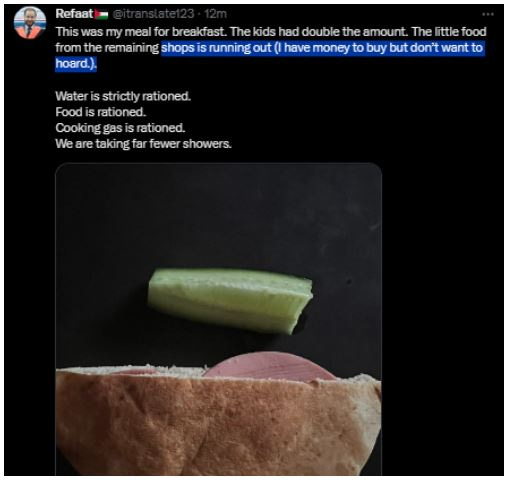
[Refaat Alareer IF I MUST DIE] Refaat Alareer was extremely hungry, November 2023, days before killed by Israel airstrike. If November 2023 already [one-by-one Gazan] extremely hungry, imagine August 2025.

Thanks for reading Prada’s Newsletter!