
Sanae is Different

After Sanae Takaichi’s landmark election win, many who normally pay little attention to Japan are taking an interest, leading some to project their beliefs onto that soon-to-be-iconic blue suit.
Conservatives are delighting in their view that she is the latest fringe figure to attain power, a position they believe she won thanks to her unwavering opposition to immigration. Liberals, meanwhile, seem to think her victory marks some kind of rightward shift in the country, perhaps even a step toward fascism.
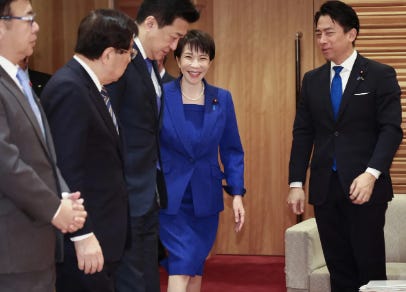
But much of what you read about Takaichi is divorced from reality. Her victory is a historic one, both in its scope, and in her position as the country’s first female leader. But she is far from the extremist that either side wants to paint her as.
Prominent conservatives have described her as having run “on a platform of heavily restricting foreign immigration and deporting anyone and everyone with expired visas.” Others believe that “Japan got literally the tiniest bit of migration” and “responded with the most right-wing electoral result in history.”
This view of the country — as one that’s had immigration forced upon it, and then reacted by electing an anti-foreigner firebrand — is simply wrong. Migration has indeed become a talking point in recent years. But far from Takaichi representing some rightward shift against foreigners, her stance on immigration is broadly in line with longstanding norms here.
Japan has long been hesitant on mass migration. Workers from overseas are expected to learn the language, obey the rules and, ideally, not stay forever in too large numbers. What’s different now is two things: a surge in foreigners, both tourists and workers, in the last decade, and the fact that Takaichi is willing to discuss it. Past leaders, including her mentor the late Shinzo Abe, preferred to avoid acknowledging the issue at all.
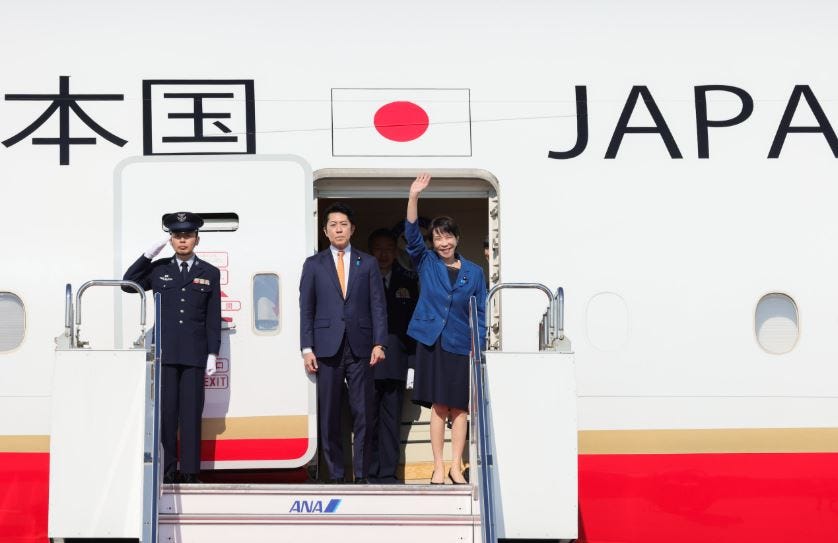
Takaichi’s policy makes no mention of reducing the foreign population. It’s instead focused on creating an orderly system to manage what will surely be an increase in migrant workers in coming years. While it calls for deporting over-stayers and dealing “appropriately” with criminals, it also outlines steps to help residents integrate into society, such as Japanese classes and tailored welfare systems.
Try telling that to those (including many foreign residents) who think her stance basically overlaps with Reform UK leader Nigel Farage. Some have described her as an “ultraconservative” sporting a “hardline agenda,” while online and in person I have even heard her described as a “fascist.”
On China, it has become de rigueur to read that she “provoked” Beijing or “started a diplomatic spat” with her comments on Taiwan. One noted academic even described her as “anti-China.” While it’s true that she is more hawkish than her predecessor Shigeru Ishiba, who I have described as “China curious,” skepticism about Beijing is hardly a position that is the preserve of the far right. Was Joe Biden, who made standing up to China one of his key positions, an “ultraconservative”?
For decades, it has been a frequent tactic to affix such labels to those who are strong on national security. But Takaichi’s foreign policy emphasizes cooperation with like-minded nations, and boosting alliances. That’s why her victory has been so welcomed by other Asian countries that are not falling for Beijing’s propaganda depicting her as a militarist. Far from the isolationism brewing in Washington, she is closer in spirit to European leaders with whom she shares an “unwavering” support for Ukraine. And it was notable that in an early press conference as prime minister she talked about how much she admired South Korean cosmetics and K-dramas (hardly a talking point of the Japanese far right).
If Takaichi does indeed pursue her goal of reforming the pacifist constitution, you can expect to see more of these revisionist, militarist labels. But much of the world is realizing that, as the prime minister put it, no one will help a country that refuses to help itself. Increased defense spending in Europe is not met with accusations of militarism, but with recognition that this is an overly late response to very real threats (a reminder that Russia is Japan’s neighbor, too). And she is not alone in this desire: Ishiba, largely regarded as left-leaning, also favored constitutional change, as did his predecessor, Fumio Kishida.
And while on social issues she certainly does tilt conservative, she does not represent some rightward shift — for the simple reason that the country has long been quite conservative. In talking to voters over the past few days, many explained her popularity as based not just on the hope that she can change things that need changing, but also that she’ll keep the parts of the country that need preserving.
So judge Takaichi for who she is. Watch what she says, and more importantly, what she actually does. Even a politician as popular as her is still constrained by the system she operates in. This administration is indeed a tectonic shift. But not always for the reasons many think.
==================
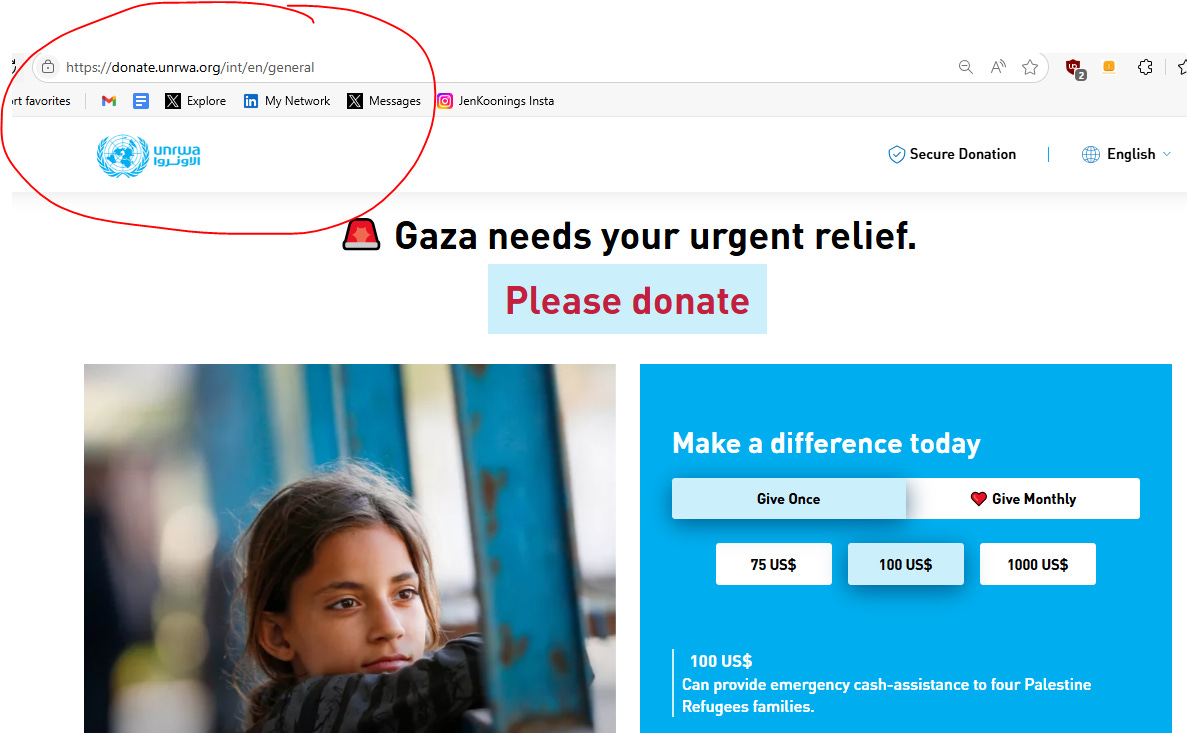
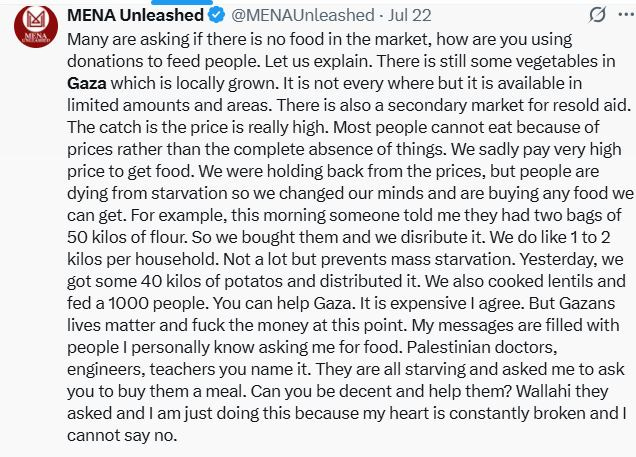
If you feel powerless to help Gaza, you still has a choice: donate. When so much of what exists is false, authenticity is a powerful weapon we can wield that the state never could. So if you feel lost, hopeless, depressed, angry and afraid, I implore you to return - again - again - and again - to the feeling of love that exists within you that brought you here in the first place. It is only through this that we can remake the world. To redress Gaza’s famine, displacement, and destruction, independent and impartial humanitarian organizations - UN agencies, international and national NGOs - must be allowed to deliver relief at scale. To salvage Gaza’s people from the devastation inflicted by Israel, it must be unified with the West Bank to form an independent and sovereign Palestinian State, not to be parceled and colonized by the former.


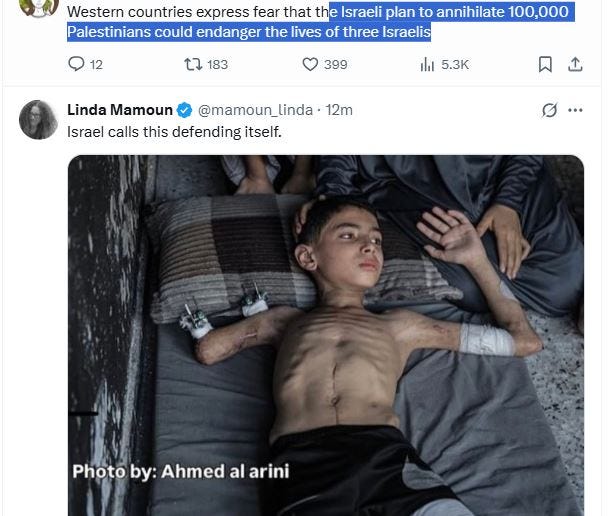
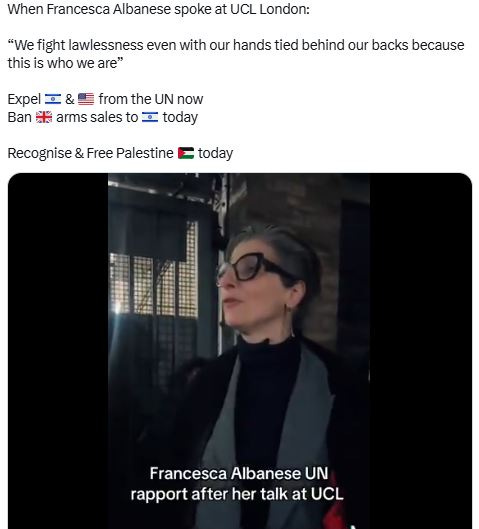
Meanwhile, children continue to be shredded by US bombs, and the starvation reaches new depths of hellish collective punishment. If both parties are going to continue to support an ongoing genocide, at least they can both be honest about doing so, rather than having one openly bloodthirsty party, and another—unconvincingly—playing the role of powerless, bumbling humanitarian.
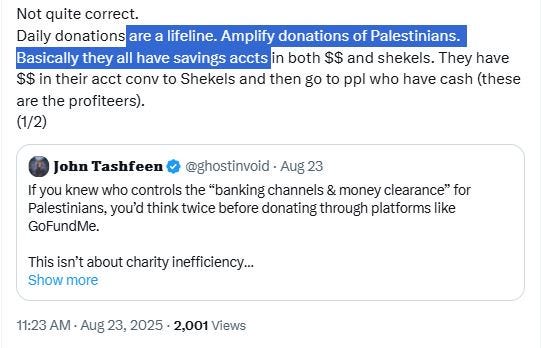
Please keep donate Gaza especially if you, as reader, has [background] International Relation [whatever universities]. IR Graduate means [you must, at least] get some semester [about] studying Middle East [in macro, not specifically Gaza].
We need more people to share fundraisers instead of only talking about Gaza. Some people think that those in Gaza don’t need money but that’s wrong. Almost everyone lost their source of income while essentials, food & medicine get sold for astronomical prices. So I put my attempt in all social media as I can, in twitter / X, in substack [since October 2023 I put link donation], in bluesky or bsky, in threads, in instagram.
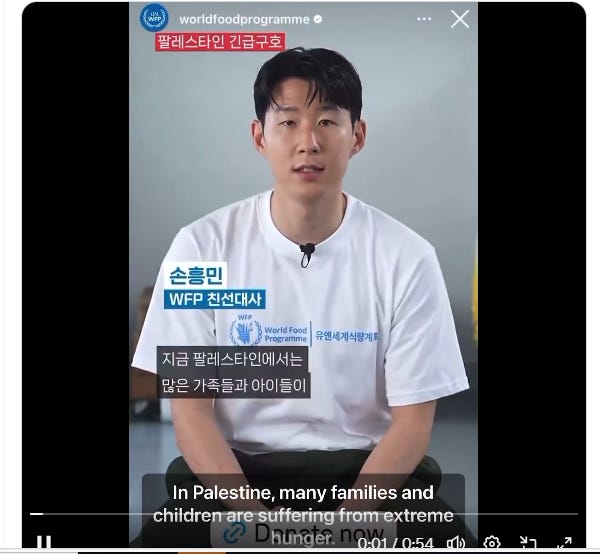
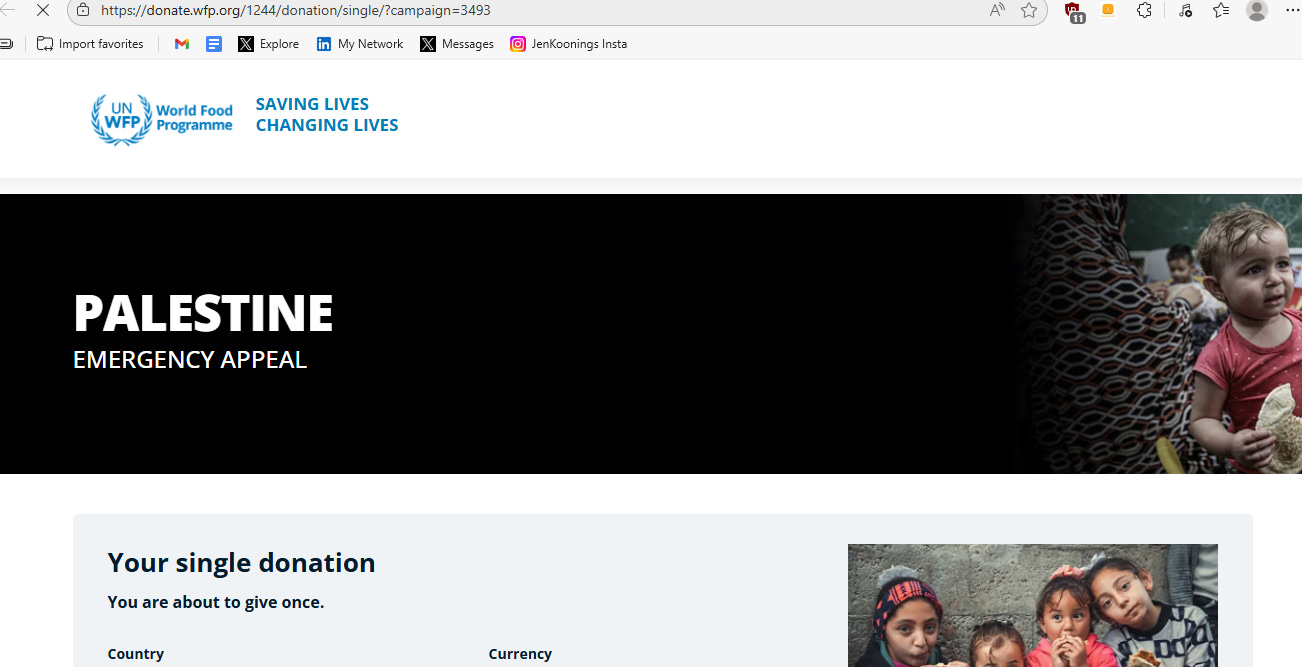
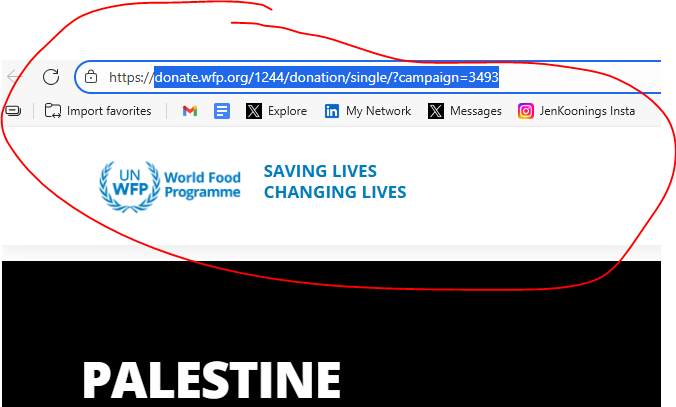
Link to donate World Food Programme - Palestine appeal: click here
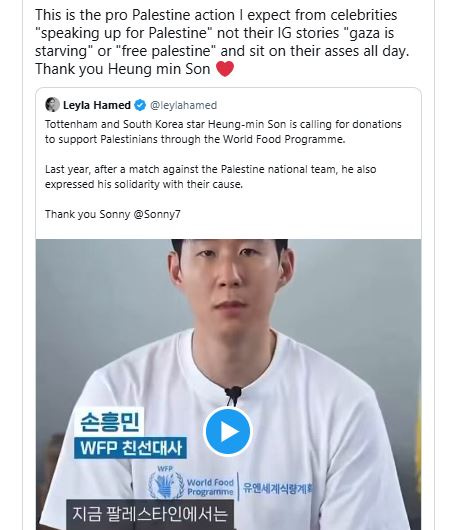

[Daniel Brühl]

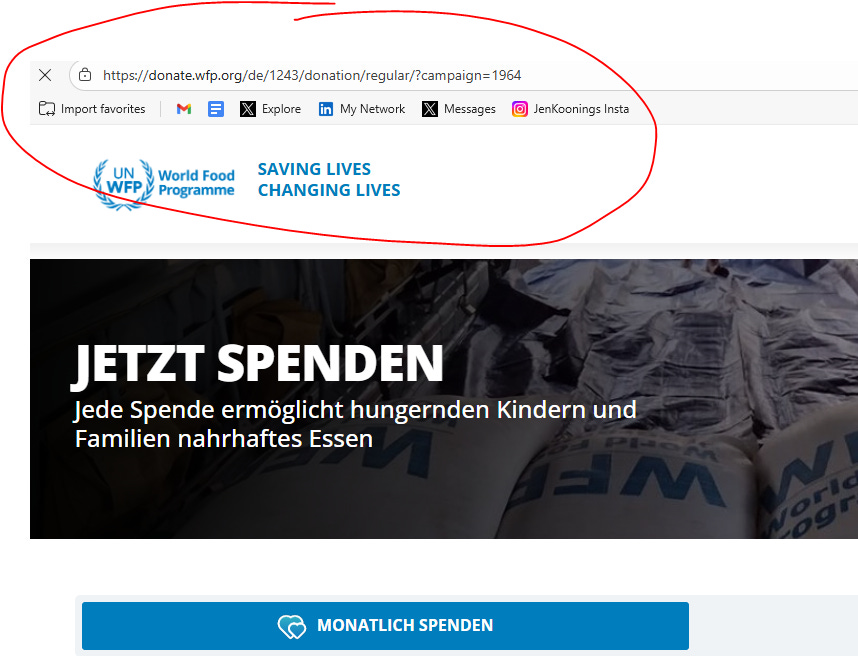
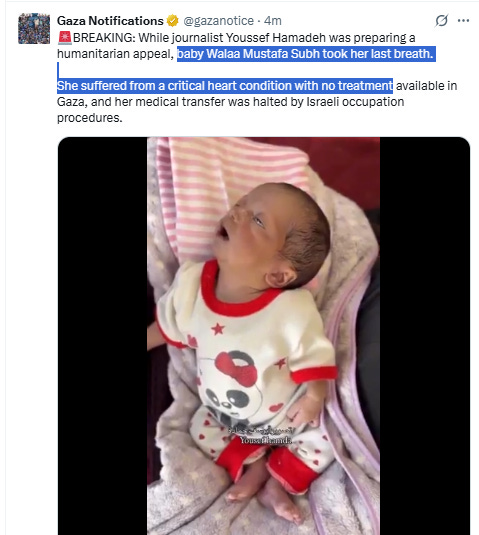
Most campaign shared or circulated in social media are for REAL people in Gaza. They’re legit. There are a lot of small campaigns for struggling families. This is their only lifeline. By donating & sharing, you are literally making history and alleviating part of their pain
Please do not rely on me alone for sharing your campaign. I’m only 1 person and sometimes I’m not online which is unreliable. I never ignore anybody on purpose but I have a very limited capacity & very little energy and time.
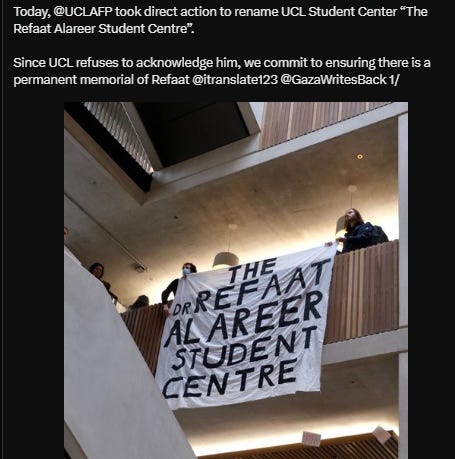
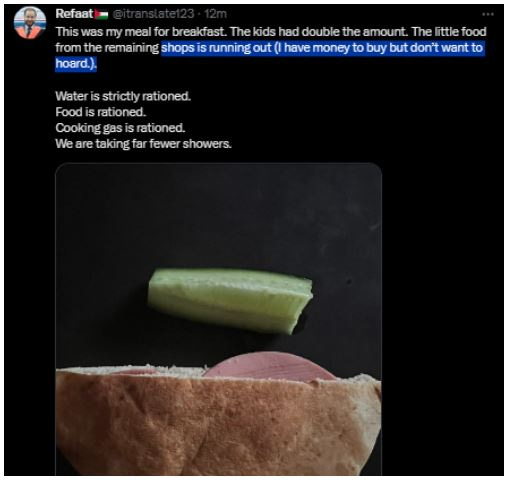
[Refaat Rafiq Alareer IF I MUST DIE] Refaat Rafiq Alareer was extremely hungry, November 2023, days before Refaat killed by Israel airstrike. If November 2023 already [one-by-one Gazan] extremely famine, extremely hungry, imagine November 2025 or more than 2 years Israel’s Genocide in Gaza.
[RENEW] 455 Languages IF I MUST DIE of Refaat Rafiq Alareer [by 6100+ Translators, Social Media Users]
·
December 20, 2023
![[RENEW] 455 Languages IF I MUST DIE of Refaat Rafiq Alareer [by 6100+ Translators, Social Media Users]](https://substackcdn.com/image/fetch/$s_!jwSl!,f_auto,q_auto:good,fl_progressive:steep/https%3A%2F%2Fsubstack-post-media.s3.amazonaws.com%2Fpublic%2Fimages%2Fc25bd266-d4e2-4169-a5e4-e901227a8b0c_725x560.png "[RENEW] 455 Languages IF I MUST DIE of Refaat Rafiq Alareer [by 6100+ Translators, Social Media Users]")
Dec 9th, 2023, New York City, 4.10am —- with update total languages to be 310 as of July 1st, 2024, 3.52am New York City, and then, to be 350 languages as of July 28th, 2024, 1.37am ====== newest update as of July, 3rd, 2025 already 384 languages, and October 8th, 2025 reaches 455 languages across the globe.

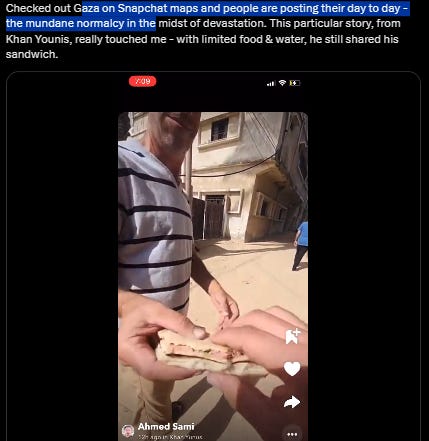
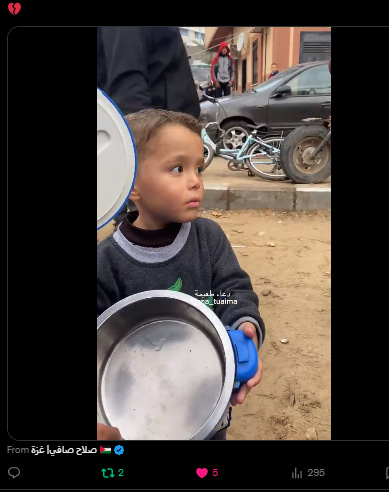
Thanks for reading Prada’s Newsletter.
I will suggest that, if Japan wants to revise its pacifist constitution, it needs to cultivate peaceful relations with its neighbors, including solid resolution of border conflicts. For example, Dokdo Island is Koren. End of discussion: Japan must recognize this formally and shut up about it.
The Senkaku Islands are a different matter, a source of friction between Japan and both China and Taiwan. Was the emergence of a Chinese claim related to the prospect of oil wells in the water surrounding the islands?
Is Japanese presence on the Senkaku Islands related to its imperialist history that included the subjugation of Taiwan?
See https://www.mofa.go.jp/a_o/c_m1/senkaku/page1we_000010.html#:~:text=After%20the%20incorporation%20of%20the,Koga/the%20Asahi%20Shimbun%20Company)
Perhaps most important, because it has blocked a peace treaty with Russia (going back to World War II), are the Kuril Islands. A state of war continues to exist between Japan and Russia. I will suggest that this MUST be resolved before the international community will allow Japan to revise its pacifist constitution. Here is a proposal: Use the southern-most island, under continuing Russian sovereignty, as an entry point for freight and passengers on a mag-lev rail system stretching up through Kamchatka and onward to Alaska and through Canada to Minneapolis, Minnesota. And build another rail line through Busan, Pyongyang and Beijing to Jakarta and points east.
Finally, regarding immigration, I learned while living in Korea that the Japanese people arose from a mixing of Korean immigrants with the indiginous Ainu. I also learned that the Japanese emperors descend from the royal family of the defeated kingdom of Silla in southeastern Korea a thousand years ago. I learned that the first Chinese imperial dynasty came from Korea ("the land to the east"), as did Confucius: Korea is the elder brother of both Japan and China.