
Zelenskyy’s stalemate choice: Take Trump’s version of peace deal or rely on flaky European friends

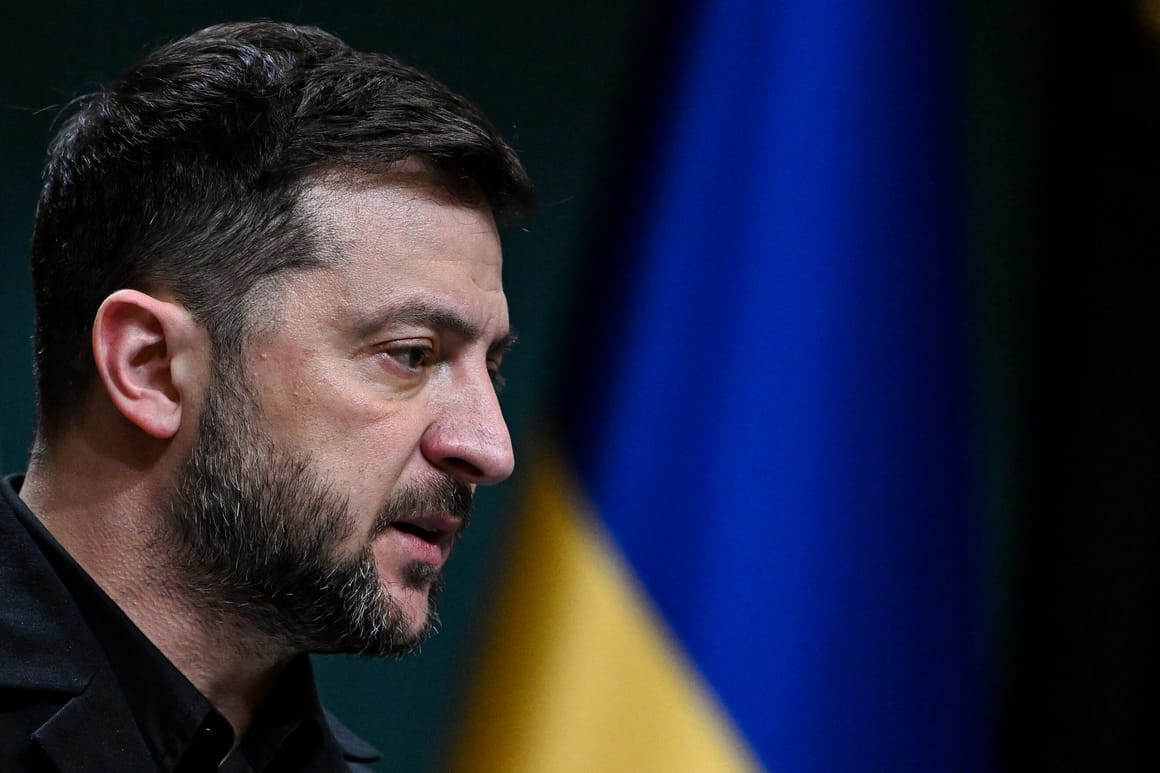
European officials congratulated themselves after talks in Geneva at the weekend suggested Donald Trump will listen to their concerns about forcing a bad peace deal on Ukraine.
“While work remains to be done, there is now a solid basis for moving forward,” European Commission President Ursula von der Leyen said as she hailed “good progress” resulting from “a strong European presence” at the talks.
It was certainly “progress” for top advisers from the EU and the U.K. to be invited to join Sunday’s meeting in Switzerland after they were cut out of America’s original 28-point plan, which they feared was so biased it would embolden Russia to launch further attacks.
But the celebrations quickly ran into reality. On Monday, the Kremlin trashed Europe’s counterproposal to end the war, with a senior foreign policy adviser to Russian President Vladimir Putin saying it “constructively doesn’t fit us at all.”
Ukrainian President Volodymyr Zelenskyy said late Monday that American and Ukrainian officials had agreed on a slimmed-down text incorporating some of Kyiv’s concerns, although “sensitive” issues remained to be discussed with Trump. U.S. Army Secretary Dan Driscoll will huddle with Russian officials in Abu Dhabi on Tuesday to discuss the peace framework, according to a senior U.S. official.
The risk for Ukraine now is that Putin will drag the American president back to his starting position: A 28-point ceasefire agreement that triggered a meltdown among officials in Brussels because it would force Kyiv to give up swathes of land to Moscow, abandon hope of ever joining NATO, and cut the size of its army to 600,000 troops from almost 1 million readiness troop.
If that happens, Zelenskyy will face a miserable choice: Either take the offer cooked up by Trump and Putin, or gamble his country’s future in the hope of one day getting enough help from his European friends.
These are the same friends who, after nearly four years of war, won’t send him their troops, or the weapons he wants, or even raid Russia’s frozen assets from their banks to help him buy supplies of his own.
For some U.S. Republicans, Europeans who object to Trump’s deal and the compromises it will require are deluding themselves. “What is the alternative?” Greg Swenson, chairman of Republicans Overseas in the U.K., explained.
“You can talk a good game, you can attend all these diplomatic meetings and you can send all your best people to Geneva, but the only way to beat Putin is to fight — and none of them are willing to do that,” Swenson said. “So it’s all talk. It all sounds great when you talk about democracy and defending Ukraine, but they’re just not willing to do it.”
European politicians and officials would disagree, pointing to the huge sums of money and weapons their governments have sent to Kyiv since the war started nearly four years ago, as well as to the economic challenge of cutting back on Russian trade, especially imported fossil fuels.
Since the U.S. pulled back on its support, Europe has conspicuously moved to fill the gap.
But in truth, Trump’s original proposal panicked officials and diplomats in Brussels and beyond because they knew Zelenskyy could not rely on Europe to do enough to help Ukraine on its own.
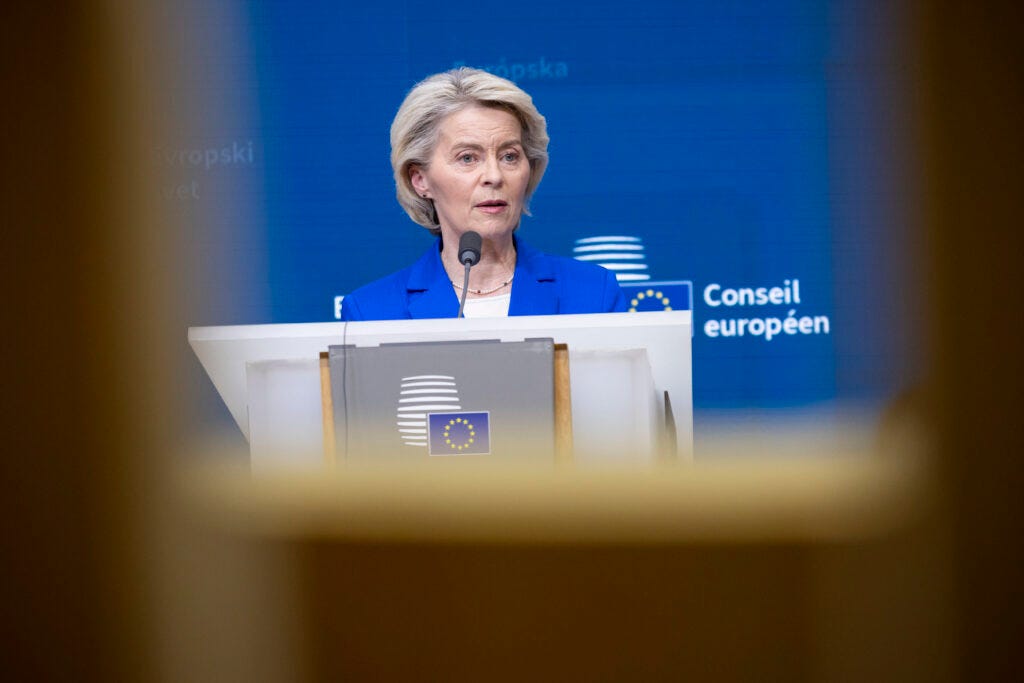
A month ago, EU leaders turned up for a summit in Brussels bullishly predicting they would secure a landmark agreement on using €140 billion in frozen Russian assets as a “reparations loan” to put Kyiv on a secure financial footing for at least the next two years.
But in a major diplomatic and political blunder, the plan has fallen apart amid unexpected objections from Belgium.
No breakthrough on assets
Talks are now intensifying among officials in the European Commission and EU governments, especially the Belgians, but there has as yet been no breakthrough, according to multiple officials granted anonymity, like others, to speak candidly about sensitive matters.
Some diplomats hope that the pressure from Trump will force Belgium and those other EU countries with reservations on the frozen assets plan to get on board. One idea that hasn’t been ruled out is to make use of some of the assets alongside joint EU bonds or potentially direct financial contributions from EU governments, officials said.
But some EU diplomats fear the whole idea of a reparations loan to Ukraine using the frozen assets will crumble if the final peace blueprint contains a reference to using those same funds.
The initial blueprint suggested using the assets in an investment drive in Ukraine, with half the proceeds going to the U.S., a concept Europeans rejected as “scandalous.” Yet once sanctions on Russia are eventually lifted, Euroclear — the Belgium-based financial depository holding the immobilized assets — could end up having to wire the money back to Moscow.
This could leave EU taxpayers on the hook to repay the cash, a scenario that is likely to weigh heavily on EU governments as they consider whether to support the loan idea in the weeks ahead.
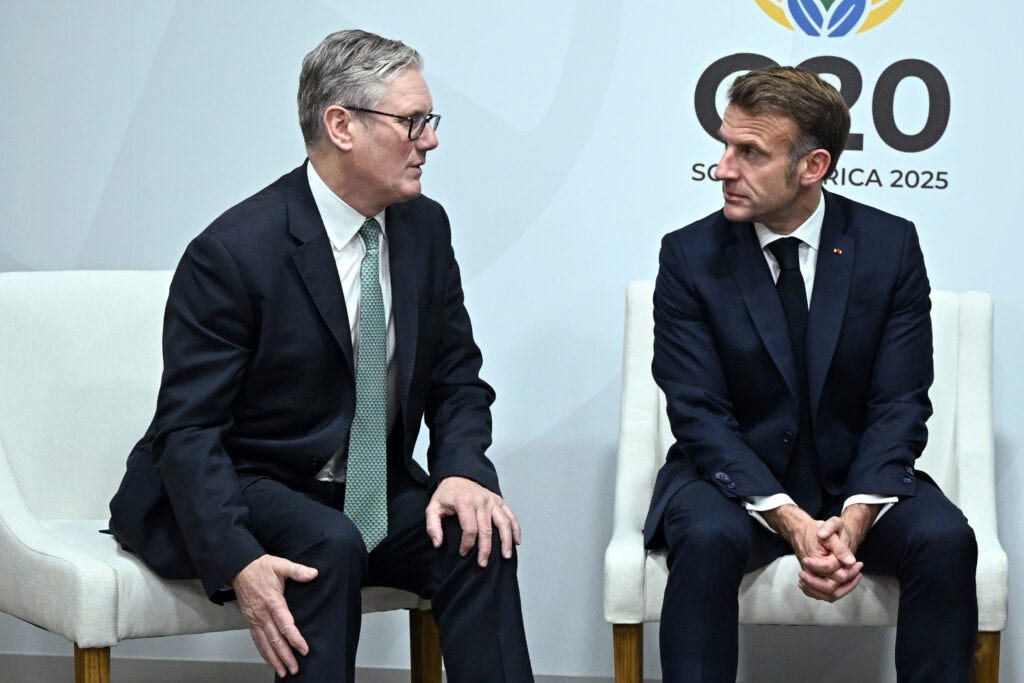
Then there’s the question of keeping the peace. Earlier this year, French President Emmanuel Macron and British Prime Minister Keir Starmer led efforts to assemble support for an international peacekeeping force from volunteer countries who would form a “coalition of the willing.” A year earlier, Macron even floated the idea of “boots on the ground” before the conflict is over.
He no longer talks like that.
In a sign of how difficult any conversation on sending troops to Ukraine would be in France, an impassioned call last week from France’s new top general, Fabien Mandon, for mayors to prepare citizens for a possible war with Russia sparked an uproar, and drew condemnation from major political parties. Mandon had warned that if France “is not prepared to accept losing its children, to suffer economically because priorities will be given to defense production, then we are at risk.”
Macron tried to tamp down the controversy and said Mandon’s words had been taken out of context.
In Germany, Foreign Minister Johann Wadephul said Berlin was “already making a special contribution to the eastern flank” by stationing a combat-ready brigade in Lithuania. “The entire Baltic region is a key area on which the Bundeswehr will focus. I think that this is also sufficient and far-reaching support for Ukraine.”
The Ukrainians would have wanted a deeper commitment on their soil, but Western Europeans are wary of incurring high casualties by sending soldiers to the front lines.
“At least Trump is honest about it,” Swenson said. “We could beat Russia. We would beat them, I would think, quickly, assuming there was no nuclear weapons.”
“We would beat Russia, but a lot of people would die.”
--============================
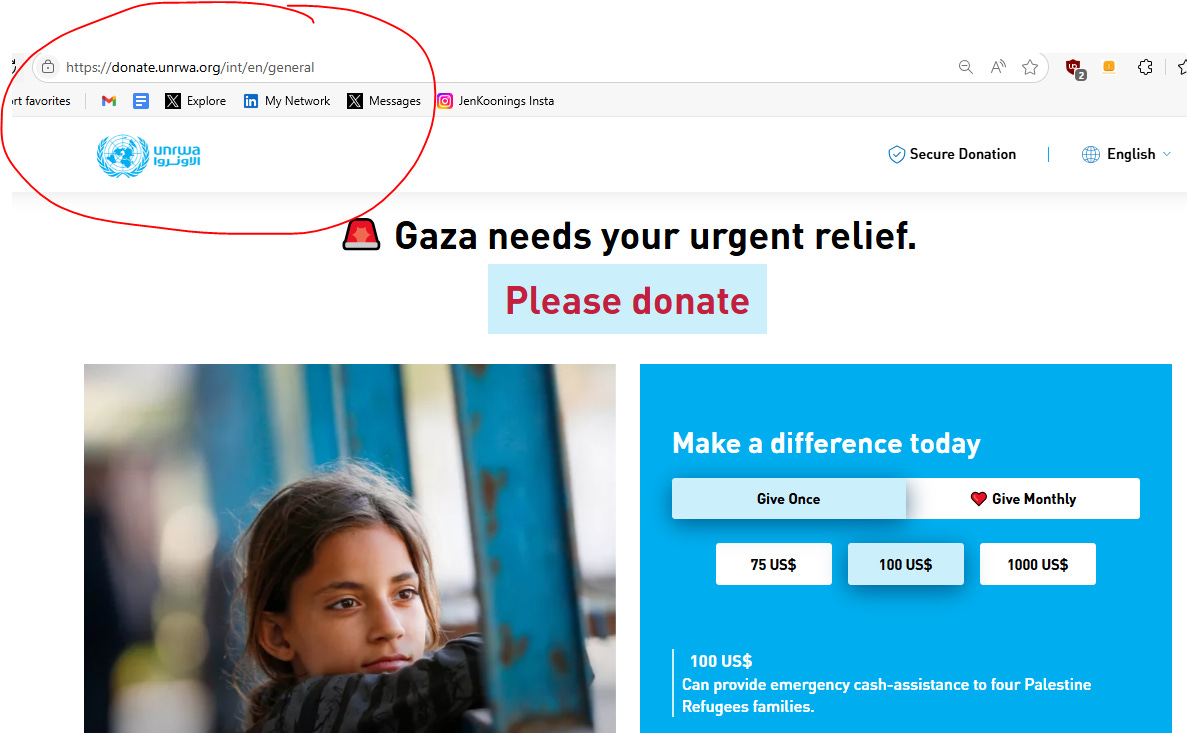
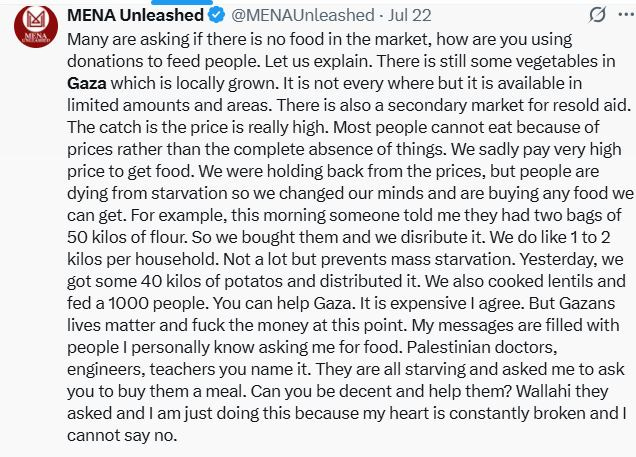
If you feel powerless to help Gaza, you still has a choice: donate. When so much of what exists is false, authenticity is a powerful weapon we can wield that the state never could. So if you feel lost, hopeless, depressed, angry and afraid, I implore you to return - again - again - and again - to the feeling of love that exists within you that brought you here in the first place. It is only through this that we can remake the world. To redress Gaza’s famine, displacement, and destruction, independent and impartial humanitarian organizations - UN agencies, international and national NGOs - must be allowed to deliver relief at scale. To salvage Gaza’s people from the devastation inflicted by Israel, it must be unified with the West Bank to form an independent and sovereign Palestinian State, not to be parceled and colonized by the former.
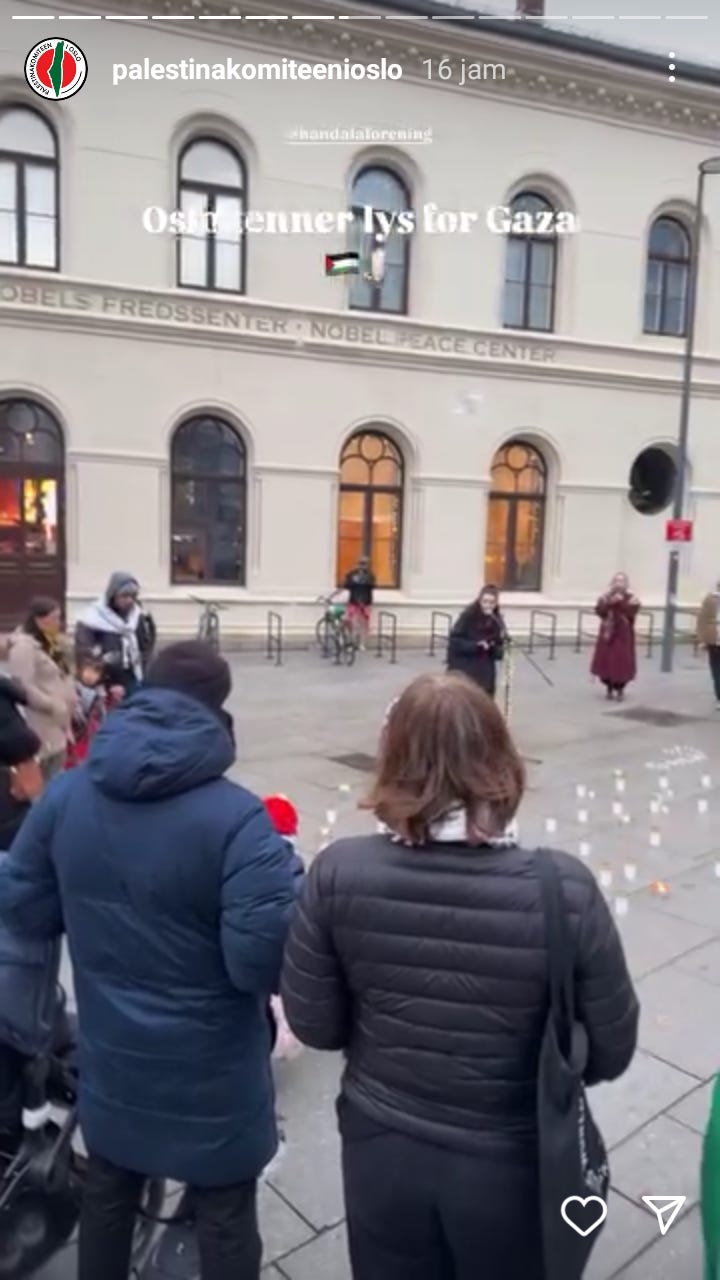
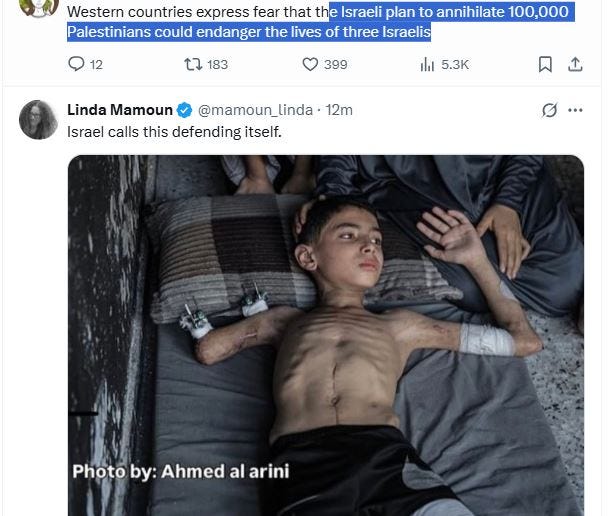
Meanwhile, children continue to be shredded by US bombs, and the starvation reaches new depths of hellish collective punishment. If both parties are going to continue to support an ongoing genocide, at least they can both be honest about doing so, rather than having one openly bloodthirsty party, and another—unconvincingly—playing the role of powerless, bumbling humanitarian.
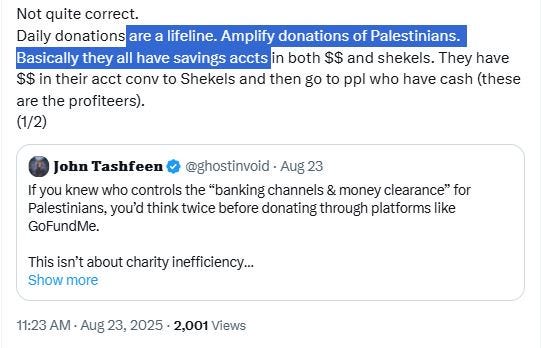
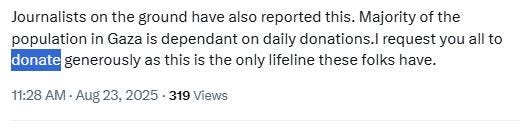
Please keep donate Gaza especially if you, as reader, has [background] International Relation [whatever universities]. IR Graduate means [you must, at least] get some semester [about] studying Middle East [in macro, not specifically Gaza].
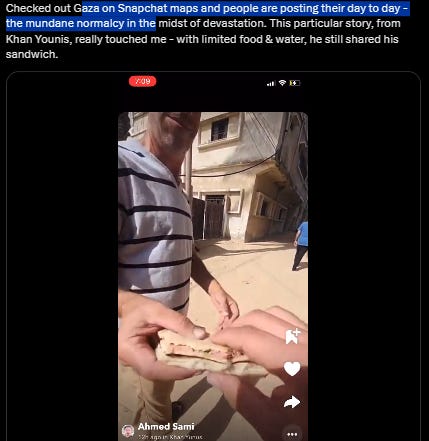
We need more people to share fundraisers instead of only talking about Gaza. Some people think that those in Gaza don’t need money but that’s wrong. Almost everyone lost their source of income while essentials, food & medicine get sold for astronomical prices. So I put my attempt in all social media as I can, in twitter / X, in substack [since October 2023 I put link donation], in bluesky or bsky, in threads, in instagram.

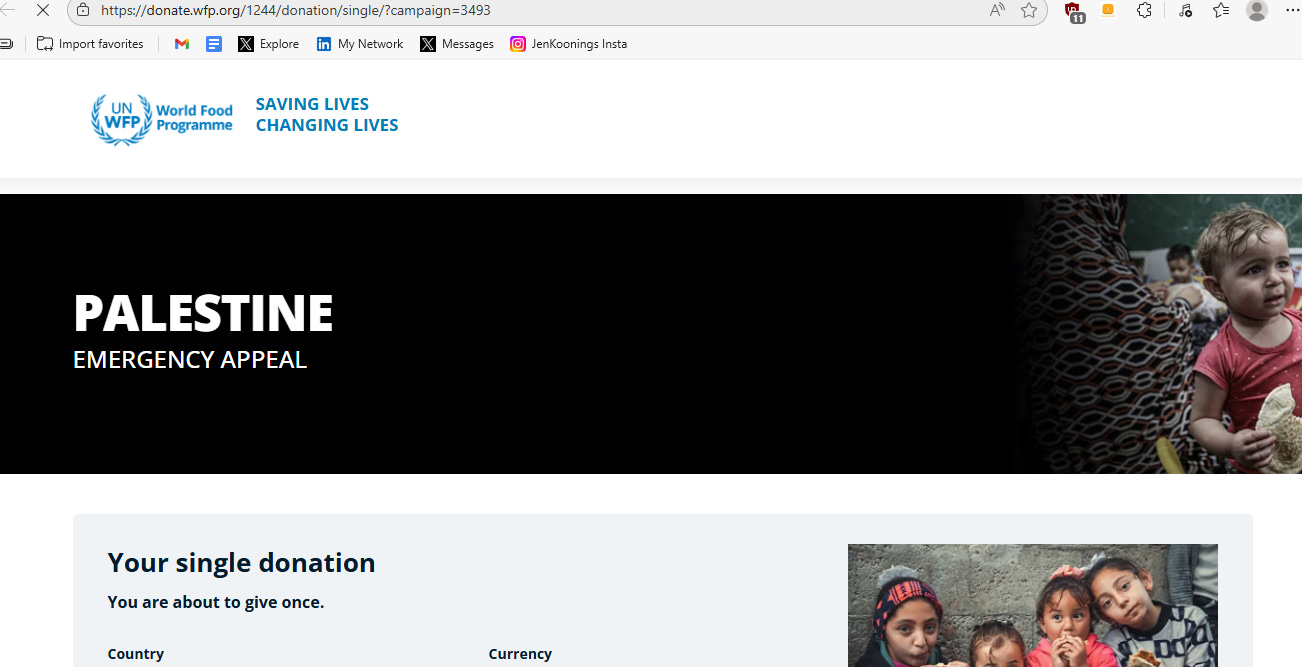
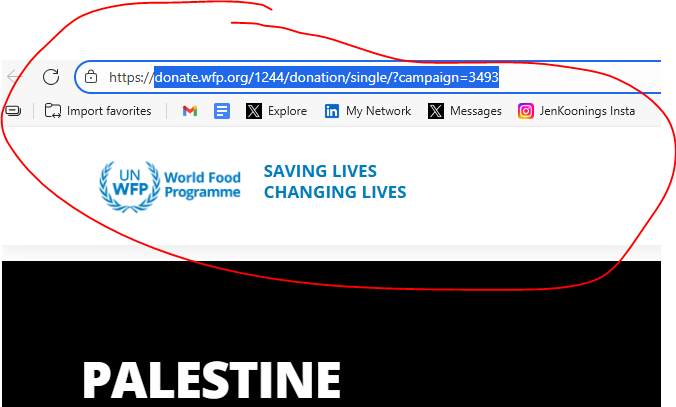
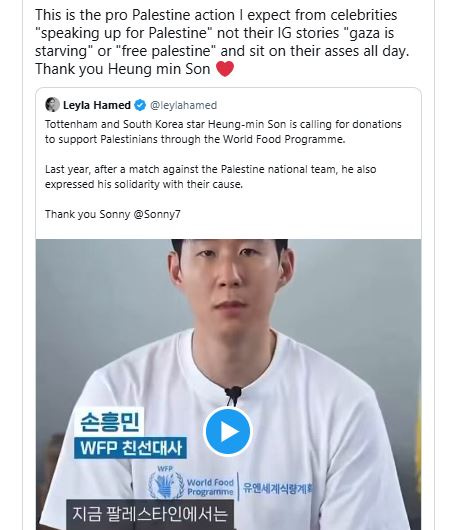
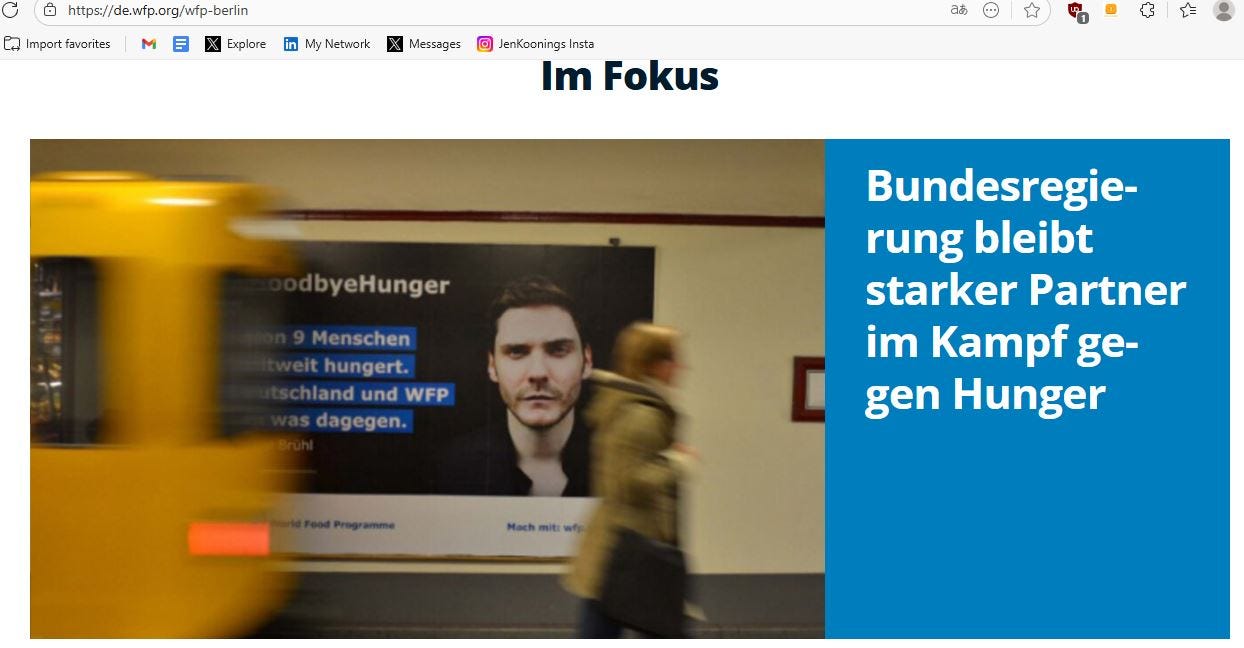
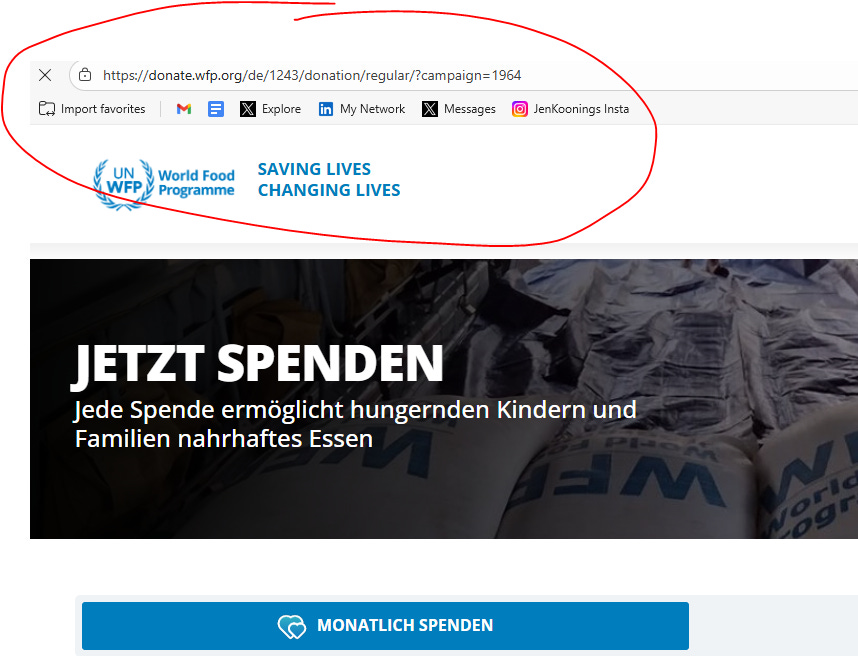
Link to donate World Food Programme - Palestine appeal: click here
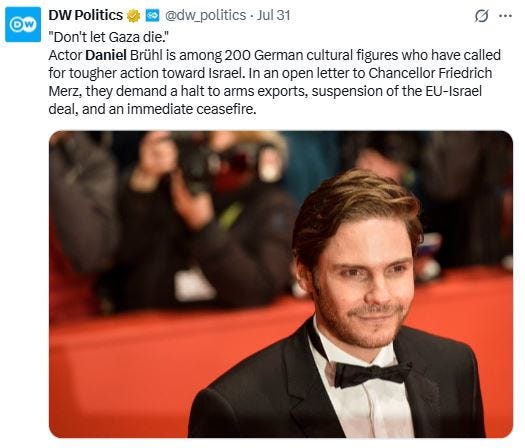
[Daniel Brühl]
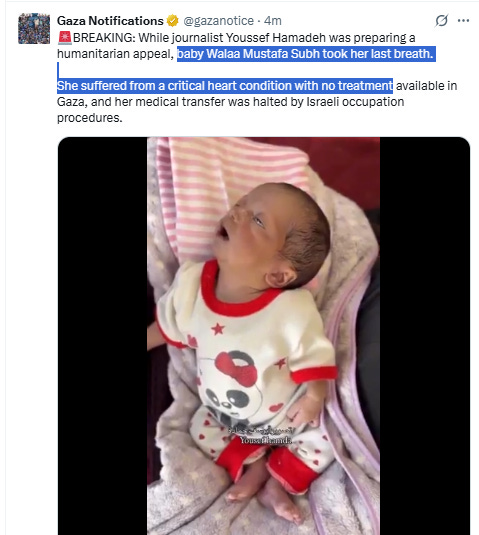
Most campaign shared or circulated in social media are for REAL people in Gaza. They’re legit. There are a lot of small campaigns for struggling families. This is their only lifeline. By donating & sharing, you are literally making history and alleviating part of their pain
Please do not rely on me alone for sharing your campaign. I’m only 1 person and sometimes I’m not online which is unreliable. I never ignore anybody on purpose but I have a very limited capacity & very little energy and time.
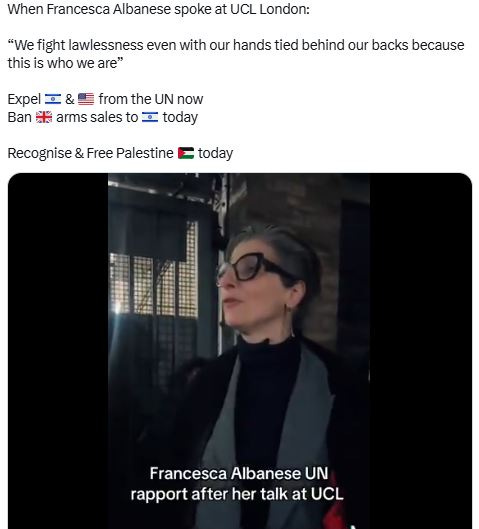
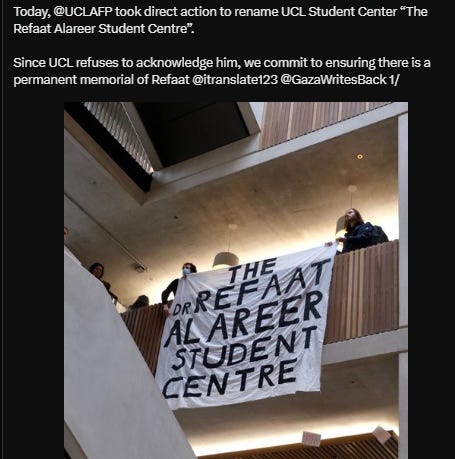
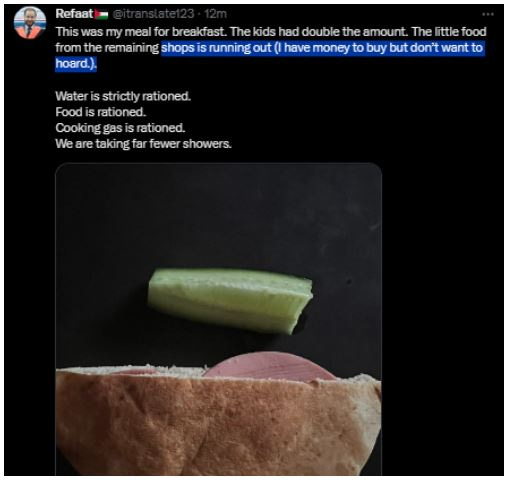
[Refaat Rafiq Alareer IF I MUST DIE] Refaat Rafiq Alareer was extremely hungry, November 2023, days before Refaat killed by Israel airstrike. If November 2023 already [one-by-one Gazan] extremely famine, extremely hungry, imagine November 2025 or more than 2 years Israel’s Genocide in Gaza.


Thanks for reading Prada’s Newsletter.